The Macbeths of the Middle East: Two Old Men, One War, and the Price of Survival
“I am in blood / Stepp’d in so far that, should I wade no more, / Returning were as tedious as go o’er.”
Macbeth, Act 3, Scene 4
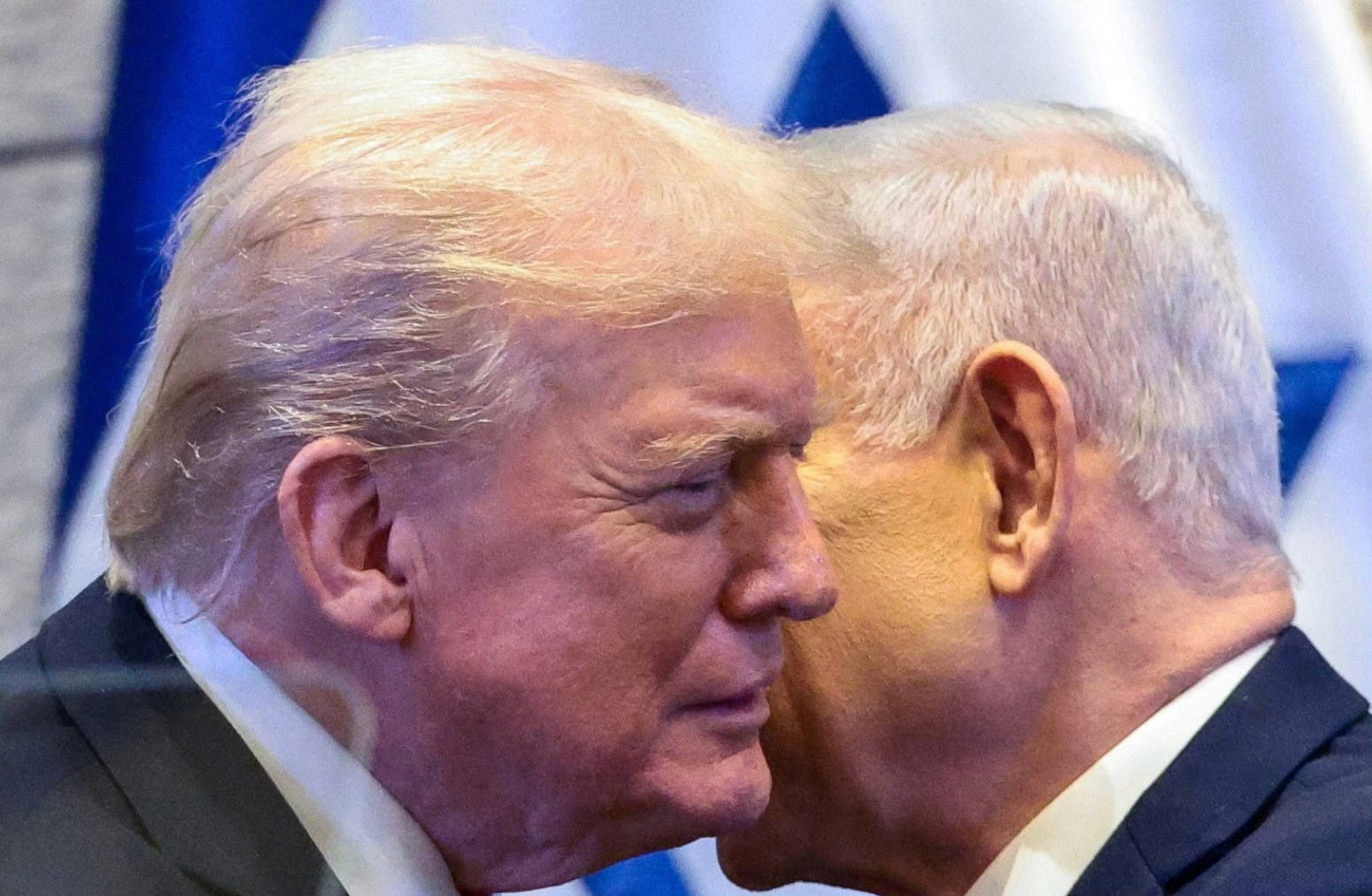
On 28 February 2026, the United States and Israel launched coordinated military strikes against Iran. The stated objectives were familiar: the elimination of Iran’s nuclear programme, the degradation of its ballistic missile capabilities, and what both governments described, with varying degrees of candour, as the pursuit of regime change (Loft, 2026). The strikes were massive in scale, the largest deployment of American military assets in the region since the second Iraq war, and the consequences were immediate and global. The Strait of Hormuz, through which roughly 20 percent of the world’s oil passes, was effectively paralysed. Energy markets convulsed. Countries from the Philippines to Sri Lanka declared national emergencies (Al Jazeera, 2026).
By day 26, the war had spread. Iran was striking back at Israel, at US military bases across the region, and at Arab Gulf states hosting American forces. Hezbollah had opened a front from Lebanon, killing over a thousand people in weeks. The United Nations Secretary-General was warning that Lebanon must not become “the next Gaza.” Pakistan was offering to host peace talks. China and France were urging restraint. Iran had rejected a 15-point American ceasefire proposal as “extremely maximalist and unreasonable” (Al Jazeera, 2026). The world was watching, and the world was afraid.
Two men sit at the centre of this. Donald Trump, aged 79, the 47th President of the United States, and Benjamin Netanyahu, aged 76, the longest-serving Prime Minister in Israel’s history. A private phone call on 23 February, in which Netanyahu shared intelligence about the location of Iran’s Supreme Leader and senior officials, opened the door to assassination and direct military action (Kurtzer and Miller, 2026). Five days later, the bombs fell.
The world was told to look outward — at Iran’s nuclear ambitions, at regional instability, at the threat of a rogue state. But to understand this war fully, we must also look inward. We must identify the conditions under which these two men made their decisions; what they had to lose, and what they stood to gain.
This war arrived at a moment when both men were already under extraordinary pressure. And that is not a coincidence. It is a pattern.
The Pressure Beneath the Surface
In early 2026, Donald Trump was facing a crisis that had nothing to do with Iran. The Department of Justice, now under the control of Trump loyalist Attorney General Pam Bondi, had been forced to comply with the bipartisan Epstein Files Transparency Act. The initial release, on 30 January, was immediately found to be incomplete. Independent journalists discovered that the DOJ had withheld dozens of pages of FBI interview records — specifically, four 302 forms associated with a woman who alleged she had been trafficked to Trump by Jeffrey Epstein when she was a young teenager (Whitehouse, 2026). Three of those four records named Trump directly. The DOJ’s explanation that the files had been “incorrectly coded as duplicative,” satisfied no one (NBC News, 2026).
By March, Senator Sheldon Whitehouse was on the Senate floor for a 48-minute speech, viewed more than two million times, unravelling what he described as a mountain of circumstantial evidence connecting Trump, Epstein, and Russia (Whitehouse, 2026). Subpoenas were being issued. The House Oversight Committee was demanding answers. Thirty-seven pages of records remained unreleased. The story was not going away.
This is the context in which Trump was operating. A man under renewed, deeply personal scrutiny that threatened to expose not just political corruption, but something far darker.
Benjamin Netanyahu’s pressure was of a different kind, but no less acute. His corruption trial, which began in 2020, has now dragged into its sixth year. He faces charges of bribery, fraud, and breach of trust across three separate cases. The most serious — Case 4000 — alleges that he granted regulatory benefits worth approximately $500 million to a telecom company in exchange for favourable coverage on a news website (Khan, 2025). The potential sentence, if convicted on the bribery charge alone, is up to ten years in prison.
Netanyahu has spent years engineering delays. The Gaza war, which resumed in earnest after October 7, 2023, forced the courts to postpone his hearings for over 14 months (Abu Ras, 2025). In February 2025, he asked the court to reduce his testimony schedule from three days to two per week, citing “changing security circumstances for the country’s very future.” The courts accepted. When Israel broke the ceasefire in March 2025, proceedings were postponed again. By late 2025, however, the delays were running out. In December, Netanyahu was forced to take the stand for the first time, testifying in his own defence while simultaneously requesting a highly controversial presidential pardon, an act without precedent in Israeli legal history (Khan, 2025).
These pressures are not identical. Trump’s exposure is personal and reputational; Netanyahu’s is legal and existential. But they share a common feature: both men are operating with something to lose. Something that cannot be lost if they remain in power and cannot be protected if they do not.
The Pattern: Power and Crisis
Political history is not short of moments where external conflict has coincided with internal vulnerability. When leaders face scrutiny at home, war offers something that no press conference or legal manoeuvre can provide. It reframes the narrative. It transforms a man under investigation into a wartime commander. It converts political division into national unity, or at least demands it. It shifts the media’s gaze from courtrooms and congressional hearings to missile strikes and military briefings. It makes the question of personal conduct seem, temporarily, beside the point.
This is not a new phenomenon. Leaders throughout history have understood, consciously or not, that external crisis provides internal shelter. The mechanism does not require cynicism to operate. It does not even require intent. It only needs incentives align — that the same action which serves a strategic purpose also happens to serve a personal one. When those two things converge, restraint becomes politically expensive. Caution becomes a liability. The pressure to act intensifies, and the pressure to wait diminishes.
What makes the current situation so compelling is the degree to which both incentive structures aligned simultaneously, in both men, at the same moment. Trump needed a distraction from Epstein. Netanyahu needed a crisis to justify further delays to his trial and to satisfy the far-right coalition partners on whom his government depends. Iran, long the shared obsession of both men, provided the answer.
Netanyahu has spent four decades advocating for regime change in Tehran. He has pressed this case with every American president, and every American president until Trump rejected or ignored him (Kurtzer and Miller, 2026). Trump, in his second term, offered an open door. He was, as Carnegie scholars Daniel Kurtzer and Aaron David Miller put it, “risk-ready and caught up in a self-generated aura of military power and invincibility” following the removal of Venezuela’s Nicolás Maduro (Kurtzer and Miller, 2026). His envoys told him that negotiations with Iran had failed. The Omani foreign minister and a British senior adviser, who had sat in on the final round of talks, assessed there was a good chance of reaching agreement. Trump did not listen to them. He had already made up his mind (Kurtzer and Miller, 2026).
Subscribe to Notes From Plague Island and join our growing community of readers and thinkers.
Incentive, Not Intent
When leaders are under severe personal pressure, their decision-making changes in ways that are not always visible, not always conscious, and not always acknowledged. Escalation becomes more than strategy. It becomes shelter. And the two things — strategic justification and personal utility — do not cancel each other out. They coexist and reinforce each other. They make the decision feel not just necessary, but inevitable.
Netanyahu’s coalition is the clearest illustration of this dynamic. His government is the most right-wing in Israel’s history, dependent on Finance Minister Bezalel Smotrich and National Security Minister Itamar Ben-Gvir — men who have been explicit about their desire for permanent occupation and the ethnic cleansing of Palestinians (Abu Ras, 2025). Netanyahu cannot form an alternative coalition without them. They jointly control the third-largest caucus in the Knesset. When Israel broke the ceasefire in March 2025, Ben-Gvir returned to the coalition after leaving it in protest at the ceasefire’s signing. The message was unambiguous: war is the price of political survival.
This is the trap Netanyahu built for himself. To stay in power, he needs his far-right partners. To keep his far-right partners, he needs perpetual conflict. To maintain perpetual conflict, he needs to escalate. And escalation, also conveniently delays his trial. Trump’s situation is structurally similar, if differently textured. He is a man who has spent his entire career understanding that the best defence is offence, that the best way to suppress a damaging story is to create a bigger one. The Epstein files were not going away. The subpoenas were multiplying. The 48-minute Senate speech had been viewed by millions. A war — a real war, a dramatic war, a war that put him at the centre of the world stage as a decisive commander — was the most effective narrative intervention available.
This does not mean the war is fake. It means the war is overdetermined. It has real strategic rationales and real personal ones, and the personal ones made the strategic ones easier to pursue, harder to question, and more resistant to the restraining influence of allies, diplomats, and international law.
The Nature of Truth in Their Politics
There is something else that connects these two men, something that makes the dynamic we are describing not just possible but almost inevitable. Both of them operate within political systems where truth has become negotiable.
Trump’s relationship with truth has been documented exhaustively. It is not simply that he lies — though he does, constantly and without apparent discomfort. It is that he has constructed a political style in which contradiction is absorbed, narrative overrides fact, and the emotional truth of a story matters more than its factual accuracy. In this system, the Epstein files are not evidence of wrongdoing. They are a “witch hunt.” The missing 302 forms are not a cover-up. They are “incorrectly coded duplicates.” The war is not a distraction. It is a triumph. The story is always the same: Trump is the victim of enemies who fear his greatness, and his actions, whatever they are, are vindicated by the fact that he took them.
Netanyahu has built a parallel architecture. His corruption trial is not a legitimate legal proceeding. It is, in his framing, a “deep state” conspiracy by bureaucrats and jurists who cannot defeat him at the ballot box (Abu Ras, 2025). His judicial overhaul — the systematic attempt to weaken Israel’s courts, remove independent prosecutors, and replace “gatekeepers of democracy” with political loyalists — is not an assault on democratic institutions. It is a necessary correction of a biased system. The war is not a political convenience. It is an existential necessity.
When truth becomes a tool rather than a constraint, escalation becomes easier to justify and harder to challenge. The mechanisms of accountability — courts, press, parliamentary oversight, allied pressure — all depend, to some degree, on a shared commitment to the idea that facts matter. When that commitment is abandoned by the men at the top, the mechanisms weaken. When the mechanisms weaken, the men at the top can do things that would otherwise be impossible.
This has direct, material consequences. Trump launched this war without bipartisan support, congressional authorisation, the buy-in of allies, or the majority of the American public (Kurtzer and Miller, 2026). He did it because he could. Because the institutions that might have constrained him had been sufficiently weakened, sufficiently captured. Netanyahu resumed the Gaza war and escalated into Iran while under criminal indictment, while his trial was being delayed by the very conflicts he was escalating, while his coalition partners were openly threatening to collapse his government if he stopped fighting. He did it because the system allowed him to. When truth is negotiable, escalation is inevitable.
The Shakespearean Turn
In a previous piece on Plague Island, we explored Trump through the lens of Shakespearean tragedy: specifically, as Macbeth, a man who seizes power through dark means and finds that maintaining it requires ever-increasing acts of violence and paranoia (L&A, 2024). Shakespeare understood something about the psychology of power under threat that modern political science often struggles to articulate: that the desperate act of self-preservation is itself the mechanism of destruction. We return to that framework now, because it illuminates something that conventional political analysis misses.
Macbeth’s tragedy is not that he is ambitious. Ambition is human. His tragedy is that once he has committed to a course of action, once he has waded into blood, the logic of that commitment becomes self-reinforcing. Returning is no longer an option. Every act of violence generates a new threat that requires a new act of violence. Every enemy eliminated creates two more. The man who kills to protect his power finds that his power now requires constant killing. He is governing against the possibility of collapse.
This is Trump and Netanyahu. These are not men making clear-eyed strategic calculations from positions of security, but governing against the possibility of their own destruction. That changes everything.
A leader governing from strength can afford restraint. A leader governing against collapse cannot. For him, restraint is surrender. Negotiation is weakness. Every moment of de-escalation is a moment in which the personal threat reasserts itself, in which the trial resumes, in which the files are released, in which the story returns.
Netanyahu maps most precisely onto the late-stage Lear — an embattled ruler whose authority is visibly under strain, who has made himself dependent on the most extreme elements of his court, and who has confused the survival of his reign with the survival of his nation. He has dismissed the head of internal intelligence, moved to fire the attorney general, and replaced independent officials with ideological loyalists (Abu Ras, 2025). He is cannibalising the state. Like Lear dividing his kingdom among those who flatter him most, Netanyahu has distributed power to those who demand the most from him, and in doing so, has made himself a prisoner of their demands.
Trump is Macbeth more precisely: the man who acts to pre-empt loss and in doing so creates the conditions he claimed to resist. He entered his second term with enormous power and squandered the possibility of diplomatic resolution with Iran by surrounding himself with advisers who would only say yes, by dismissing the assessments of mediators who saw a path to agreement, and by choosing the aura of military invincibility over the harder, quieter work of statecraft (Kurtzer and Miller, 2026). He has waded in. Returning is now as tedious as going over.
The tragedy is not that these men seek power. It is that they cannot afford to lose it. And that incapacity — that structural inability to accept the consequences of accountability — is what makes them dangerous to us all
The Danger: Escalation Without Restraint
A war driven by overlapping motives — strategic, ideological, and personal — is a war that is harder to contain. When a leader’s personal interests are served by continued conflict, the incentives that normally constrain escalation are weakened. The adviser who recommends a ceasefire is threatening the leader’s political survival; the diplomat who reports that negotiations are possible is now undermining the justification for war.
This is precisely what happened in the weeks before the strikes. The Omani foreign minister and a British senior adviser assessed that a negotiated agreement with Iran was within reach. Trump’s own envoys, Steve Witkoff and Jared Kushner, told him otherwise. Trump listened to the men who told him what he needed to hear (Kurtzer and Miller, 2026). The war began five days after Netanyahu’s intelligence call.
The consequences are now playing out in real time. As of late March 2026, more than 50,000 US troops are deployed in the Middle East, including two aircraft carriers and 200 combat aircraft (Al Jazeera, 2026). Iran has launched waves of missiles and drones at Israel, US bases, and Arab Gulf states. Approximately 2,000 vessels and 20,000 seafarers are stranded in the Strait of Hormuz. Lebanon has suffered over a thousand casualties in three weeks. Iraq is struggling to balance its dependence on both the US and Iran and has granted Iran-backed paramilitary groups the right to respond to American strikes. The Philippines has declared a national energy emergency. Sri Lanka has ordered streetlights switched off to ration power.
Iran has rejected the American ceasefire proposal. The war continues.
The Question We Should Be Asking
We are told, in moments like this, to look outward: at the enemy, the threat, the necessity. These are legitimate questions. But they are not the only ones.
The most important question is this: were the men who made these decisions free to choose differently? Were they free to negotiate, to accept a partial agreement, to allow the diplomatic process that multiple credible mediators believed was working to continue? Or were they so constrained by their own personal exposure — by the trial, the files, the coalition partners, the sycophants who would only say yes — that escalation was not a choice but a necessity?
If the answer is that they were free, then we are dealing with a strategic decision that can be evaluated on its merits. If the answer is that they were not — that the war was, at least in part, the product of men who could not afford peace — then we are dealing with something far more dangerous. A war that cannot be ended by the same logic that started it.
Shakespeare knew this. Macbeth cannot stop. Not because he is evil, though he is. But because the logic of his position has made stopping impossible. Every step forward is also a step away from accountability. Every act of violence is also an act of self-protection. The blood he wades through is not just the blood of his enemies, but the evidence of his crimes. The deeper he wades, the harder it becomes to return to shore.
Two old men. One war. And the world paying the price for their survival.
Or support us with a one-off tip → Buy Me a Coffee
References
Abu Ras, T. (2025) ‘A Calculus of Conflict: Netanyahu’s Political Survival Through Extended War’, Arab Center Washington DC, 16 April. Available at: https://arabcenterdc.org/resource/a-calculus-of-conflict-netanyahus-political-survival-through-extended-war/ [Accessed: 23 March 2026].
Al Jazeera (2026 ) ‘US-Israel war on Iran: What’s happening on day 26 of attacks?’, Al Jazeera, 25 March. Available at: https://www.aljazeera.com/news/2026/3/25/us-israel-war-on-iran-whats-happening-on-day-26-of-attacks [Accessed: 25 March 2026].
Khan, S. (2025 ) ‘Netanyahu’s Corruption Trial Splits Israel as Leader Takes the Stand’, Modern Diplomacy, 1 December. Available at: https://moderndiplomacy.eu/2025/12/01/netanyahus-corruption-trial-splits-israel-as-leader-takes-the-stand/[Accessed: 24 March 2026].
Kurtzer, D.C. and Miller, A.D. (2026 ) ‘The Problem With the Idea That Netanyahu Made Trump Attack Iran’, Carnegie Endowment for International Peace, 23 March. Available at: https://carnegieendowment.org/emissary/2026/03/trump-netanyahu-iran-war-responsibility [Accessed: 24 March 2026].
L&A (2024 ) ‘The Thane of Mar-a-Lago: A Shakespearean Reckoning of Trump and the Void’, Notes From Plague Island, 24 January 2026. Available at: https://www.plagueisland.com/p/the-thane-of-mar-a-lago-a-shakespearean [Accessed: 23 March 2026].
Loft, P. (2026 ) ‘US-Israel strikes on Iran: February/March 2026’, House of Commons Library, 9 March. Available at: https://commonslibrary.parliament.uk/research-briefings/cbp-10521/ [Accessed: 25 March 2026].
NBC News (2026 ) ‘DOJ releases missing Epstein files related to a woman who made allegation against Trump’, NBC News, 6 March. Available at: https://www.nbcnews.com/politics/donald-trump/doj-releases-missing-epstein-files-related-woman-made-allegation-trump-rcna262024 [Accessed: 24 March 2026].
Shakespeare, W. (ed. Hunter, G. ) Macbeth. London: Penguin Classics, 2015.
Whitehouse, S. (2026) ‘As DOJ Continues to Withhold Epstein Files About Accusations Against Trump, Whitehouse Demands that DOJ Follow the Law and Preserve All Related Documents’, Senator Sheldon Whitehouse, 11 March. Available at: https://www.whitehouse.senate.gov/news/release/as-doj-continues-to-withhold-epstein-files-about-accusations-against-trump-whitehouse-demands-that-doj-follow-the-law-and-preserve-all-related-documents/ [Accessed: 25 March 2026].


