
“Where Is Humanity?”: Ben Gvir, Lebanon, and the Broadcast of Genocide

Since December 2024 we have documented the genocide in Gaza and the political, legal and rhetorical machinery Britain and the West built to protect it. Every piece is collected, in the order it was written, at Palestine: The Evidence.
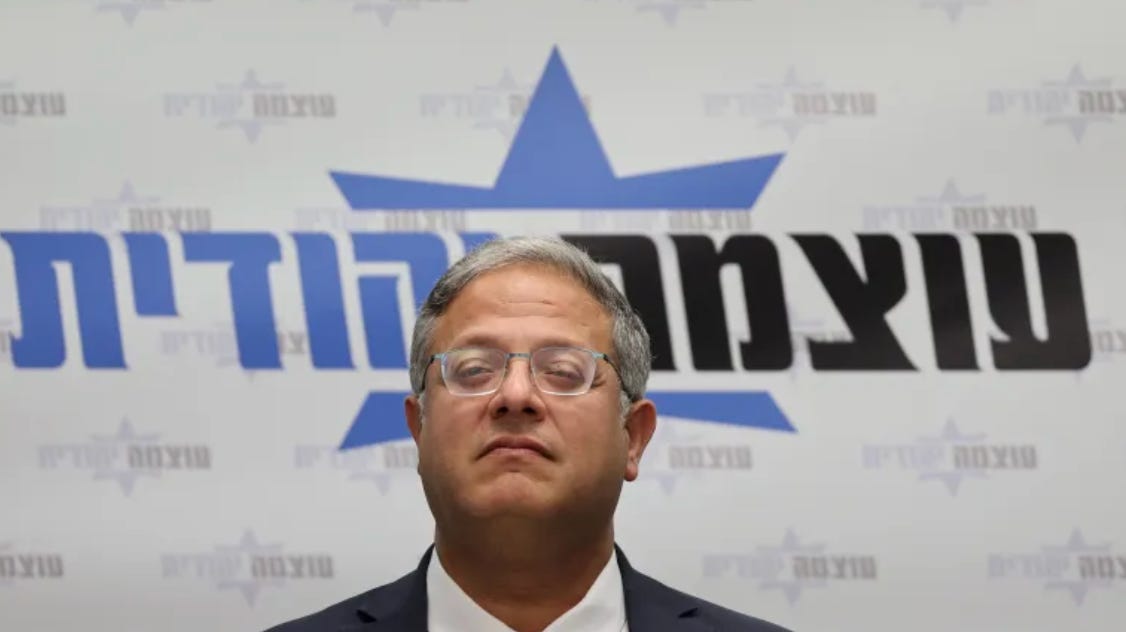
On the morning of the 19 June 2026, the Israeli National Security Minister Itamar Ben Gvir looked at the escalating death toll in Lebanon and did not call for a military victory. He did not speak of strategic objectives, nor did he reach for the sterile, bureaucratic language of modern warfare: the collateral damage, the proportionality, the surgical strikes. He called for a mathematical equation of suffering: one Israeli tear to one thousand Lebanese tears.
By the time Ben Gvir spoke, 3,826 Lebanese civilians were dead. Over 1.2 million people, a full fifth of the nation’s population, had been displaced since March (OCHA, 2026; NHRCLB, 2026). Four Israeli soldiers had been killed in combat. The response to those four military deaths was a public demand, broadcast to 4.5 million followers before breakfast, that “all of Lebanon must burn” (Rennolds, 2026).
This is not the hyperbolic “ping-pong” of Middle Eastern diplomacy, as Ben Gvir himself attempts to frame it, but a state that is already carrying out a genocide in Gaza, confirmed as such by the UN Commission of Inquiry (OHCHR, 2025) and Amnesty International (Amnesty International, 2024). When the National Security Minister of that state demands the burning of a neighbouring country, there is no question of credibility to resolve. We know exactly what is being called for. This is the mask slipping entirely: a raw, unfiltered demand for the extension of a genocide already in progress, delivered by a sitting cabinet minister with the authority, budget, and military apparatus of a nuclear-armed state behind him.
The Body Count
The arithmetic of 1:1000 is a policy currently being executed. Since the escalation in March 2026: over 3,798 dead, 11,781 injured, 1.3 million displaced (OCHA, 2026; NHRCLB, 2026). The scale of this violence is the intended outcome. Of those deaths, 1,417 occurred after the supposed April 17 ceasefire (Human Rights Watch, 2026a). The guns reloaded under the cover of diplomatic press releases.
UNICEF reports that an average of 12 children are killed or maimed every single day (UN News, 2026). Twelve children, every day, their bodies broken by a military machine that operates with total impunity. In a UNICEF-supported hospital in Lebanon, a 14-year-old girl woke from a coma. An Israeli strike had killed her father and three brothers while she slept. Her first questions to the UNICEF representative at her bedside were not about her injuries. They were: “Where is humanity? Where is a sense of justice?” (UN News, 2026). There is no answer to those questions that does not begin with the acknowledgment that this child, this shattered family, is the precise outcome Ben Gvir demands when he calls for “a thousand Lebanese mothers” to weep.
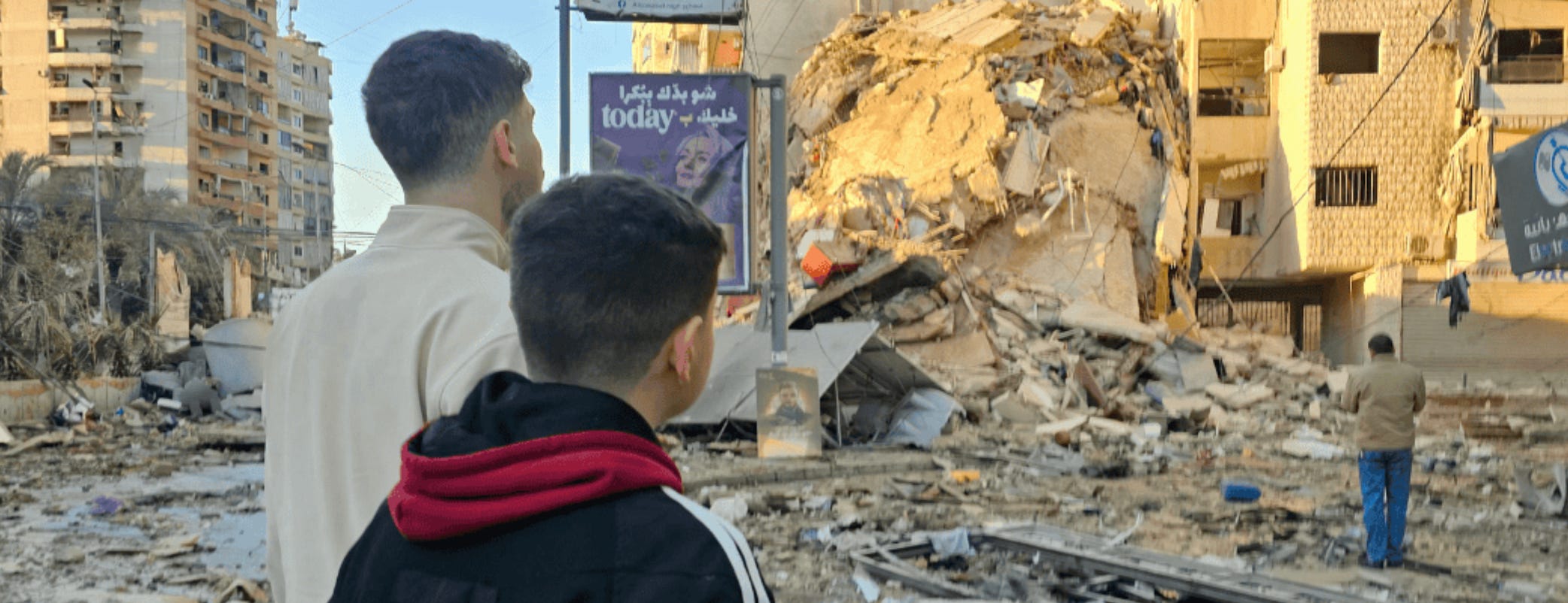
To destroy a people, you must destroy their capacity to heal. Three hospitals in southern Lebanon were struck by Israeli forces in under a week. On the 1 June, an Israeli strike hit Jabal Amel hospital in Tyre, killing four and injuring 127, the vast majority of them medical staff (Christou, 2026). The hospital director, Wael Mroueh, said: “We prepared ourselves psychologically that maybe some of our medical staff could be targeted, but a huge strike like this, in this way. We didn’t expect it” (Christou, 2026). Human Rights Watch documented 132 health workers killed across Lebanon (Human Rights Watch, 2026a). The BMJ concluded that Israel is using the “Gaza playbook” to systematically dismantle Lebanese healthcare (BMJ, 2026).
The pattern is not coincidental. Attacking hospitals, medical personnel, and ambulances is a war crime under the Geneva Conventions. It is also a strategy. A population without functioning hospitals cannot treat its wounded or survive prolonged bombardment. It is forced to flee or to die in place. The destruction of healthcare infrastructure is one of its primary instruments. When Ben Gvir says “all of Lebanon must burn,” the hospitals are part of what he means. The doctors are part of what he means. The 14-year-old girl waking from her coma in a ward that may itself be the next target: she is part of what he means.
“All of Lebanon Must Burn”: The War Crime of Unlawful Transfer
Not Hezbollah. Not the south. Not military infrastructure. Lebanon. The country. The people. In the 600 sq km “buffer zone” that Israel has carved into southern Lebanon, the metaphor has become literal. The Israeli military has used explosives and bulldozers to systematically demolish entire villages (Dziadosz, Osseiran and Cartier, 2026).
Amnesty International has concluded that Israel’s mass displacement orders, covering 20% of the entire country, an area of 2,000 sq km, coupled with explicit “don’t-come-back” orders, constitute the war crime of unlawful transfer under the Fourth Geneva Convention (Amnesty International, 2026a). Defence Minister Israel Katz stated plainly that these security zones will be “cleared of local residents” (Amnesty International, 2026a). That is the language of ethnic cleansing, spoken from the podium, without apology.
Over densely populated residential areas in Nabatieh and Yohmor, Israel has deployed white phosphorus, causing severe burns and igniting civilian infrastructure (The New York Times, 2026; Human Rights Watch, 2026b). Ben Gvir demanded that Lebanon must “burn.” His military has been the one burning it.
Subscribe to Notes From Plague Island and join our growing community of readers and thinkers.
Hawraa Ghadbouni returned to her home in southern Lebanon to find it in ruins. The next day, she was bombed out again. “We want to return, even if we have to sleep on the ground. What matters is going back. Life here is not sustainable” (Dziadosz, Osseiran and Cartier, 2026). Salha Srour, speaking to MSF teams, asked: “Why are our villages and homes being destroyed? It isn’t right to live like this” (MSF, 2026a). Wael al-Amin, a medic in Bedias, watched his children play in the street under the buzz of a drone overhead. He thought: “These are children. Who would target them?” Moments later, a blast tore through his brother’s house. His eight-year-old son was wounded. His brother was killed (Dziadosz, Osseiran and Cartier, 2026). This is what the burning of Lebanon means.
The Ideological Engine: The Arithmetic of Supremacy
Consider the specific language Ben Gvir chose. Not soldiers, combatants, or military assets. Mothers. Tears.
He reached past the entire apparatus of modern warfare, past generals, air strikes, ground offensives, and placed his demand squarely in the domestic, intimate, and civilian. International Humanitarian Law rests on the absolute principle of distinction between combatants and civilians (ICRC, 1977). Ben Gvir abolished that principle. By demanding the suffering of mothers, he made civilian pain the primary objective: not the regrettable by-product of military necessity, but the explicit, stated goal. The exchange rate is one to a thousand, which is the arithmetic of supremacy.
This is the exact psychological mechanism required to drop white phosphorus on a residential neighbourhood. Before a soldier can do that, someone must first tell him that the people below are worth less. That their suffering is not a tragedy but a transaction. Ben Gvir is that someone constructing the moral permission for a massacre.
The permission structure has a name. In October 2008, IDF Northern Command Chief Gadi Eizenkot stated publicly: “What happened in the Dahieh quarter of Beirut in 2006 will happen in every village from which shots will be fired in the direction of Israel. We will wield disproportionate power and cause immense damage and destruction. From our perspective, these are military bases” (Harel, 2008). The UN Fact-Finding Mission on the Gaza Conflict confirmed that this doctrine involves “the application of disproportionate force and the causing of great damage and destruction to civilian property and infrastructure, and suffering to civilian populations” and concluded it had been put into practice (UNHRC, 2009). It is already a violation of Article 33 of the Fourth Geneva Convention, which prohibits collective punishment (ICRC, 1949). Ben Gvir’s statement takes this doctrine, strips it of its military pretensions, and pushes it fully into the realm of genocidal intent. The Dahiya Doctrine sought deterrence through disproportionate destruction. Ben Gvir seeks annihilation through disproportionate suffering. The distinction is the difference between a war crime and a genocide.
Going “Berserk”: The State’s Disavowal of Law
“Enough with the ping-pong. In the Middle East, you don’t win with measured responses and restraint. You need to go berserk. To obliterate. To crush the terror.” (Rennolds, 2026).
That is a sitting minister of state publicly instructing his military to abandon the entire legal and moral architecture of modern warfare. Not as a slip of the tongue or hyperbole, but as policy.
This public rejection of constraint serves a specific, lethal function: it grants permission to the apparatus of the state. When the National Security Minister tells the military to “go berserk,” he is dismantling the internal barriers against committing war crimes. He is sending a signal down the chain of command that restraint is weakness, and obliteration is the only acceptable response. He is making atrocity the official policy of the state.
Julius Streicher did not build the gas chambers. He edited a newspaper. He wrote the words that told ordinary Germans that Jewish people were subhuman, that their suffering was deserved, that their destruction was necessary. At Nuremberg, the International Military Tribunal found him guilty of crimes against humanity on the basis of his words alone, ruling that his incitement to the extermination of the Jewish people constituted a crime regardless of whether he personally ordered a single killing (IMT, 1946). That judgment became the direct precedent for the Genocide Convention’s prohibition on incitement (Schabas, 2009): before a population can be exterminated, they must first be dehumanised, and the perpetrators must be given permission to act. Ben Gvir is operating from the cabinet table of a state actively engaged in mass civilian death. He is engaged in the same mechanism of verbal annihilation. He is Streicher with a ministry.
Ben Gvir does not operate in isolation. In October 2023, Prime Minister Netanyahu addressed IDF soldiers deploying to Gaza and invoked the biblical command to destroy Amalek: “You must remember what Amalek has done to you.” In the Book of Samuel, God commands the total annihilation of the Amalekites: every man, woman, child, infant, ox, sheep, camel, and donkey. Not defeat. Extermination. This is the theological framework being deployed to construct the permission structure for genocide. The International Court of Justice, in its provisional measures order of January 2024, specifically cited statements by Israeli officials, including this invocation of Amalek, as evidence of plausible genocidal intent (ICJ, 2024). The court did not treat these words as metaphor or political rhetoric; it treated them as evidence. Ben Gvir’s demand that Lebanon burn is the same logic, stripped of its biblical dressing and stated in plain language.
The instruction to “go berserk” is also a specific rejection of the concept of proportionality: the legal principle that the harm caused to civilians must not be excessive in relation to the anticipated military advantage. Proportionality is not a technicality. It is the foundational mechanism by which international humanitarian law attempts to preserve civilian life in wartime. To publicly instruct a military to abandon it is to publicly instruct that military to commit war crimes. Ben Gvir knows this but does not care.
The Machinery of Incitement
Ben Gvir has past convictions for inciting racism and supporting a terrorist organisation (United Nations, n.d.). Rather than marginalise him for these convictions, the state elevated him to the cabinet. He is the inevitable product of a political system that has spent decades rewarding the logic of supremacy with power.
The most chilling line in Ben Gvir’s statement is not the demand that Lebanon burn. It is this: “I told the Prime Minister, even in our private meetings: For every tear of an Israeli mother, a thousand Lebanese mothers must weep” (Rennolds, 2026). The genocidal rhetoric is the active policy advice being pushed inside the war cabinet. It is the language of the state speaking to itself, behind closed doors, deciding the fate of millions.
This is significant because it forecloses the most common escape route available to those who wish to defend the indefensible. When a politician says something monstrous in public, the apologists reach for the same toolkit: it was taken out of context; it was a moment of emotion; it does not reflect actual policy. Ben Gvir has closed that door himself. He told us, unprompted, that this is what he says in private. This is what he says to the Prime Minister. This is the policy advice he is actively pushing at the highest level of government. There is no context that softens it. There is no emotional register that excuses it. It is a sitting minister of state advocating, in private and in public, for the collective punishment of an entire civilian population.
Article 25(3)(e) of the Rome Statute is unambiguous: “direct and public incitement to commit genocide” is a crime (ICC, 1998). The precedent was set in blood. At the International Criminal Tribunal for Rwanda, radio broadcasters were convicted for their role in inciting the slaughter of Tutsis, not for pulling a trigger, but for speaking into a microphone (Wilson, 2015). The tribunal’s logic was precise: words can be weapons of mass destruction. The incitement is the crime. Ben Gvir did not speak into a radio in a small central African nation. Instead, he spoke from the cabinet of a nuclear-armed state to 4.5 million followers, while that state’s military was actively engaged in mass civilian death. The law and the precedent are clear — what is absent is the will to apply it.
The Complicity of Silence
US Representative Brad Schneider called Ben Gvir a “national disgrace” (Firstpost, 2026). The EU debated sanctions and, predictably, could not agree (Reuters, 2026). Meanwhile, Western governments continued to approve arms transfers to Israel, continued to veto and abstain on UN Security Council resolutions demanding a ceasefire, and continued to describe the slaughter in the language of “self-defence” and “complexity.”
This is not paralysis because paralysis is the inability to act. What we are witnessing is the active, deliberate choice not to act: a system that has decided its strategic interests outweigh the lives of Lebanese civilians and is simply waiting for the world to stop paying attention.
The absorption of Ben Gvir’s rhetoric into the daily news cycle is a structural choice. The political and media ecosystem has decided that the demand to burn an entire nation is an acceptable position for an allied minister to hold. The threshold of the unthinkable has not just been breached; it has been paved over. We have normalised the language of extermination.
The Western governments that continue to arm Israel, to shield it at the Security Council, and to describe its actions as “self-defence” are not neutral observers. They are participants. Every arms shipment approved after the publication of these findings is a political choice, as is Every veto cast at the UN, and statement of “deep concern” issued in lieu of action. The language of concern without consequence is permission.
The Arithmetic of the End
The rhetoric also serves a domestic function. It is a tool of internal cohesion for a fractured, embattled government. By projecting an image of absolute, uncompromising brutality outward, the state attempts to mask its internal vulnerabilities. The arithmetic of 1:1000 is a promise to a terrified populace that security can be achieved through the sheer volume of inflicted suffering. But it is a hollow promise. Security built on the ashes of a neighbouring country is not security, but a permanent state of war. It guarantees that the cycle of violence will not only continue but will escalate until the very concept of a civilian is erased from the map of the Middle East.
The death penalty law passed in March 2026, which explicitly designates Palestinians as subject to execution while exempting Israeli settlers from the same sanction, is the same logic applied domestically. The demand that Lebanon burn is the same logic applied regionally. It is one continuous project, and Ben Gvir is its most honest spokesman.
If a state can publicly declare that the lives of one group are worth a thousand times less than another, and the international community accepts this premise through its inaction, then the post-WWII consensus is not under threat. It is already dead.
The arithmetic of annihilation has been spoken aloud by those in power, and the world has chosen to look away. The tears of the mothers are not metaphorical, and the burning of the nation is not a figure of speech. They are the literal, documented reality of southern Lebanon today. The bulldozers are clearing the land, the phosphorus is burning the sky, and the hospitals are in ruins.
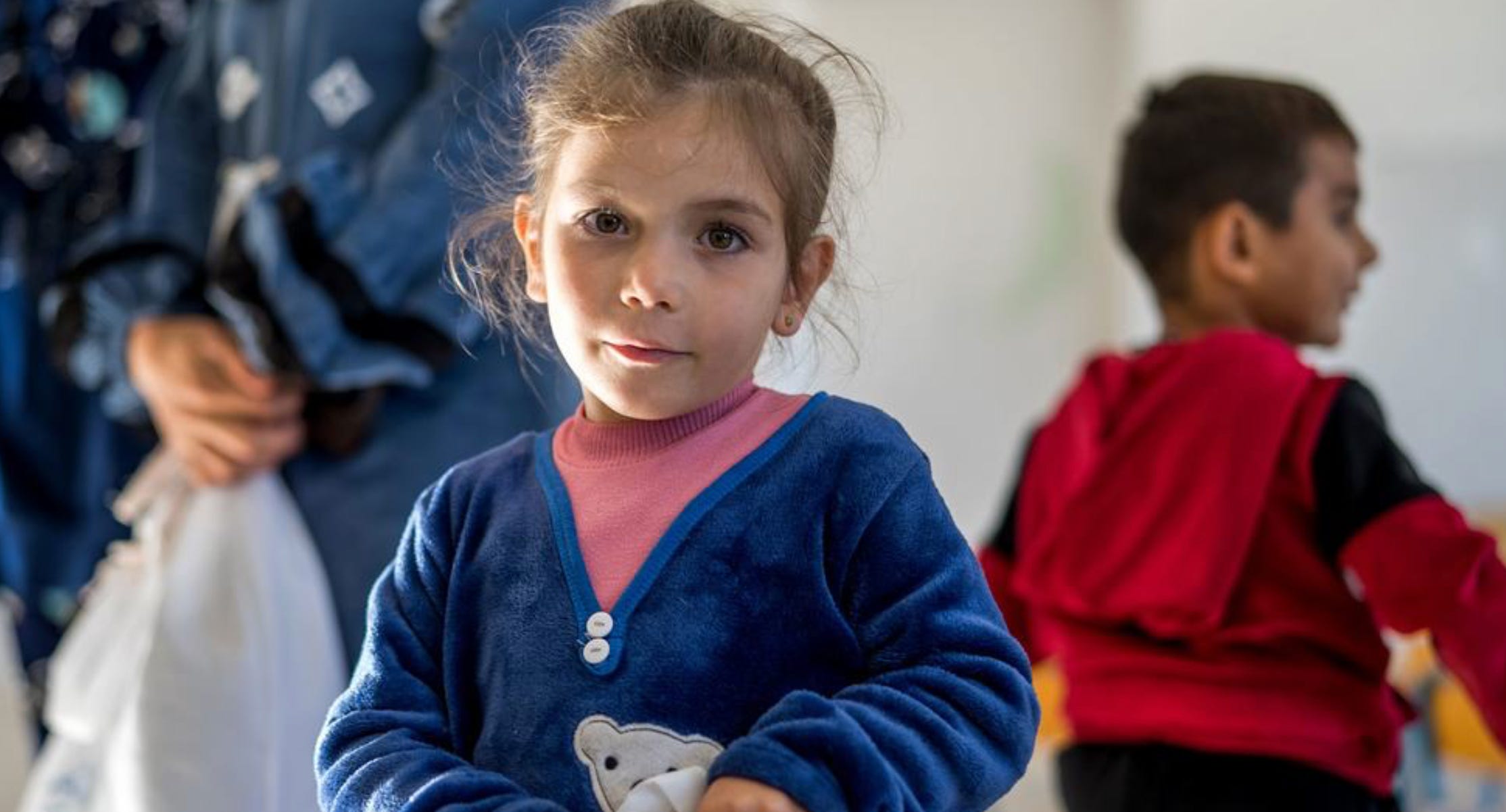
We have seen this before. In Gaza, the world watched the same sequence: the displacement orders, the white phosphorus, the hospitals bombed into rubble, the children counted in daily death tolls, the genocide findings issued by the UN and Amnesty and the ICJ, and the arms shipments continuing regardless. We watched it, named it, documented it in meticulous legal detail, and did nothing that mattered. Now the same state, emboldened by that exact same impunity, is pointing the machine north. Ben Gvir is announcing the extension of a genocide already in progress. We allowed it in Gaza. We are being asked, again, to allow it in Lebanon. The question the 14-year-old girl asked from her hospital bed is the same question history is asking of us now: where is humanity?
Or support us with a one-off tip → Buy Me a Coffee
References
Amnesty International (2024) Amnesty concludes Israel is committing genocide in Gaza. Available at: https://www.amnesty.org/en/latest/news/2024/12/amnesty-international-concludes-israel-is-committing-genocide-against-palestinians-in-gaza/ [Accessed: 19 June 2026].
Amnesty International (2026a) Lebanon: Israel radically expands use of unlawful mass ‘evacuation’ orders and commits war crime of unlawful transfer, 17 June. Available at: https://www.amnesty.org/en/latest/news/2026/06/lebanon-israel-radically-expands-use-of-unlawful-mass-evacuation-orders-and-commits-war-crime-of-unlawful-transfer/ [Accessed: 19 June 2026].
BMJ (2026) ‘Israel is using “Gaza playbook” to attack healthcare facilities in Lebanon’. Available at: https://www.bmj.com/content/392/bmj.s572.full.pdf [Accessed: 19 June 2026].
Chehayeb, K., Harb, M. and Hussein, B. (2026) ‘Residents return to war-ravaged southern Lebanon with hope and sorrow after the U.S.-Iran deal’, PBS NewsHour / Associated Press, 18 June. Available at: https://www.pbs.org/newshour/world/residents-return-to-war-ravaged-southern-lebanon-with-hope-and-sorrow-after-the-u-s-iran-deal [Accessed: 19 June 2026].
Christou, W. (2026) ‘Three Lebanese hospitals hit by Israeli forces in under a week’, The Guardian, 3 June. Available at: https://www.theguardian.com/world/2026/jun/03/lebanese-hospitals-hit-by-israeli-forces [Accessed: 19 June 2026].
Dziadosz, A., Osseiran, N. and Cartier, C. (2026) ‘How Israel has emptied southern Lebanon far beyond the front lines’, Reuters, 28 May. Available at: https://www.reuters.com/world/middle-east/how-israel-has-emptied-southern-lebanon-far-beyond-front-lines-2026-05-28/ [Accessed: 19 June 2026].
Firstpost (2026) ‘US Rep. Brad Schneider called Israeli Minister Ben-Gvir a national disgrace and a threat to Israel’s security’, Firstpost, 21 May. Available at: https://www.facebook.com/firstpostin/photos/us-rep-brad-schneider-called-israeli-minister-ben-gvir-a-national-disgrace-and-a/1501554555338860/ [Accessed: 19 June 2026].
Human Rights Watch (2026a) Israeli Displacement and Killings of Civilians in Lebanon Rage On, 11 June. Available at: https://www.hrw.org/news/2026/06/11/israeli-displacement-and-killings-of-civilians-in-lebanon-rage-on [Accessed: 19 June 2026].
Human Rights Watch (2026b) Lebanon: Israel Unlawfully Using White Phosphorus, 9 March. Available at: https://www.hrw.org/news/2026/03/09/lebanon-israel-unlawfully-using-white-phosphorus [Accessed: 19 June 2026].
ICC (1998) Rome Statute of the International Criminal Court. Available at: https://www.icc-cpi.int/sites/default/files/2024-05/Rome-Statute-eng.pdf [Accessed: 19 June 2026].
ICRC (1949) Geneva Convention (IV) on Civilians, 1949, Article 33. Available at: https://ihl-databases.icrc.org/en/ihl-treaties/gciv-1949/article-33/commentary/2025 [Accessed: 19 June 2026].
ICRC (1977) Protocol Additional to the Geneva Conventions of 12 August 1949, and relating to the Protection of Victims of International Armed Conflicts (Protocol I). Available at: https://ihl-databases.icrc.org/en/ihl-treaties/api-1977[Accessed: 19 June 2026].
Harel, A. (2008) ‘IDF plans to use disproportionate force in next war’, Haaretz, 5 October. Available at: https://www.haaretz.com/print-edition/news/analysis-idf-plans-to-use-disproportionate-force-in-next-war-1.254954[Accessed: 19 June 2026].
UNHRC (2009) Human Rights in Palestine and Other Occupied Arab Territories: Report of the United Nations Fact-Finding Mission on the Gaza Conflict [Goldstone Report], A/HRC/12/48. United Nations Human Rights Council. Available at: https://www2.ohchr.org/english/bodies/hrcouncil/docs/12session/A-HRC-12-48.pdf [Accessed: 19 June 2026].
MSF (2026a) Southern Lebanon: “Everyone is heartbroken”: 46 days under continuous attacks by Israeli forces, 28 April. Available at: https://msf.org.au/article/project-news/southern-lebanon-everyone-heartbroken-46-days-under-continuous-attacks-israeli [Accessed: 19 June 2026].
MSF (2026b) What to know about the crisis in Lebanon, 17 June. Available at: https://msf.org.au/article/project-news/what-know-about-crisis-lebanon [Accessed: 19 June 2026).
NHRCLB (2026) ‘Lebanon’s Displaced Face a New Battle: Hunger, Rising Prices, and Uncertainty’, 2 June. Available at: https://nhrclb.org/en/archives/7328 (Accessed: 19 June 2026].
OCHA (2026) Lebanon Flash Update #35: Escalation of hostilities in Lebanon (as of 15 June 2026). Available at:https://reliefweb.int/report/lebanon/lebanon-flash-update-35-escalation-hostilities-lebanon-15-june-2026 [Accessed: 19 June 2026].
OHCHR (2025) Israel has committed genocide in the Gaza Strip, UN Commission finds. Available at: https://www.ohchr.org/en/press-releases/2025/09/israel-has-committed-genocide-gaza-strip-un-commission-finds[Accessed: 19 June 2026].
Rennolds, N. (2026) ‘’All of Lebanon must burn,’ Israeli minister says after IDF reports four soldiers killed’, Euronews, 19 June. Available at: https://www.euronews.com/2026/06/19/all-of-lebanon-must-burn-israeli-minister-says-after-idf-reports-four-soldiers-killed [Accessed: 19 June 2026].
Reuters (2026) ‘No consensus for EU sanctions against Israel’s Ben-Gvir, top diplomat says’, Reuters, 15 June. Available at: https://www.reuters.com/world/no-consensus-eu-sanctions-against-israels-ben-gvir-top-diplomat-says-2026-06-15/[Accessed: 19 June 2026].
The New York Times (2026) What Visual Evidence Tells Us About Israel’s Use of White Phosphorus, 6 June. Available at: https://www.nytimes.com/2026/06/06/world/middleeast/white-phosphorous-israel-lebanon.html [Accessed: 19 June 2026].
UN News (2026) Lebanon: 12 children killed, maimed daily despite truce between Hezbollah and Israel, 17 June. Available at: https://news.un.org/en/story/2026/06/1167736 [Accessed: 19 June 2026].
United Nations (n.d.) Report of the Special Committee to Investigate Israeli Practices Affecting the Human Rights of the Palestinian People and Other Arabs of the Occupied Territories. Available at: https://www.un.org/unispal/document/report-of-the-special-committee-to-investigate-israeli-practices-affecting-the-human-rights-of-the-palestinian-people-and-other-arabs-of-the-occupied-territories-a-78-553-2/ [Accessed: 19 June 2026].
ICJ (2024) Application of the Convention on the Prevention and Punishment of the Crime of Genocide in the Gaza Strip (South Africa v. Israel), Provisional Measures Order, 26 January 2024. International Court of Justice. Available at: https://www.icj-cij.org/case/192 [Accessed: 19 June 2026].
IMT (1946) Trial of the Major War Criminals before the International Military Tribunal, Nuremberg, 14 November 1945 – 1 October 1946, Vol. 1. Nuremberg: International Military Tribunal. Reprinted in (1947) American Journal of International Law, 41(1), pp. 172–333.
Schabas, W.A. (2009) Genocide in International Law: The Crime of Crimes. 2nd edn. Cambridge: Cambridge University Press.
Wilson, R.A. (2015) ‘Inciting Genocide with Words’, Michigan Journal of International Law, 36(2). Available at: https://repository.law.umich.edu/mjil/vol36/iss2/2/ [Accessed: 19 June 2026].
This is a despicable war criminal period