Trump's Special Relationships: Britain, Epstein, and Iran

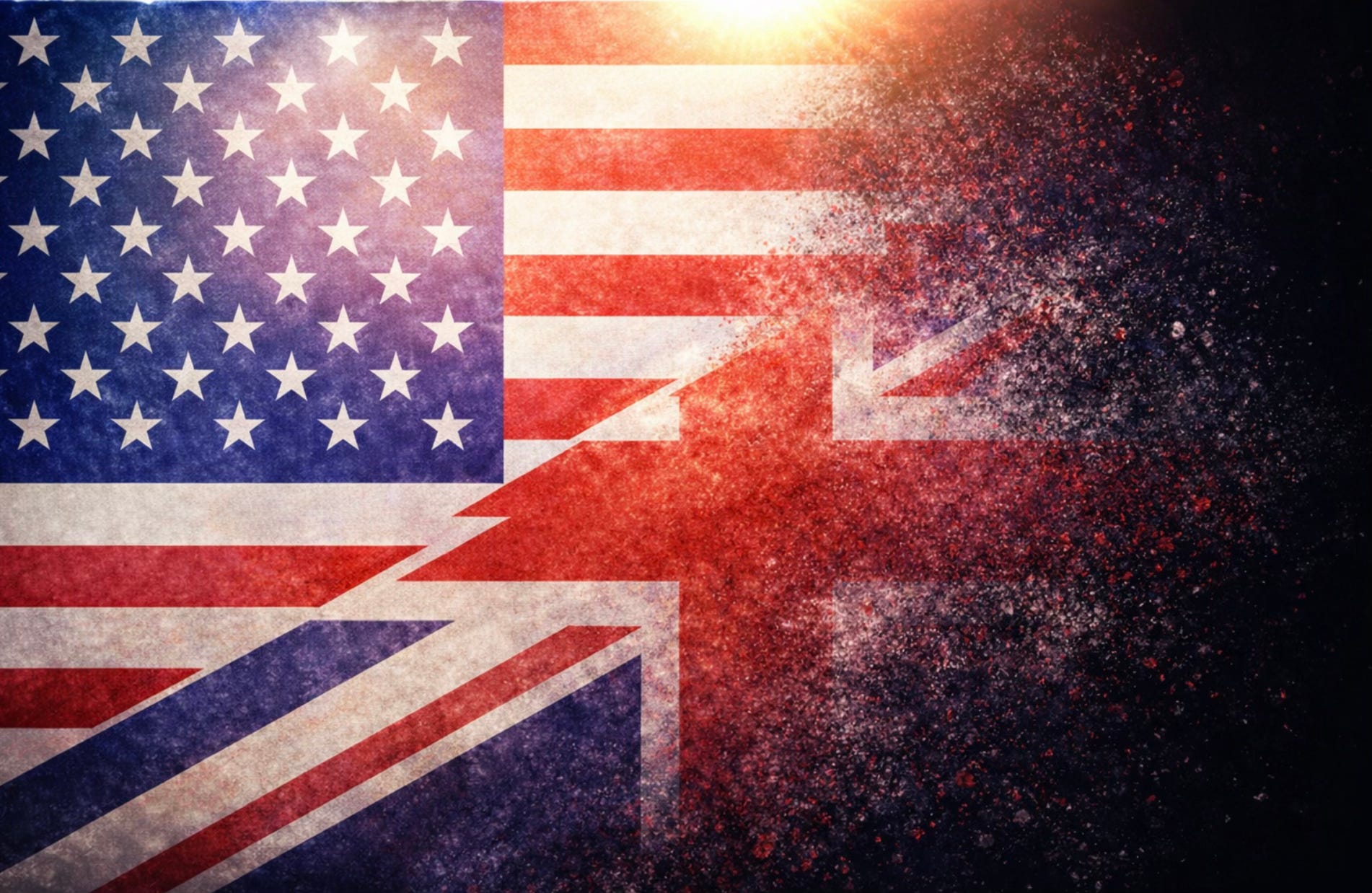
For generations, British leaders have spoken reverently about the “Special Relationship.” The phrase has become almost liturgical in Westminster, repeated whenever a prime minister travels to Washington, stands beside an American president, or pledges loyalty in another foreign war. It is a diplomatic comfort blanket, a way for Britain to imagine that it still occupies a unique place in global politics, long after the empire has crumbled and the economic engine has sputtered. It is, in the plainest possible terms, a story Britain tells itself. And like all comfortable stories, it has always required a careful avoidance of the facts.
The events of the last week have stripped the phrase of whatever remained of its dignity. Donald Trump has openly mocked Britain while simultaneously using British territory for his war with Iran. He criticised Keir Starmer for hesitating to support US strikes, dismissed Britain’s potential military assistance as unnecessary, and publicly compared Starmer unfavourably to Winston Churchill — the most condescending and deliberately humiliating comparison available in the Anglo-American diplomatic playbook (Gecsoyler and Badshah, 2026). The humiliation was complete: Washington using British bases at RAF Fairford in Gloucestershire and Diego Garcia in the Indian Ocean while telling the British government that its help was unwanted. Four B-1 Lancer bombers, each capable of carrying twenty-four cruise missiles, landed at Fairford on the morning of 7 March, while Trump was simultaneously mocking the man who had just granted him permission to use the runway (Gecsoyler and Badshah, 2026). If the “Special Relationship” ever existed as something more than mythology, it died in that moment.
Trump understands power in primitive terms. Loyalty must be demanded, not negotiated. Allies exist to demonstrate obedience. The language he uses towards Britain is revealing precisely because it is so unguarded. Praise is offered only to those who fall into line. Hesitation is treated as betrayal. Even the smallest act of independence becomes a public affront. In this sense, the “Special Relationship” now functions less as an alliance than as a carrot dangling from a stick, a crude form of emotional blackmail. Britain is invited to believe that it occupies a privileged place beside the United States, provided it behaves correctly. The reward for obedience is proximity to power. The punishment for hesitation is public humiliation. This is the reality of dealing with a man who views international relations as a protection racket, a transactional exchange where loyalty is extracted through coercion and threat, and where the language of friendship is deployed purely as a mechanism of control.
The illusion becomes even harder to maintain when viewed against Trump’s economic nationalism. There was no Special Relationship when Trump imposed 25% tariffs on British steel and aluminium exports, treating Britain’s industries with the same contempt he directed at the European Union (House of Commons Library, 2026). When it comes to trade, Britain is not a cherished partner but simply another competitor to be squeezed. The mythology of shared history dissolves quickly when American domestic politics demands a scapegoat. Special relationships rarely survive the arrival of tariffs. They certainly do not survive the predatory instincts of a bloated, failing capitalist system desperate to extract resources and dominance at any cost, lashing out at allies and adversaries alike in its terminal decline.
The Wound That Never Healed
Yet the deeper problem with the Special Relationship is older than Trump. The phrase helped justify one of the most catastrophic decisions in modern British foreign policy: the invasion of Iraq in 2003. To understand where we are now, we must be willing to look squarely at what happened then as an open wound that has never properly healed.
Britain followed the United States into a war built on lies. The weapons of mass destruction did not exist. The intelligence was manipulated, the legal case was fabricated, and the promised democratic transformation of the Middle East never arrived. The Chilcot Report, published in 2016 after seven years of investigation, found that Tony Blair had deliberately overstated the threat posed by Saddam Hussein, that the UK had failed to plan or prepare for the reconstruction of Iraq, and that the circumstances in which the decision to go to war was made were wholly inadequate (BBC, 2016). The report stopped short of declaring the war illegal, but it left no serious doubt about the moral catastrophe that had been committed in the name of the alliance.
Iraq was shattered. The estimates of the dead vary, but they are all devastating. Iraq Body Count documented between 187,000 and 211,000 civilian deaths from violence alone in the years following the invasion (Iraq Body Count, 2024). The Costs of War project at Brown University estimated that over 940,000 people were killed by direct war violence across the post-9/11 conflicts in Iraq, Afghanistan, Syria, Yemen, and Pakistan between 2001 and 2023 (Costs of War, 2023). The invasion created the conditions for the rise of ISIS, for the sectarian violence that consumed entire cities, for the displacement of millions of people who had no part in any of it. 179 British service personnel fought and died in a war whose legal and moral foundations were always deeply questionable (Independent, 2023). They were sent into battle on the basis of intelligence that was known to be unreliable, for objectives that were never clearly defined, in service of an alliance that offered Britain nothing in return except the hollow prestige of standing beside the most powerful military force on earth.
Think of the families who received the knock on the door. Think of the veterans who came home changed, or who did not come home at all. Think of the Iraqi children who grew up in the rubble of Fallujah and Mosul, who never knew a country that was not at war. Think of the mass graves, the torture chambers and the horrors of Abu Ghraib, the hospitals that ran out of medicine, the schools that were never rebuilt. Think of all of it and then ask yourself what the Special Relationship gave us in return. Ask yourself what it was worth.
The cost of the Special Relationship was paid in blood, Iraqi and British alike. And yet the language of loyalty endured. The phrase survived Chilcot. It survived the evidence of manipulation and deceit. It survived because the political class that had committed the crime needed it to survive, needed the mythology to remain intact, needed Britain to keep believing that the alliance was something more than a mechanism for dragging this country into America’s wars.
The Strategic Irrelevance Britain Cannot Admit
Ironically, Britain’s strategic usefulness to the United States has diminished precisely at the moment when British politicians still cling most tightly to the mythology. For decades, Britain served as Washington’s closest interlocutor inside the European Union, a country capable of translating American priorities into European politics, of shaping EU policy in directions that served American interests, and acting as Washington’s eyes and ears in Brussels. This was the real basis of the Special Relationship. Not sentiment. Not shared history. Not Churchill and Roosevelt. Strategic utility.
Brexit removed a large portion of that role overnight. Outside the EU, Britain has far less influence over European policy. The diplomatic leverage that once justified Washington’s special treatment has weakened considerably. If Britain can no longer shape Europe, its value to American strategy inevitably declines. Trump’s dismissive tone reflects that reality with brutal clarity. We are no longer a partner; we are a vassal state, useful only when our territory can be exploited for American military adventures, and dispensable the moment we hesitate to comply.
And this is where the current crisis with Iran becomes genuinely dangerous. Starmer agreed to allow the US to use RAF Fairford and Diego Garcia for what were described as “defensive” strikes on Iranian missile sites (BBC, 2026). The Ministry of Defence confirmed that the US had “started using British bases for specific defensive operations to prevent Iran firing missiles into the region” (Gecsoyler and Badshah, 2026). Those bases are now potential targets in any Iranian response. Britain could become a participant in a war it neither started nor supports, simply because it allowed its territory to be used. The man who demanded that permission then turned around and told the world that Britain’s help was not needed.
Subscribe to Notes From Plague Island and join our growing community of readers and thinkers.
If Britain’s assistance is genuinely unnecessary, then the question is this: Why should Britain assume the risk of retaliation for a war in which it has no meaningful role? Why should British citizens, British service personnel, and British infrastructure be exposed to Iranian missiles so that Donald Trump can prosecute a conflict whose stated objectives shift with every press briefing? The rationale for this war has changed constantly: regime change, nuclear deterrence, retaliation, defensive necessity (Olivares, 2026). Even American officials have struggled to articulate a single consistent explanation. Intelligence assessments already suggest that the bombing campaign is unlikely to achieve the regime change that some in Washington appear to desire, with shrinking weapon stockpiles and no credible plan for what comes after the strikes (Olivares, 2026).
If that sounds familiar, it should. The early stages of the Iraq war were also marked by confident predictions about rapid transformation and decisive outcomes. The architects of that disaster spoke with the same certainty, the same contempt for doubt, the same dismissal of anyone who questioned the intelligence or the legal basis. History rarely repeats itself neatly, but it rhymes with unnerving precision. The cost of that rhyme, as we have already seen, is measured in the lives of children.
On 28 February 2026, the first day of US and Israeli strikes on Iran, a school in Minab in southern Iran was hit. The Shajareh Tayyebeh girls’ elementary school. UNICEF confirmed that 168 girls were killed in the strike, children aged between eight and ten years old (UNICEF, 2026). US military investigators subsequently concluded it was likely that US forces were responsible, though the Pentagon declined to confirm a final determination (The Guardian, 2026). The White House press secretary responded by saying that “the Iranian regime targets civilians and children, not the United States of America,” a statement that, in the context of 168 dead schoolgirls, represents a moral obscenity of the highest order (The Guardian, 2026). Human Rights Watch called for the attack to be investigated as a war crime (Human Rights Watch, 2026).
Those girls had names. They had families. They had the rest of their lives ahead of them. They were killed on the first morning of a war that was launched without congressional authorisation, without UN approval, and without any serious strategy for what comes next (Khan, 2026). Their small coffins were draped with Iranian flags and passed across a crowd at a mass funeral. And the man who ordered the strikes was simultaneously demanding Britain’s unconditional loyalty while telling the world that Britain’s help was not needed.
The Man Behind the War
Donald Trump has built his political brand on moralising rhetoric about civilisation, strength, and national virtue. He presents himself as the defender of the West, the protector of the innocent, the scourge of corruption and depravity. He has done so while maintaining one of the most thoroughly documented associations with a convicted paedophile in modern political history.
Trump and Jeffrey Epstein moved in the same social circles for nearly fifteen years. In 2002, Trump told New York Magazine: “I’ve known Jeff for fifteen years. Terrific guy. He’s a lot of fun to be with. It is even said that he likes beautiful women as much as I do, and many of them are on the younger side” (New York Magazine, 2002). It was a public endorsement, offered freely, of a man who was at that time already known in certain circles for his predatory behaviour towards young girls. Trump knew. He said so himself, and he said it with a smile.
In March 2026, the Department of Justice published three FBI interview memos, so-called “302” documents, that had been missing from the massive trove of Epstein files released earlier in the year (Rabinowitz et al., 2026). The memos described interviews with a woman who told agents that Epstein had abused her physically and sexually starting when she was approximately thirteen years old. She also accused Trump of sexually assaulting her. According to the FBI summary, the woman said that Epstein introduced her to Trump in a tall building in New York or New Jersey when she was between thirteen and fifteen years old. Trump asked everyone to leave the room and “mentioned something to the effect of, ‘Let me teach you how little girls are supposed to be.’” He then, according to the woman’s account, forced her head down to his penis. When she bit him, he struck her and told those outside to “get this little bitch the hell out of here” (Rabinowitz et al., 2026).
Trump has consistently denied wrongdoing. The White House described the allegations as “completely baseless accusations, backed by zero credible evidence” (Rabinowitz et al., 2026). The woman ultimately declined to cooperate further with the FBI investigation, citing the likely expiry of the statute of limitations and fear of retaliation — she reported threatening phone calls and being run off the road on multiple occasions (Rabinowitz et al., 2026). The allegations are unverified. But the documents and the FBI interviews are real. The woman’s testimony, whatever its ultimate legal status, is real. And the proximity, the fifteen years of friendship, the shared parties, the public endorsements, is not in dispute.
Crucially, the accusation does not exist in a vacuum. It aligns with a decades-long, publicly documented pattern of misogyny and sexual violence. This is the man who was caught on tape in 2005 boasting about sexual assault: “I just start kissing them. It’s like a magnet. Just kiss. I don’t even wait. And when you’re a star, they let you do it. You can do anything. Grab ‘em by the pussy” (Nelson, 2016). This is the man who was found liable by a federal jury in 2023 for the sexual abuse and defamation of E. Jean Carroll, resulting in a combined $88.3 million in damages across two trials (Bernstein, 2023). Trump has spent his entire public life treating women as property to be acquired, used, and discarded. The FBI 302 documents do not describe an aberration, but the logical extreme of a worldview Trump has broadcast for half a century.
This is the man whose wars we are enabling, whose bombers are now sitting on a runway in Gloucestershire. If the Special Relationship has a face, this is it: a man credibly accused of the sexual assault of a thirteen-year-old girl, who described the paedophile who allegedly introduced them as a “terrific guy,” is now waging an illegal war in the Middle East while publicly humiliating the British prime minister.
The Epstein scandal is not a distraction from the political analysis. It is the political analysis. It is the clearest possible illustration of the system that produces men like Trump, where wealth and power confer total impunity, where the most powerful men in the world can do whatever they like to whoever they like, and where the institutions designed to hold them accountable are either captured or complicit. The same system that enabled Epstein’s network for decades is the system that put Trump in the White House, twice. The same logic of impunity that allowed powerful men to abuse children in Palm Beach and Manhattan is the logic that allows a president to bomb a girls’ school in southern Iran and have his press secretary deny responsibility within the hour.
Starmer Knows Better
This is where Keir Starmer faces a genuine test of leadership. It is another area where he is failing, spectacularly and without excuse. Starmer is not a naive man. He is a former Director of Public Prosecutions, a human rights lawyer who built his career on the principles of international law and the protection of the vulnerable. He knows what an illegal war looks like, and what the legal basis for military action requires. He knows the history of Iraq, the Chilcot findings, the cost in lives and in national credibility. He knows all of this, and he is choosing to ignore it. That is a choice that deserves to be named for what it is.
Starmer allowed the US to use British bases after initially resisting, citing the risk to British lives from Iranian retaliatory strikes in the region as the justification for his change of position (The Conversation, 2026). But this logic is circular and self-defeating. Britain is at risk from Iranian retaliation precisely because it is allowing its bases to be used for strikes on Iran. The risk does not justify the participation; the participation creates the risk. Starmer has walked Britain into a trap of his own making, and he has done so while being publicly mocked by the man he is trying to appease.
The cabinet meeting at which Starmer’s decision was discussed reportedly saw opposition from senior ministers including Yvette Cooper, Shabana Mahmood, Ed Miliband, and Rachel Reeves (Gecsoyler and Badshah, 2026). These are ministers closest to the decision, and they had doubts. Starmer overruled them. He then stood before the country and insisted that “all ministers” had supported the UK position, a claim that, according to The Guardian’s own reporting, was at best a creative interpretation of events (Gecsoyler and Badshah, 2026).
Sadiq Khan put it plainly: this is a “war of choice” being waged “unilaterally without any international consensus or UN approval, or any serious strategy as to what comes next” (Gecsoyler and Badshah, 2026). The question is why Starmer continues to act against his own better judgment, why he allows Trump to insult him and the country on the world stage, why he permits the use of British territory for a war that is almost certainly illegal, and why he does not simply withdraw permission and reclaim the sovereignty he is so casually surrendering.
The answer, of course, is the Special Relationship. The mythology is so deeply embedded in the political class that even a man of Starmer’s apparent intelligence and legal training cannot bring himself to repudiate it. The Special Relationship is not a strategic asset, but a psychological dependency and the fact is, if this war continues (there’s every indication it will) then Starmer will end up commit soldiers to Iran. He just seems to be waiting for a pre-text. It might end up costing us dearly, with our soldiers dying and being maimed in yet another American adventure, just so Starmer can have the optics of him standing shoulder-to-shoulder with Trump.
The End of the Illusion
The Special Relationship cannot function if one side openly mocks the other. It cannot work if the stronger party imposes tariffs on the weaker party’s industries, uses its territory for illegal wars, and then publicly dismisses its contribution as unnecessary. It cannot operate if the price of the relationship is the surrender of national sovereignty, the complicity in war crimes, and the willingness to be humiliated in public by a man who has been credibly accused of abusing a child.
Power relationships are not sustained by nostalgia. They are sustained by interests. The interests of the British people are not served by this alliance, not as it currently stands, not under these conditions, and not with this man.
We have been here before. We know the cost and how this will likely end. We counted it in the mass graves of Iraq, in the coffins of 179 British service personnel, in the shattered lives of the veterans who came home and found that the country they had fought for had moved on without them. We are counting it now in the small coffins of 168 Iranian schoolgirls, draped in flags, passed across a crowd in Minab. We will count it again, in whatever comes next, if we do not find the courage to say: enough.
The veneer of the Special Relationship is dead. History will record that the only special relationship Donald Trump ever truly maintained was the one with Jeffrey Epstein — a friendship of fifteen years, publicly celebrated, privately understood, and never properly accounted for. Britain would do well to remember that, the next time it is asked to stand beside him.
Or support us with a one-off tip → Buy Me a Coffee
References
BBC (2016) ‘Chilcot report: Tony Blair’s Iraq War case not justified’, BBC News, 6 July. Available at: https://www.bbc.com/news/uk-politics-36712735 [Accessed: 8 March 2026].
BBC (2026) ‘UK will allow US to use bases to strike Iranian missile sites’, BBC News, 1 March. Available at: https://www.bbc.com/news/articles/cqj9g11p1ezo [Accessed: 8 March 2026].
Bernstein, A. (2023) ‘Jury finds Trump liable for sexual abuse in E. Jean Carroll’s civil case’, NPR, 9 May. Available at: https://www.npr.org/2023/05/09/1175071486/jury-finds-trump-liable-for-sexual-abuse-in-e-jean-carrolls-civil-case[Accessed: 8 March 2026].
Costs of War (2023) ‘Human Costs of Post-9/11 Wars’, Watson Institute, Brown University. Available at: https://costsofwar.watson.brown.edu/costs/human [Accessed: 8 March 2026].
Gecsoyler, S. and Badshah, N. (2026) ‘Four US bombers land at RAF base in UK after warning of surge in strikes on Iran’, The Guardian, 7 March. Available at: https://www.theguardian.com/world/2026/mar/07/us-bomber-lands-in-uk-after-warning-of-surge-in-strikes-on-iran [Accessed: 8 March 2026].
Helmore, E. (2026) ‘Trump tells Starmer help not needed even as US uses UK bases for Iran strikes’, The Guardian, 7 March. Available at: https://www.theguardian.com/us-news/2026/mar/07/trump-starmer-iran-criticism [Accessed: 8 March 2026].
House of Commons Library (2026 ) ‘US trade tariffs’, UK Parliament, 27 February. Available at: https://commonslibrary.parliament.uk/research-briefings/cbp-10240/ [Accessed: 8 March 2026].
Human Rights Watch (2026 ) ‘US/Israel: Investigate Iran School Attack as a War Crime’, Human Rights Watch, 7 March. Available at: https://www.hrw.org/news/2026/03/07/us/israel-investigate-iran-school-attack-as-a-war-crime [Accessed: 8 March 2026].
Independent (2023) ‘Who were the 179 British soldiers who died during the Iraq War?’, The Independent, 20 March. Available at: https://www.the-independent.com/news/uk/home-news/iraq-war-uk-soldiers-deaths-b2303815.html[Accessed: 8 March 2026].
Iraq Body Count (2024) ‘Documented civilian deaths from violence’, Iraq Body Count. Available at: https://www.iraqbodycount.org/ [Accessed: 8 March 2026].
Khan, S. (2026 ) quoted in Gecsoyler, S. and Badshah, N. (2026) ‘Four US bombers land at RAF base in UK after warning of surge in strikes on Iran’, The Guardian, 7 March. Available at: https://www.theguardian.com/world/2026/mar/07/us-bomber-lands-in-uk-after-warning-of-surge-in-strikes-on-iran[Accessed: 8 March 2026].
Nelson, L. (2016) ‘”Grab ‘em by the pussy”: how Trump talked about women in private is horrifying’, Vox, 7 October. Available at: https://www.vox.com/2016/10/7/13205842/trump-secret-recording-women [Accessed: 8 March 2026].
New York Magazine (2002) ‘Jeffrey Epstein: International Moneyman of Mystery’, New York Magazine, 28 October. Available at: https://nymag.com/nymetro/news/people/n_7912/ [Accessed: 8 March 2026].
Olivares, J. (2026) ‘Shrinking weapon stockpiles and regime-change uncertainty: doubts shadow US-Israel war on Iran’, The Guardian, 7 March. Available at: https://www.theguardian.com/world/2026/mar/07/iran-us-israel-war-regime-change[Accessed: 8 March 2026].
Rabinowitz, H., Tolan, C., Reid, P. and Chapman, I. (2026) ‘Justice Department posts FBI interview memos related to Trump sex abuse allegation’, CNN, 6 March. Available at: https://www.cnn.com/2026/03/05/politics/justice-department-fbi-interview-related-trump-abuse-allegation-and-other-missing-epstein-files [Accessed: 8 March 2026].
The Conversation (2026) ‘Britain’s military presence in the Middle East — and how it could be dragged into war’, The Conversation, 1 March. Available at: https://theconversation.com/britains-military-presence-in-the-middle-east-and-how-it-could-be-dragged-into-war-277316 [Accessed: 8 March 2026].
The Guardian (2026) ‘US investigators believe strike on Iranian girls’ school probably carried out by US forces’, The Guardian, 6 March. Available at: https://www.theguardian.com/world/2026/mar/06/us-investigators-believe-strike-on-iranian-girls-school-likely-carried-out-by-us-forces [Accessed: 8 March 2026].
UNICEF (2026) ‘The brutality of war measured in children’s lives as hostilities escalate in Iran’, UNICEF, 6 March. Available at: https://www.unicef.org/eca/press-releases/brutality-war-measured-childrens-lives-hostilities-escalate-iran[Accessed: 8 March 2026].