
Trump’s Gestapo: ICE and the 53-Day Warning


Democracies die in three stages. First, the enemy is named. Then, the enemy is dehumanised. Finally, the enemy is eliminated. This is a historical pattern, a well-worn path from a free society to a fascist one. In a previous essay, we explored the chilling echoes of the Weimar Republic in our current political landscape, tracing the blueprint of democratic decay from 1920s Germany to the present day. We warned that the slow poison of lost legitimacy, the weaponisation of crisis, the erosion of the centre, and the seduction of the strongman were not relics of a buried past, but active threats to our own fragile democracies. That warning was a diagnosis of a present sickness. Now, we must examine one of the most alarming symptoms of that sickness: the transformation of a government agency into a political police force, loyal not to the law or the people, but to the will of a single man.
This is the story of how US Immigration and Customs Enforcement (ICE) under Donald Trump is becoming America’s Gestapo, a modern-day Geheime Staatspolizei for a would-be autocrat. The Brownshirts (SA) were the street thugs who brought Hitler to power; the Gestapo were the secret police who kept him there. Trump is in power now. The chaos of the rise is over; the consolidation has begun. ICE, an agency born from the ashes of 9/11, has been twisted into an instrument of political intimidation, racial animus, and state-sanctioned violence. By examining ICE’s recent actions, the chilling rhetoric of the President, and the specific, step-by-step mechanisms by which the Nazi Party consolidated its power, we can see the road to unfreedom being paved before our very eyes. This is a story about the death of a democracy.
ICE’s Transformation into a Political Police Force
The transformation of a state institution into a political weapon does not happen overnight. It is a gradual process of corrosion, a slow-motion demolition of norms, ethics, and legal constraints. For ICE, this process has accelerated dramatically under the second Trump administration, culminating in a year of unprecedented brutality and lawlessness. 2025 will be remembered as the year ICE declared war on the very communities it was sworn to protect, marking its transition from a troubled law enforcement agency to a full-blown instrument of terror.
The numbers alone tell a horrifying story. In 2025, a record number of 32 people died in ICE custody, a grim milestone not seen in two decades (Guardian, 2026). This surge in deaths was the predictable result of a deliberate policy of mass detention and calculated neglect. By mid-December, the agency was holding a staggering 68,440 people, 75% of whom had no criminal convictions (Guardian, 2026). These were not hardened criminals, but asylum seekers, DACA recipients, and families fleeing violence, swept up in indiscriminate raids and warehoused in a network of facilities rife with abuse. As Setareh Ghandehari of the Detention Watch Network stated, “This is a result of the deteriorating conditions inside of ICE detention” (Guardian, 2026).
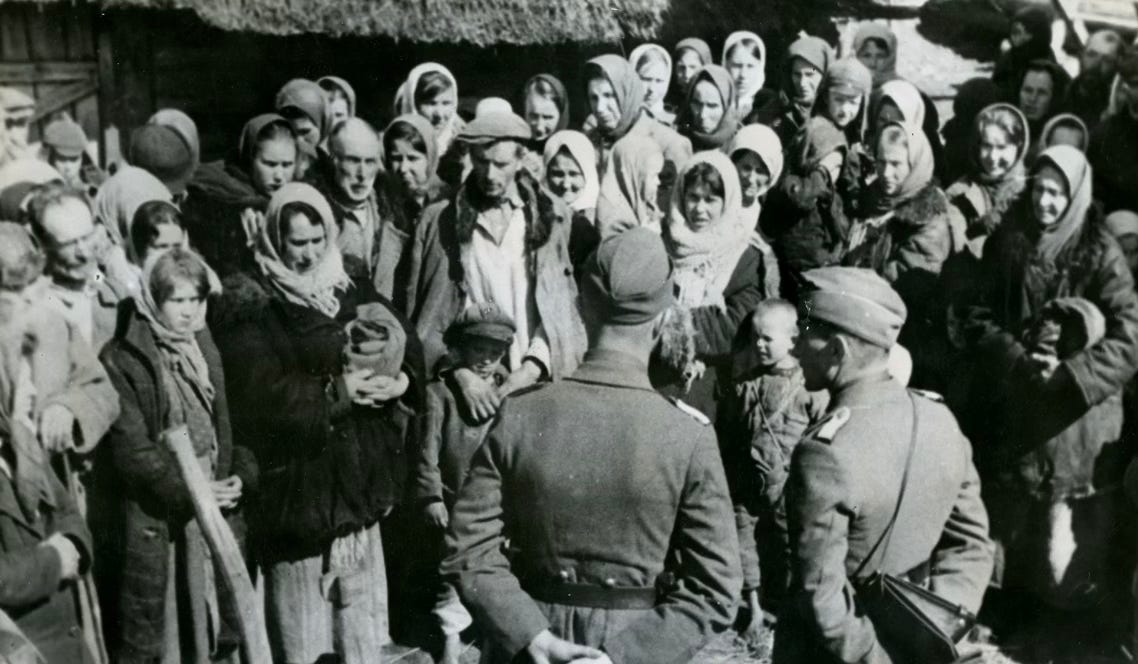
These deteriorating conditions became a death sentence for many. The causes of death read like a catalogue of institutional failure: seizure, heart failure, stroke, respiratory failure, tuberculosis, and suicide (Guardian, 2026). In numerous cases, families and advocates have alleged blatant medical neglect. The story of Maksym Chernyak, a 44-year-old Ukrainian who fled the war in his homeland only to die of a stroke in an American detention centre, is a case in point. An investigation by the Miami Herald raised serious questions about a delayed 911 call that could have saved his life (Guardian, 2026). Marie Ange Blaise, a 44-year-old Haitian woman, complained of chest pains, but detention staff allegedly refused to let her see a physician (Guardian, 2026). These are not isolated incidents; they are the predictable outcomes of a system designed to dehumanise and break its captives.
This network of deadly detention centres has a terrifying historical precedent. In the first months of 1933, before the official concentration camp system was established, the Nazi SA established hundreds of so-called “wild camps” (Wachsmann, 2015). With no blueprint, Nazi paramilitaries improvised, dragging up to 200,000 political opponents to makeshift prisons in basements, abandoned factories, and bars (Birkbeck, 2026). In these lawless spaces, SA guards — encouraged by their superiors to show “no mercy” — brutalised and tortured their captives. These were local “revenge camps” where the public could see the signs of torture on released prisoners (Birkbeck, 2026). The parallel is chilling: a state-sanctioned network of improvised, extra-legal holding pens where a designated enemy is subjected to systematic neglect and brutality, all while the state pumps out propaganda insisting the camps are tough but fair. The wild camps were the incubator for the Holocaust; ICE’s detention network is the laboratory for a new form of American cruelty.
The flashpoint for this simmering crisis arrived on January 7, 2026, with the fatal shooting of Renee Nicole Good, a 37-year-old American citizen, in Minneapolis (BBC, 2026a). The incident, captured on video, showed an ICE agent firing into Good’s car as she attempted to drive away. Police and fire department reports, obtained by CBS News, reveal the full horror: Good was shot at least three times: twice in the chest, once in the left arm, and possibly a fourth time in the head. Paramedics did not begin giving her care until five minutes after she was shot (BBC, 2026b). The Trump administration immediately claimed self-defence, but eyewitnesses and the video footage itself told a different story. Good’s death was a declaration which signalled that no one, not even a US citizen, was safe from the agency’s expanding mandate of violence. The shooting ignited a firestorm of protests across the nation, turning Minneapolis into the epicentre of a new resistance against federal overreach. In response, the administration deployed around 3,000 federal officers to the city, creating a climate of fear and intimidation that felt more like a military occupation than a law enforcement operation (BBC, 2026). The battle lines were drawn.
From Law Enforcement to Political Instrument
The death of Renee Good and the subsequent occupation of Minneapolis were the result of a deliberate strategy to transform ICE from a law enforcement agency into a political weapon. Under the direction of the White House, the agency has increasingly abandoned the pretence of impartial law enforcement, instead embracing a new role as the enforcer of a radical political agenda. This shift is most evident in its targeting of political dissidents, its casual disregard for the rights of American citizens, and the chilling pronouncements of the men who command it.
As scholar Lee Morgenbesser has documented, one of the defining characteristics of a secret police force is the targeting of political opponents (Morgenbesser, 2025). In 2025, ICE began to fit this description with alarming precision. Using the pretext of combating antisemitism, a branch of the agency once dedicated to fighting drug smugglers was repurposed to scan social media for voices sympathetic to the Palestinian cause (Morgenbesser, 2025). This digital surveillance quickly translated into real-world persecution. On March 8, prominent pro-Palestinian activist Mahmoud Khalil, a legal resident, was arrested. Days later, university student Rumeysa Ozturk was grabbed off the street by plainclothes agents (Morgenbesser, 2025). The legal justification for these actions was a McCarthy-era provision of the Immigration and Nationality Act allowing the deportation of anyone whose presence has “adverse foreign policy consequences” (Morgenbesser, 2025). As legal experts have pointed out, this is a thinly veiled attempt to retaliate against constitutionally protected free speech, punishing individuals not for their actions, but for their beliefs.
This slide into political policing has been accompanied by a shocking indifference to the most fundamental right of all: American citizenship. The concept of “collateral arrests,” which are the detention of individuals not originally targeted in a raid, has become a convenient excuse for sweeping up anyone who looks or sounds like the administration’s designated enemy. Tom Homan, Trump’s “border czar,” has openly admitted that “many” American citizens have been arrested by ICE under this pretext (BBC, 2026a). The Government Accountability Office has confirmed that hundreds of US citizens have been arrested and detained, and dozens illegally deported, though the true numbers are likely far higher due to the agency’s notoriously poor record-keeping (Morgenbesser, 2025). The Minnesota chapter of the ACLU has now filed a class action lawsuit against the Trump administration, citing the case of Mubashir Khalif Hussen, a 20-year-old US citizen who was walking to lunch on December 10 when he was stopped by multiple ICE agents. Despite repeatedly telling agents he was a citizen and offering to show them his ID, Hussen was taken into custody, shackled, and fingerprinted before finally being released (BBC, 2026b).
Subscribe to Notes From Plague Island and join our growing community of readers and thinkers.
It is a system of intentional terror, designed and implemented by the architects of Trump’s most draconian policies. Stephen Miller, the administration’s homeland security advisor, has been a key driver of this radicalisation. He reportedly ordered ICE to abandon targeted enforcement in favour of indiscriminate street-level raids at locations like “Home Depots or 7-Elevens,” a directive that critics have rightly identified as a mandate for racial profiling (Morgenbesser, 2025). The result has been a threefold increase in the targeting of Hispanic Americans (Morgenbesser, 2025). Homan, for his part, has articulated the philosophy of this new era of lawlessness with terrifying precision. He has asserted that ICE may detain people based on nothing more than “their physical appearance” and has declared that when it comes to making the country “safe,” “President Trump doesn’t have a limitation on his authority” (BBC, 2026). This is the language not of a public servant, but of a praetorian guard, loyal only to the whims of his master.
The Leader and His Army: Trump’s Rhetoric and the Insurrection Act
A paramilitary force, no matter how brutal, is merely a tool. To become a true threat to democracy, it requires a leader willing to wield it, a leader who sees the law as an obstacle to be overcome. In Donald Trump, ICE has found such a leader. Through his inflammatory rhetoric and his open contempt for legal and constitutional limits, Trump has personally directed the agency’s transformation, signalling to its agents that they are accountable only to him and that no action is out of bounds in service of his agenda.
Nowhere was this clearer than in his threat to invoke the Insurrection Act of 1807. In response to the protests in Minneapolis following the shootings of Renee Good and Julio Cesar Sosa-Celis, Trump took to Truth Social to declare that if local officials failed to crush the demonstrations, he would deploy the US military to do it for them (BBC, 2026). The Insurrection Act, a dusty legal relic intended for the most extreme national emergencies, would become a tool for suppressing domestic dissent. This was a promise to use the armed forces of the United States against American citizens on American soil, a move that would shatter the bedrock principle of the republic and place the country on a path toward martial law.
This fantasy of absolute power extends beyond the nation’s borders. In a series of chilling statements, Trump has openly entertained the idea of deporting not just immigrants, but American citizens, to foreign prisons. He has lauded the offer from El Salvador’s authoritarian president, Nayib Bukele, to house anyone the US wishes to detain — including its own citizens — in the notorious CECOT mega-prison, a facility infamous for human rights abuses (BBC, 2026). “If we had a legal right to do it, I would do it in a heartbeat,” Trump declared, musing that it would be a “great deterrent” (BBC, 2026). The illegality of such an action, a flagrant violation of the Constitution, was treated as a mere inconvenience to be explored and overcome. In a meeting with Bukele, Trump’s intentions became even more explicit. After discussing the illegal deportation of a non-citizen, Trump leaned in and promised, “Home-growns are next. The home-growns. You gotta build about five more places” (BBC, 2026).
“Home-growns.” Think for a moment about that. This is the language of a leader who no longer sees his fellow citizens as people to be governed, but as an enemy population to be controlled, contained, and, if necessary, expelled. By framing protestors as “professional agitators and insurrectionists” and American citizens as “home-growns” to be dealt with, Trump is performing the essential rhetorical work of the autocrat: he is dehumanising his opponents and defining them as outside the protection of the law. He is creating an “other” within the body politic, a group against whom any and all violence is justified. This ideological fuel would power the engine of state repression, giving a green light to the men with guns to do what was once unthinkable.
Trump has escalated his rhetoric further. On Truth Social, he declared that “the Troublemakers, Agitators, and Insurrectionists are, in many cases, highly paid professionals,” called the Minnesota Governor and Mayor “USELESS,” and warned: “If, and when, I am forced to act, it will be solved, QUICKLY and EFFECTIVELY!” (BBC, 2026b). Meanwhile, the violence on the ground continues. A family with six children, including a six-month-old baby, was tear gassed by ICE agents after getting trapped between federal officers and protesters. The baby stopped breathing and was foaming at the mouth; the mother gave CPR between her own gasps for air, telling CBS News: “I’m going to give you every breath I have until you get yours back” (BBC, 2026b). This is what Trump’s America looks like. Pure spite and cruelty made policy.
The Gestapo Playbook: The Tools of the Police State
To understand the danger of a politicised law enforcement agency, we must look to history. The Nazi seizure of power was not a sudden coup; it was a slow, methodical demolition of democracy from within, using the very tools of the republic to dismantle it. The Gestapo, created in April 1933, just three months after Hitler became Chancellor, was the key instrument of this consolidation. The parallels between its methods and ICE’s current operations are more than echoes. They are a direct replay of a well-worn playbook.
The Propaganda of Dehumanization: As the United Nations has warned, “Hate speech is an alarm bell - the louder it rings, the greater the threat of genocide. It precedes and promotes violence” (UN, 2025). This was the foundational tactic of the Nazi regime. Before the first shots were fired, before the first camps were built, the Nazis waged a war of words. Propaganda minister Joseph Goebbels and fanatics like Julius Streicher, publisher of the vile newspaper Der Stürmer, systematically dehumanised Jews, labelling them as “parasites,” “disease,” and “vermin” (UN, 2025). This was state policy, designed to strip an entire people of their humanity and moral consideration, making brutality and annihilation seem not only acceptable but necessary. When Trump rants about immigrants “poisoning the blood of our country,” calls his opponents “vermin,” or refers to human beings as “animals,” he is not being metaphorical. He is using the same well-honed tools of dehumanisation that have preceded mass atrocities throughout history. He is ringing the alarm bell.
The Big Lie: The entire German right, including the Nazis, built their movement on the “stab-in-the-back” myth — the lie that Germany’s army was not defeated in WWI but betrayed by a cabal of “November criminals” (Jews, Marxists, democrats) at home. As historian Christopher Browning notes, Hitler understood that “the masses more easily fall victim to a big lie than to a little one,” and that its power lay in “endless repetition without concession to contrary evidence” (Browning, 2022). Today, Trump’s “stolen election” narrative serves the exact same function. It is a foundational lie that delegitimises the democratic process itself, creating a permission structure for his followers to reject any outcome they dislike and view their political opponents as illegitimate usurpers.
Preventive Arrest and No Judicial Review: The Gestapo operated without civil restraints. It had the authority of “preventive arrest,” and its actions were not subject to judicial appeal (Britannica, 2026). Thousands of leftists, intellectuals, Jews, trade unionists, political clergy, and homosexuals simply disappeared into concentration camps after being arrested by the Gestapo. Consider the fate of Hans Litten, a young lawyer who had once humiliated Hitler on the witness stand. On the night of the Reichstag Fire, the Gestapo came for him. He was dragged from prison to prison, tortured for five years, and finally driven to suicide in Dachau in 1938. His crime was not violence or conspiracy; it was embarrassing the Führer. This is mirrored in ICE’s use of “collateral arrests” and its defiance of court orders. When Tom Homan admits that “many” American citizens have been arrested by ICE, he is describing a system of preventive arrest. When the agency targets activists like Mahmoud Khalil not for crimes but for their speech, it is following the Litten playbook: punishing those who dare to challenge the leader. When the agency ignores judicial rulings, it is asserting that it is above the law.
The Complicity of the Police: The regular German police were not all fanatical Nazis, but they were instrumental in Hitler’s consolidation of power. As the police became centralised under Nazi control, they were “Nazified,” their mission transformed from upholding the law to enforcing the Führer’s will (Britannica, 2026). They stood by as the SA brutalised political opponents, and they dutifully carried out arrests under the emergency decrees. This is the path ICE is on today. When ICE agents operate in plainclothes, when they defy court orders, when they arrest judges who try to intervene, they are showing their allegiance is not to the rule of law, but to the executive. They are transitioning from public servants to a political police force.
The Psychology of Complicity: How Ordinary People Become Killers
How does this happen? How do ordinary people become the instruments of atrocity? The answer is as disturbing as it is essential to understand. It does not require monsters, only ordinary people who are given permission to be cruel. Three key psychological studies reveal the mechanisms of complicity.
The Banality of Evil (Hannah Arendt): Reporting on the trial of Adolf Eichmann, the Nazi operative who organised the transportation of millions to the death camps, Hannah Arendt was struck by his sheer normality. He was, she wrote, “neither perverted nor sadistic,” but “terrifyingly normal.” He was a bland bureaucrat, a careerist motivated by a desire to advance within the system. His evil was “banal” because it was rooted not in monstrous ideology, but in “thoughtlessness;” an inability to think from the standpoint of others, a complete disengagement from the reality of his actions (White, 2018). He was a joiner, a man who drifted into the Nazi party for a sense of purpose, not out of deep conviction. The lesson: the most horrific deeds can be committed by people who are simply following procedures and not thinking about the consequences.
The Power of Conformity (Christopher Browning): In his groundbreaking book Ordinary Men, historian Christopher Browning studied the men of German Reserve Police Battalion 101, a unit of middle-aged, working-class men from Hamburg who were sent to Poland and became mass murderers. Browning discovered that these men were given a choice: they could opt out of the killings. Yet the vast majority did not. Why was this? Browning points to the immense pressure of conformity. To step out meant to separate oneself from one’s comrades, to be seen as “weak” or “cowardly” (Ethics Unwrapped, n.d.). Most of these ordinary men became “willing, although not enthusiastic, killers” simply because they did not want to be different.
Obedience to Authority (Stanley Milgram): In his infamous 1960s experiments, psychologist Stanley Milgram demonstrated that ordinary people would administer what they believed were painful, even fatal, electric shocks to a stranger simply because an authority figure in a lab coat told them to. A staggering 65% of participants went all the way to the maximum 450-volt shock (McLeod, n.d.). The key was the presence of an authority figure who took responsibility. When the experimenter said, “I am responsible for what happens here,” participants felt absolved of their own moral judgment. The lesson: when a leader gives the order, most people will obey, even if it violates their conscience.
These three forces: the thoughtlessness of the bureaucrat, the pressure to conform, and the instinct to obey authority create a powerful cocktail of complicity. They explain how an ICE agent can separate a child from her mother, how a detention centre guard can ignore a sick person’s pleas for help, and how a nation can slide into barbarism. It doesn’t take monsters. It just takes ordinary people who stop thinking, who want to fit in, and who do what they’re told.
Consider the ICE agent who fired into Renee Good’s car. Consider the agents who tear-gassed that family with a six-month-old baby. Were they sadists? Perhaps some were. But more likely, they were ordinary men who had been told that the people in front of them were “animals,” “vermin,” “invaders.” They had been told by their superiors that the President “doesn’t have a limitation on his authority.” They had been surrounded by colleagues who did not object. They had been absolved of responsibility by the chain of command. And so, they pulled the trigger. They threw the canister. They did what they were told. This is how atrocities happen: not through the actions of monsters, but through the abdication of conscience by ordinary people who convince themselves they are just doing their jobs.
The Fateful Alliance: Paramilitaries and Conservative Enablers
No democracy dies without the help of its own establishment. Hitler did not seize power alone; he was handed it by conservative elites who foolishly believed they could control him. President Hindenburg, who privately dismissed Hitler as a “Bohemian corporal,” ultimately appointed him Chancellor on January 30, 1933, to “overcome legislative gridlock and restore democratic procedures” (Ryback, 2024). They saw him as a useful tool to crush the left and dismantle the welfare state. They were catastrophically wrong.
This is the “fateful alliance” that political scientists Levitsky and Ziblatt warn of in How Democracies Die: the moment when mainstream political actors join forces with extremists, believing they can co-opt their energy without being consumed by their fire (Levitsky & Ziblatt, 2018). The Republican establishment’s embrace of Trump, their rationalisations for his behaviour, their willingness to look the other way at his most egregious abuses; this is the modern echo of Hindenburg’s fatal miscalculation. Where are the Republican senators as ICE defies court orders? Silent. Where are the “institutionalists” as the President threatens martial law against American citizens? Compliant. They tell themselves they are moderating him, channeling his energy toward legitimate ends. They are wrong. They are not riding the tiger; they are feeding it. And when the tiger turns on them, as it turned on the German conservatives who thought they could control Hitler, it will be too late.
In this alliance, the paramilitary force plays a crucial role. The SA, the Brownshirts, were the street-level enforcers of the Nazi movement. They were the ones who broke up the meetings of the Social Democrats, who brawled with communists, who terrorised Jewish citizens (Holocaust Explained, n.d.). Their violence created a climate of fear that made organised opposition impossible. They were the chaos agents that made Hitler’s promise of “law and order” seem so appealing. As the Holocaust Explained project notes, “The Nazi Party used these two forces [the SA and SS] to terrify their opposition into subordination, slowly eliminate them entirely, or scare people into supporting them” (Holocaust Explained, n.d.).
ICE is now playing this role for the Trump administration. The raids, the detentions, the public displays of force — they are not just about immigration enforcement. They are a form of political theatre, a demonstration of power designed to intimidate opponents and rally the base. When ICE agents conduct military-style raids on workplaces or enter schools under false pretences, they are sending a message: we can reach you anywhere. When they arrest activists and legal residents for their political speech, they are sending another: dissent will be punished. They are the chaos agents, manufacturing the very “crisis” at the border that the administration uses to justify its ever-expanding power.
The Immune System Awakens: Resistance in the Age of Trump
But the story is not over just yet. Just as the state’s machinery of repression has grown, so too has the resistance to it. Across America, in red states and blue, a powerful and diverse movement is rising to defend the targeted and disrupt the machine. This is the democratic immune system, kicking into gear.
The forms of resistance are as varied as the communities they spring from. In Chicago, a 49-year-old real-estate appraiser named Jose, who used to spend his free time performing in Gilbert and Sullivan productions, now chases ICE vehicles on his bicycle as part of a rapid response network. His group, Protect Rogers Park, organised neighbourhood assemblies and trainings to prepare for raids. They even started a book club and read Timothy Snyder’s On Tyrannytogether. “We’re going to outlast them,” he told The Guardian. “They can’t sustain this forever” (Wong, 2025). In the same city, Mark Selner, the owner of a fetish shop, gives away free whistles to help residents alert their neighbours to raids. He has distributed almost 400 of them. “I’ve been really angry because I was bullied when I was young, and these are bullies,” he said (Wong, 2025).
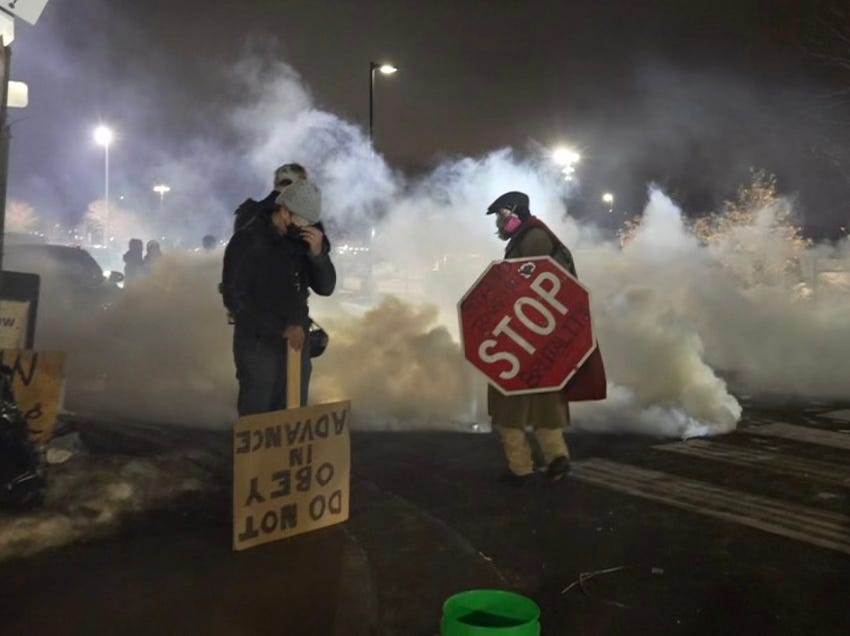
This resistance is not confined to liberal enclaves. In North Carolina, the grassroots group Siembra NC has created a hotline for reporting ICE activity and has published a downloadable playbook for organisers in red states. Their ICE-watch patrols have been so effective that, according to co-executive director Nikki Marín Baena, “in every case we worked on, when the agents realised they were being watched, they abandoned their stakeout” (Kolhatkar, 2025). In Texas, Vecinos Unidos DFW organises court-watching programs and works to prevent local police from collaborating with ICE. In Alabama, Bham Migra Watch alerts communities to raids. In Tennessee, Music City Migra Watch is leading a boycott of Avelo Airlines for its collaboration with ICE (Kolhatkar, 2025). In Los Angeles, a student named Miguel Montes noticed that patients at the hospital where he works were missing appointments because they were too afraid to leave their homes. He organised a grocery delivery program to bring food to families in hiding (Wong, 2025).
The killing of Renee Good ignited a national firestorm. More than 1,000 demonstrations were planned across the country in the days following her death (CNN, 2026). Large crowds took to the streets of Minneapolis shouting “ICE out now!” and “Renee Good, ICE bad!” (NPR, 2026). Democratic lawmakers have held a field hearing in Minneapolis titled “Kidnapped and disappeared: Trump’s deadly assault on Minnesota.” Representative Ilhan Omar declared: “There is no modern precedent for this level of federal violence, overreach, lawlessness carried out in the name of immigration enforcement.” Representative Angie Craig was blunter: “This administration isn’t looking for criminals. They are looking for black and brown neighbors” (BBC, 2026b). This is what a democracy fighting for its life looks like. It is ordinary people refusing to be bystanders, refusing to be complicit. They are the antibodies to the fascist virus.
Conclusion: The 53-Day Warning
On January 30, 1933, Adolf Hitler was appointed Chancellor of Germany. On February 27, the Reichstag building burned. On February 28, citing the fire as a pretext for a communist uprising, the government issued the Reichstag Fire Decree, suspending most civil liberties, including freedom of speech, press, and assembly, and allowing for indefinite detention without trial (Holocaust Explained, n.d.). On March 23, with the SA surrounding the opera house where the vote was held, the Reichstag passed the Enabling Act, effectively voting itself out of existence and granting Hitler the power to rule by decree (Holocaust Explained, n.d.). In just 53 days, a flawed but functioning democracy was dead.
The record deaths in custody. The targeting of political dissidents for their speech. The illegal detention and deportation of American citizens. The threat of martial law against protestors. The open discussion of shipping “home-growns” to foreign torture prisons. These are not the actions of a legitimate law enforcement agency operating within the bounds of a democratic system. They are the tactics of authoritarianism — already in America, already deployed, already claiming lives. America remains a democracy, but it is a democracy sliding fast, hemorrhaging the norms and institutions that once protected it. The regime is testing the limits of what it can get away with, probing for weaknesses, convinced that no one can stop it.
The parallels to the collapse of the Weimar Republic are no longer subtle or academic. A charismatic leader who treats the law as an obstacle. A manufactured sense of permanent crisis. The relentless demonisation of minorities and political opponents. The capture of state institutions by loyalists who answer only to the leader. The normalisation of violence against the “other.” The blueprint is being followed with chilling fidelity, and the destination is clear to anyone willing to see it.
The question is no longer whether it can happen in America. It is happening in America. The road to unfreedom is paved with the complicity of those who believe they can control the forces they unleash, and the silence of those who are too afraid, too comfortable, or too distracted to speak out. History offers no comfort to those who wait for someone else to act.
But history also teaches us that authoritarianism is not inevitable. The regime may believe it is unstoppable, but the resistance is building. In Chicago and Minneapolis, in North Carolina and Texas, in red states and blue, ordinary people are refusing to look away. They are chasing ICE vehicles on bicycles, blowing whistles, delivering groceries to families in hiding, and flooding the streets in protest. And Renee Nicole Good, a 37-year-old American citizen shot dead by her own government, may yet prove to be more than a tragedy. In 1933, the Reichstag Fire was the spark that burned down German democracy. But Renee Good’s death could be a different kind of spark: the one that ignites a fire of resistance, a fire that burns not the republic, but the authoritarian project that seeks to destroy it; a fire that torches the dead wood and allows something new to grow.
The echoes of Weimar are screaming. This time though, the American people are listening. This time, they are fighting back.
Or support us with a one-off tip → Buy Me a Coffee
References
BBC. (2026a). Trump threatens to invoke Insurrection Act to quell anti-ICE protests in Minnesota. BBC News. https://www.bbc.com/news/articles/cwy15596p98o
BBC. (2026b). Trump warns Minnesota protests will be dealt with ‘quickly’ as Democrats decry ICE raids. BBC News Live. https://www.bbc.co.uk/news/live/cwyg34kexrgt
Birkbeck, University of London. (2026). Early Camps. The Nazi Concentration Camps. https://www.camps.bbk.ac.uk/themes/early-camps.html
Britannica. (2026). Gestapo. Encyclopaedia Britannica. https://www.britannica.com/topic/Gestapo
Browning, C. R. (1992). Ordinary Men: Reserve Police Battalion 101 and the Final Solution in Poland. HarperCollins.
Browning, C. R. (2022). How Hitler’s Enablers Undid Democracy in Germany. The Atlantic. https://www.theatlantic.com/ideas/archive/2022/10/nazi-germany-hitler-democracy-weimar/671605/ [Accessed: 13th Jan 2026].
CNN. (2026). Nationwide protests after ICE agent’s killing of Minneapolis woman. CNN. https://www.cnn.com/us/live-news/minneapolis-ice-shooting-immigration-crackdown-01-10-26 [Accessed: 13th Jan 2026].
Ethics Unwrapped. (n.d.). German Police Battalion 101. University of Texas at Austin. https://ethicsunwrapped.utexas.edu/case-study/german-police-battalion-101 [Accessed: 15th Jan 2026].
Guardian. (2026). ICE closes 2025 as deadliest year in two decades. The Guardian. https://www.theguardian.com/us-news/ng-interactive/2026/jan/04/ice-2025-deaths-timeline [Accessed: 15th Jan 2026].
Holocaust Explained. (n.d.). The role of the SA and the SS. The Holocaust Explained. https://www.theholocaustexplained.org/the-nazi-rise-to-power/the-nazi-rise-to-power/sa-and-ss/ [Accessed: 16th Jan 2026].
Kolhatkar, S. (2025). Anti-ICE Resistance Sprang Up Across Red States in 2025. Truthout. https://truthout.org/articles/anti-ice-resistance-sprang-up-across-red-states-in-2025/ [Accessed: 16th Jan 2026].
Levitsky, S., & Ziblatt, D. (2018). How Democracies Die. Crown.
McLeod, S. (n.d.). The Milgram Shock Experiment. Simply Psychology. https://www.simplypsychology.org/milgram.html[Accessed: 16th Jan 2026].
Morgenbesser, L. (2025). How ICE is becoming a secret police force under the Trump administration. The Conversation. https://theconversation.com/how-ice-is-becoming-a-secret-police-force-under-the-trump-administration-255019[Accessed: 16th Jan 2026].
NPR. (2026). Anti-ICE protests across U.S. demand justice for Renee Good. NPR. https://www.npr.org/2026/01/10/nx-s1-5673229/ice-protests-minneapolis-portland-renee-good [Accessed: 16th Jan 2026].
Ryback, T. (2024). How Hitler Used Democracy to Take Power. Time. https://time.com/6971088/adolf-hitler-take-power-democracy/ [Accessed: 16th Jan 2026].
United Nations. (2025). From Words to Violence: Lives Behind the Fields of Death. UN Exhibits. https://www.un.org/en/exhibits/exhibit/from-words-violence [Accessed: 16th Jan 2026].