The Avignon Threat: How the Trump Project Tried to Capture the Church

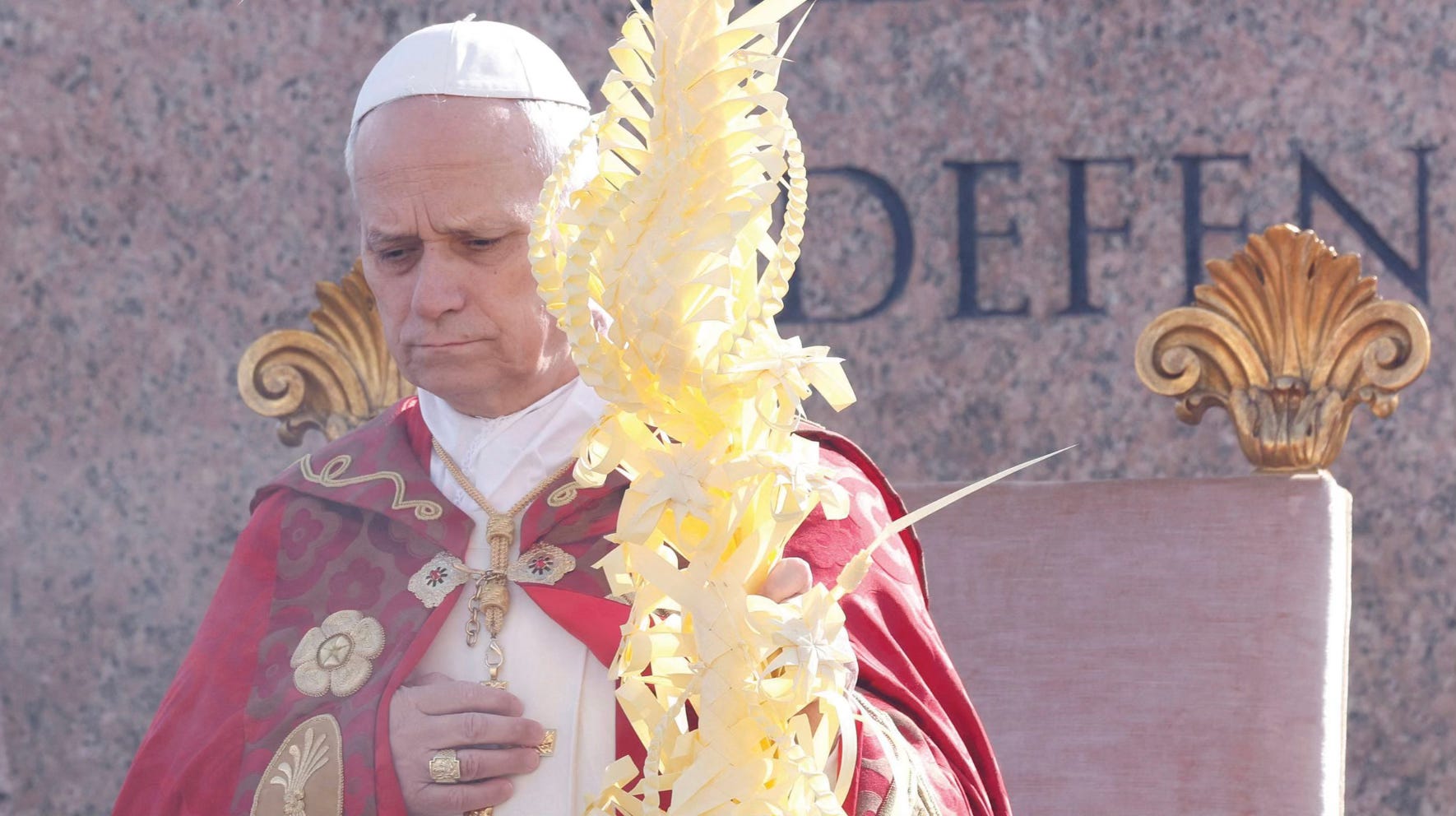
The words were spoken in Rome, but they were aimed directly at Washington. On Palm Sunday, 29 March 2026, Pope Leo XIV presided over a prayer vigil in St. Peter’s Basilica. He did not name the American president, he did not need to, because the target of his moral outrage was unmistakable.
“Enough of the idolatry of self and money!” the Pope declared. “Enough of the display of power! Enough of war!” (Winfield, 2026a). He then turned his attention to the specific rhetorical strategy that the Trump administration has used to sanitise its violence in the Middle East. He denounced the “delusion of omnipotence” that fuels the conflict, warning that “even the holy Name of God, the God of life, is being dragged into discourses of death” (Winfield, 2026a).
Rather than a theological dispute, this is a struggle over who gets to define morality. The Trump administration, armed with the deadliest weapons in human history, is attempting to monopolise the language of righteousness to justify a war of choice. The head of the Catholic Church, an American himself, is refusing to let them have it.
The conflict between the Vatican and the White House exposes the central hypocrisy of the Trump project: its cynical, transactional use of religion as a tool of state power. When the administration demands that the Church bless its wars, and the Church refuses, the scripture runs dry. What remains is not faith, but a demand for submission so absolute that it has reportedly led the Pentagon to threaten the Vatican itself.
The Trump Project: War Framed as Destiny
To appreciate the depth of this clash, we must first understand how the Trump administration talks about violence. Instead of the language of reluctant necessity or strategic deterrence, it is the language of holy war.
Nowhere is this more evident than in the rhetoric of Defense/War Secretary Pete Hegseth. Hegseth is the ugly, militant id of the administration’s Christian nationalism. He bears a “Deus Vult” (God wills it) tattoo, a crusader slogan that he has described as a call for followers of Christ to “take up the sword in defense of their faith, their families, and their freedom” (Jones, 2026). He carries a Bible with the Jerusalem Cross and “Deus Vult” stamped on the cover (Kaylor, 2026). The tattoo and the Bible have become a uniform.

Hegseth views the military which he oversees as a spiritual force. He presides over monthly Christian worship services at the Pentagon, the first such events in the building’s history (Jones, 2026). In his book American Crusade, he explicitly links American identity to Christian violence, writing that “American Crusaders must lead the cultural fight” against Muslims, communists, and trans people (Jones, 2026).
When the war with Iran escalated, Hegseth’s rhetoric reached a fever pitch. On 25 March 2026, during a Pentagon worship service, he prayed directly for God to pour out “overwhelming violence of action against those who deserve no mercy” (Kaylor, 2026). The prayer was read from a script and had previously been delivered to bless the military operation in Venezuela in January. He then applied it to Iran. The full text is worth sitting with for a moment, because it clearly reveals the distorted theology at the heart of this administration:
“Break the teeth of the ungodly. By the blast of your anger, let the evil perish. Let their bulls go down to slaughter for their day has come, the time of their punishment. Pour out your wrath upon those who plot vain things and blow them away like chaff before the wind. Give them wisdom in every decision, endurance for the trial ahead, unbreakable unity, and overwhelming violence of action against those who deserve no mercy. Preserve their lives, sharpen their resolve, and let justice be executed swiftly and without remorse that evil may be driven back and wicked souls delivered to the eternal damnation prepared for them.” (Kaylor, 2026)
This is the language of a crusade. The writer Brian Kaylor, who watched the service, noted that the prayer was the second most violent he had ever encountered, surpassed only by Mark Twain’s satirical The War Prayer, written as a critique of exactly this kind of religious bloodlust (Kaylor, 2026). The difference is that Twain was being ironic. Hegseth was not.
The prayer was accompanied by an equally explicit verbal declaration. Hegseth told the American public to pray for victory over the Iranian regime “in the name of Jesus Christ,” urging them to do so “every day, on bended knee, with your family, in your schools, in your churches” (Barrow, 2026). He has described the war as a conflict between a Christian nation and its enemies, and he has invoked his faith to cast American military power as an instrument of divine will.
Trump himself, when asked by a reporter whether he believed God approved of the war, replied: “I do, because God is good — because God is good and God wants to see people taken care of” (Barrow, 2026). The Rev. Franklin Graham, son of the iconic Baptist evangelist Billy Graham, declared that God had “raised him up for such a time as this,” and prayed for victory so that Iranians could “be set free from these Islamic lunatics” (Barrow, 2026).
Then, on 7 April 2026, Trump posted on Truth Social what may be the most nakedly genocidal statement ever made by a sitting American president. “A whole civilization will die tonight,” he wrote, “never to be brought back again” (Trump, 2026). The post was framed as a warning to Iran to reopen the Strait of Hormuz, but the language was akin to a man who had convinced himself that destruction was righteous, and that God was watching approvingly.
This is the “delusion of omnipotence” that Pope Leo XIV condemned. It is the belief that American military power is an extension of divine will, and that the annihilation of a sovereign state is a righteous act of purification. Hegseth uses God as a weapon; Leo uses God as a limit.
The Hollow Faith of J.D. Vance
If Hegseth provides the militant crusader imagery, Vice President J.D. Vance provides the intellectual hypocrisy. Vance’s highly publicised conversion to Catholicism in 2019 was celebrated by the New Right as a sign of intellectual seriousness, evidence that the MAGA movement had a philosophical depth beyond its most brutish instincts. But his faith, when tested against the demands of the Trump project, is revealed as a hollow performance, an aesthetic choice rather than a moral compass.

Vance did not simply join a parish and start going to Mass. He entered an intellectual world immersed in post-liberal Catholic thought — a movement associated with thinkers like Patrick Deneen, Sohrab Ahmari, and Adrian Vermeule, who argue that liberal democracy has failed and that the state should be guided by Catholic social teaching. This is Catholic integralism: the belief that religious values, specifically Christian ones, should guide government policies (Lecaque, 2026). It is a seductive framework for an ambitious politician, because it provides a sophisticated theological vocabulary for authoritarian politics.
The problem, which Vance has never satisfactorily resolved, is that the actual Catholic Church — including two successive popes — has consistently rejected the specific applications of this framework that the Trump administration favours. The Church’s opposition to the war in Iran, its defence of migrants, its insistence on the dignity of the poor: these are not liberal positions imported from outside the tradition. They are the tradition.
Vance has repeatedly attempted to extract moral authority from the Church to serve the state. In early 2025, he tried to use the Catholic theological concept of ordo amoris, the order of love, derived from St. Augustine and developed by St. Thomas Aquinas, to justify the administration’s draconian immigration policies and mass deportations. In a Fox News interview, he argued that Christian love requires prioritising one’s own citizens over foreigners: that the duty of love moves outward in concentric circles, from family to community to nation, and that this hierarchy justifies excluding the stranger (McKeown, 2025).
Before he was even elected Pope, Cardinal Robert Prevost — the man who would become Leo XIV — had already weighed in on this argument. On 3 February 2025, he posted on X, linking to a National Catholic Reporter editorial with the headline “JD Vance is wrong: Jesus doesn’t ask us to rank our love for others” (Pereira, 2025). He broke a period of silence on social media specifically to make this point. A man who had not posted on X since July 2023 returned to the platform to tell the Vice President of the United States that he had misread the Gospel.
The Vatican’s formal response was swift and devastating. In a February 2025 letter to US bishops, Pope Francis explicitly rebuked Vance’s interpretation. Francis wrote that the true ordo amoris is discovered by meditating on the parable of the Good Samaritan, “that is, by meditating on the love that builds a fraternity open to all, without exception” (McKeown, 2025). The Pope added, pointedly: “Christian love is not a concentric expansion of interests that little by little extend to other persons and groups” (McKeown, 2025).
Vance’s reaction to this papal reprimand was exposing. He told conservative radio host Hugh Hewitt, “I try not to play the politicization of the Pope game” (Politico, 2025). This is precisely what a man says when he has lost the theological argument and knows it. He does not derive his moral authority from the Church; he attempts to use the Church to launder his political ambitions. When the Vicar of Christ contradicts his political imperatives, the faith is discarded.
The pattern has continued into the Iran war. When the Pentagon meeting with the Vatican’s ambassador became public knowledge in April 2026, Vance said only that he would “look into it,” a response so deliberately vague as to be meaningless (Newsweek, 2026). He did not condemn the reported threats or defend the Pope’s right to speak freely. He offered the same studied non-answer that he always offers when his Catholicism is put to a genuine test: a shrug dressed up as prudence.
This is the question that Vance cannot answer, and that the media has been too polite to press: where does he get his moral authority from? If it comes from the Catholic Church, then he must answer to the Pope. If it does not come from the Church, then his conversion is a costume, nothing other than a way of signalling intellectual seriousness to a certain kind of conservative voter, while practising a politics that the Church explicitly condemns. The Pope chided him on immigration, the treatment of migrants, and on the war in Iran. At what point does a Catholic politician who has been repeatedly corrected by the Pope acknowledge that he is not, in any meaningful sense, following his faith? The answer, of course, is that he will not because the faith was never the point.
Subscribe to Notes From Plague Island and join our growing community of readers and thinkers.
Leo XIV: A Moral Counterweight
It is crucial to understand that Pope Leo XIV is not a progressive hero or a liberal ally. He is a traditionalist whose opposition to the war reflects established church teachings, not the reflexive politics of the moment. As Catholic University professor William Barbieri noted, the Church has spent five centuries helping to develop strong international norms, a tradition “rooted in Scripture and theology and philosophy” (Barrow, 2026). The Pope’s opposition to the war is not a political statement. Rather, it is the application of a moral framework that pre-dates the United States by fifteen centuries.
Leo XIV was born Robert Francis Prevost on 14 September 1955 in Chicago, Illinois. He joined the Order of Saint Augustine in 1977 and was ordained a priest in 1982. He spent more than a decade as a missionary in Peru, working in poor, rural communities far from the corridors of power. He later led the Augustinian order globally and served as Pope Francis’s Prefect for recommending bishop appointments around the world. This role that gave him a view of the global Church and its relationship with political power in every corner of the planet (Vatican News, 2025).
When the College of Cardinals elected him in May 2025, Trump welcomed the news as “a great honor for our country” (Barrow, 2026). The administration assumed, as it assumes about everything, that an American pope could be a useful American asset. But Leo’s global experience — his years in Peru, his oversight of bishops across the developing world, his first-hand knowledge of how Washington’s economic and military policies affect less powerful nations — had given him a perspective that no amount of transactional thinking could accommodate.
Leo’s power in this narrative stems precisely from his structural position. He is the head of an institution that claims universal moral authority, and he is using that authority to contradict the American empire’s claim to divine endorsement. When Trump threatened to destroy Iranian civilization, Leo called the threat “truly unacceptable” and said any attacks on civilian infrastructure violate international law (Barrow, 2026). When Hegseth prayed for overwhelming violence, Leo told Chaldean Catholic bishops gathered in Rome — senior clerics of an Aramaic-speaking Iraqi Christian church whose communities have been devastated by decades of American-backed conflict — to “proclaim clearly that God does not bless any conflict; to cry out to the world that whoever is a disciple of Christ, the Prince of Peace, never stands on the side of those who yesterday wielded the sword and today drop bombs” (Winfield, 2026b).
In his Palm Sunday message, Leo went further still, quoting the Book of Isaiah directly: “even though you make many prayers, I will not listen — your hands are full of blood” (Barrow, 2026). This is a direct theological reproach of the administration’s claim that God endorses the war. The line from Isaiah was chosen deliberately. It is a passage about rulers who perform religious rituals while committing atrocities, who believe that prayer can sanctify violence. Leo was saying, in the plainest possible terms, that Hegseth’s war prayers are an abomination.
Theology professor Natalia Imperatori-Lee of Fordham University described the moment: “Popes have critiqued unfettered capitalism before, very robustly. The popes have critiqued the Industrial Revolution, right? Things that the U.S. has been at the forefront of. But it’s never been this specific and localized” (Barrow, 2026). The fact that Leo is a native English speaker removes any ambiguity from his words. There is no translation to hide behind, no cultural distance to exploit. When Leo says, enough of war, every American Catholic — and every American — understands exactly what he means and exactly who he is addressing. This is a line-by-line refutation of the Trump project. It is a refusal to allow the language of faith to be co-opted by the machinery of war.
The Avignon Threat: The Empire Demands Submission
The administration’s response to this moral resistance reveals the true nature of its authoritarianism. It wholly disagrees with the Pope and views independent moral authority as a threat to be neutralised. In January 2026, a closed-door meeting took place at the Pentagon between US defense officials and Cardinal Christophe Pierre, the Vatican’s outgoing ambassador to Washington. The meeting occurred after Leo had delivered a major foreign policy address to diplomats accredited to the Holy See, that included what the AP described as a “strong but veiled criticism” of US military intervention (Winfield, 2026b). According to reports, an American official warned the ambassador that the United States has the military power to do whatever it wants in the world, and the Catholic Church had better take its side (Lecaque, 2026). The most intimidating detail of the meeting was the reported invocation of the “Avignon Papacy” (Lecaque, 2026).
For those unfamiliar with 14th-century history, the Avignon Papacy refers to a period when a series of French popes resided in Avignon rather than Rome, effectively serving as extensions of the French monarchy. This arrangement did not arise peacefully. It began after the King of France sent his minister, Guillaume de Nogaret, to beat Pope Boniface VIII and hold him captive in retaliation for excommunicating the king. Boniface died shortly afterwards. His successor, Benedict XI, lasted only eight months before also dying suddenly. The next pope, Clement V, was the Archbishop of Bordeaux and a personal friend of the French king. He moved the papacy to Avignon, where it remained for nearly seventy years, a period which historians sometimes call the “Babylonian Captivity” of the Church (Lecaque, 2026).

To invoke Avignon in a meeting at the Pentagon is a mafia-style threat, a reminder that empires can break popes. The implication was unmistakable: comply or face the consequences. As Thomas Lecaque, an Associate Professor of History at Grand View University, wrote in Religion Dispatches: “it’s easy to see how an invocation of Avignon is a (very) thinly-veiled threat of violence” (Lecaque, 2026). The threat was taken seriously enough that Vatican officials reportedly shelved plans for Pope Leo XIV to visit the United States later in the year for the celebration of America’s 250th anniversary (Lecaque, 2026). The first American pope was effectively told he was not welcome in his own country.
The Vatican, for its part, issued a careful statement saying that the meeting “does not correspond to the truth in any way” in the characterisation given by media reports, and that Pierre’s attendance was part of his “regular duties” (Winfield, 2026b). The US Embassy to the Holy See echoed this, calling the reports a “deliberate misrepresentation.” Both statements were notably careful: they disputed the characterisation of the meeting, not the fact of it. The meeting happened; what was said in the room remains contested.
What is not contested is the broader pattern of behaviour. This is an administration that has threatened to deport legal residents, used the apparatus of the state to intimidate judges, journalists, and political opponents, and has sent its Defense/War Secretary to pray for the eternal damnation of its enemies. The idea that it would also send a message to the Vatican that the Pope had better fall into line is not, in the context of everything else this administration has done, remotely surprising.
An American Pope vs. an American Empire
There is a profound irony in the fact that the most prominent voice challenging American militarism today belongs to the first American pope. Leo XIV, a 70-year-old from Chicago, and Donald Trump, a 79-year-old from Queens, two white boomers from the same generation who represent jarringly distinct approaches to vast power (Barrow, 2026). They grew up in the same post-war America, lived through the same upheavals of the Civil Rights Movement and Vietnam, and arrived at positions that could not be more opposed.
Trump came of age in the world of New York real estate, where power is measured in money and leverage, and where the only moral question is whether you won or lost. Leo came of age in the Augustinian order, and then in the barrios of Peru, where power is measured in its effect on the poor, and where the only moral question is whether you served or abandoned the vulnerable.
“They’re two white guy boomers but they could not be any more different in their life experiences, in their values, in the way they have chosen to live those values,” said theology professor Natalia Imperatori-Lee. “This is a very stark contrast, and I think an inflection point for American Christianity” (Barrow, 2026).
The clash between them exposes a fracture within the American identity itself. The United States exports power, violence, and form of capitalism that has enriched a tiny elite while immiserating billions. The Vatican, under an American pope, is attempting to export restraint. Leo understands, from his years in Peru, what it means to live in a country that is on the receiving end of Washington’s decisions. He knows what American power looks like from the outside. Trump and his advisers, as Steven Millies, a professor at Chicago’s Catholic Theological Union, observed, “think only in terms of transactional politics — who’s for us and who’s against us” (Barrow, 2026). They cannot comprehend a moral framework that exists outside of their own power demands.
The administration’s confusion about Leo is, in this sense, revealing. They assumed that an American pope would be a useful American asset, that shared nationality would translate into shared political interest. They did not understand that Leo’s Americanness is precisely what makes him such a devastating critic. He is not a foreign dignitary offering polite diplomatic concern, but a man from Chicago who reads the New York Times, plays Wordle, and follows American sports (Barrow, 2026). He understands the country’s domestic political crisis from the inside. He has chosen, with full knowledge of what he is doing, to say: this is wrong.
The Refusal That Matters
There are limits on moral authority. The Vatican does not have an army. Pope Leo XIV cannot stop the bombs from falling on Iran, force J.D. Vance to abandon his cynical politics, or make Pete Hegseth understand the blasphemy of his crusader tattoos. The (delicate) ceasefire that took hold in April 2026 was the product of negotiations, not papal intervention.
But in a political landscape dominated by cowardice and complicity, refusal matters. When the Republican Party cheers a man who posts genocidal threats on social media, and the Cabinet applauds a Defense/War Secretary who prays for the eternal damnation of America’s enemies, the Pope’s refusal to bless the war creates friction in the narrative. It makes the administration’s claim to religious authority harder to sustain and gives cover to the American Catholics — and there are millions of them — who are appalled by what is being done in their name and in the name of their faith.
The Trump project relies on the illusion of total consensus, the idea that its actions are not only necessary but righteous. By saying ‘no,’ Leo XIV shatters that illusion. He exposes the administration’s religious rhetoric as a cheap con, and its threats against the Vatican as the desperate flailing of a project that knows it has lost the moral argument.
There is also the question of what the Avignon threat reveals about the administration’s deeper ambitions. Lecaque’s analysis in Religion Dispatches is worth returning to here because the invocation of Avignon is, at its most ambitious, a fantasy of a captive church — an American papacy that would rubber-stamp the administration’s wars, bless its deportations, and provide theological cover for its authoritarianism (Lecaque, 2026). This is Catholic integralism in its most deranged form: not the Church guiding the state, but the state capturing the Church.
The fantasy is farcical, as Lecaque notes. It underestimates the depth of anti-Catholicism in American Protestantism, the independence of the College of Cardinals, and the basic structural reality that the Vatican is a sovereign state that has survived empires far more powerful than the current occupant of the White House. But the fact that someone in the Pentagon apparently thought it was worth invoking tells you something important about the administration’s relationship to power. It does not recognise limits or accept the existence of institutions that it cannot control. When it encounters one, its first instinct is to threaten it.
This is the administration that J.D. Vance serves, and the project that his Catholicism is supposed to dignify. And this is the Pope who has looked at all of it — the war prayers, the genocide threats, the Avignon fantasy — and chose not to kneel.
When a dying empire demands God’s approval for its atrocities, refusal becomes a form of resistance. The most dangerous thing in a war built on the delusion of omnipotence is a voice that resists. Not because the voice has the power to stop the bombs, but because it has the power to name what the bombs are. They are not God’s will. They are not a crusade. They are not righteous. They are what they have always been: the violence of the powerful against the powerless, dressed up in the language of the divine.
Leo XIV knows this. He has spent his life in the places where that violence lands. And the institution he leads has watched empires like this one rise and fall for two millennia — has buried their flags, forgotten their names, and kept going. It has outlasted every tyrant who tried to bend it, silence it, or capture it. In that long reckoning, Donald Trump will not merit a chapter. He will barely be a footnote: filed, forgotten, and unmourned.
Or support us with a one-off tip → Buy Me a Coffee
References
Barrow, B. (2026) ‘Trump and Pope Leo are at odds over Iran’, AP News, 10 April. Available at: https://apnews.com/article/trump-pope-leo-iran-war-relationship-criticism-8473f1d8b8127a77ef94ba2f4ad378fb[Accessed: 12 April 2026].
Jones, S. (2026 ‘Iran Has Become Pete Hegseth’s Holy War’, New York Magazine, 1 April. Available at: https://nymag.com/intelligencer/article/iran-pete-hegseth-holy-war.html [Accessed: 12 April 2026].
Kaylor, B. (2026) ‘Pete Hegseth’s War Prayer’, Word & Way, 3 April. Available at: https://wordandway.org/2026/04/03/pete-hegseths-war-prayer/ [Accessed: 12 April 2026].
Lecaque, T. (2026) ‘Why Would Pentagon Allegedly Threaten Pope’s Ambassador With “Avignon Papacy”?’, Religion Dispatches, 10 April. Cited in: Newsweek (2026) ‘Avignon Papacy Explained: What Reported US Threat to Pope and Vatican Means’, Newsweek, 9 April. Available at: https://www.newsweek.com/avignon-papacy-explained-what-reported-us-threat-to-pope-and-vatican-means-11803877 [Accessed: 12 April 2026].
McKeown, J. (2025) ‘Pope Francis, Vice President JD Vance clash over “ordo amoris”’, EWTN News, 13 February. Available at: https://www.ewtnnews.com/world/us/pope-francis-vice-president-jd-vance-clash-over-ordo-amoris[Accessed: 12 April 2026].
Pereira, I. (2025) ‘Pope Leo shared posts critical of Trump, Vance’s immigration policies on social media’, ABC7 News, 9 May. Available at: https://abc7.com/post/pope-leo-views-cardinal-robert-prevost-shared-posts-critical-jd-vance-donald-trump-immigration-policies-social-media/16362584/ [Accessed: 12 April 2026].
Politico (2025) ‘Vance brushes off apparent Pope Leo XIV criticism’, Politico, 9 May. Available at: https://www.politico.com/news/2025/05/09/jd-vance-pope-leo-00339790 [Accessed: 12 April 2026].
Newsweek (2026 ) ‘JD Vance Reacts to Report US Official Issued Threat to Vatican Ambassador’, Newsweek, 10 April. Available at: https://www.newsweek.com/jd-vance-reacts-report-us-official-issued-threat-vatican-ambassador-11802350[Accessed: 12 April 2026].
Trump, D.J. (2026 ) Post on Truth Social, 7 April. Available at: https://truthsocial.com/@realDonaldTrump/posts/116363336033995961 [Accessed: 12 April 2026].
Vatican News (2025) ‘Biography of Robert Francis Prevost, Pope Leo XIV’, Vatican News, 8 May. Available at: https://www.vaticannews.va/en/pope/news/2025-05/biography-of-robert-francis-prevost-pope-leo-xiv.html [Accessed: 12 April 2026].
Winfield, N. (2026a) ‘Pope Leo XIV denounces the “delusion of omnipotence” he says fuels the US-Israeli war in Iran’, AP News, 11 April. Available at: https://apnews.com/article/pope-leo-usisraeli-war-iran-7309c5df6c7312b942e0510ea65502cb [Accessed: 12 April 2026].
Winfield, N. (2026b) ‘Pope amplifies criticism of Iran war and says “God does not bless any conflict”’, AP News, 10 April. Available at: https://apnews.com/article/vatican-pope-leo-chaldean-trump-mideast-iran-720eea814712d1d859875f39661d599f [Accessed: 12 April 2026].