The Architecture of Silence: How Britain Weaponised Antisemitism to Protect a Genocide

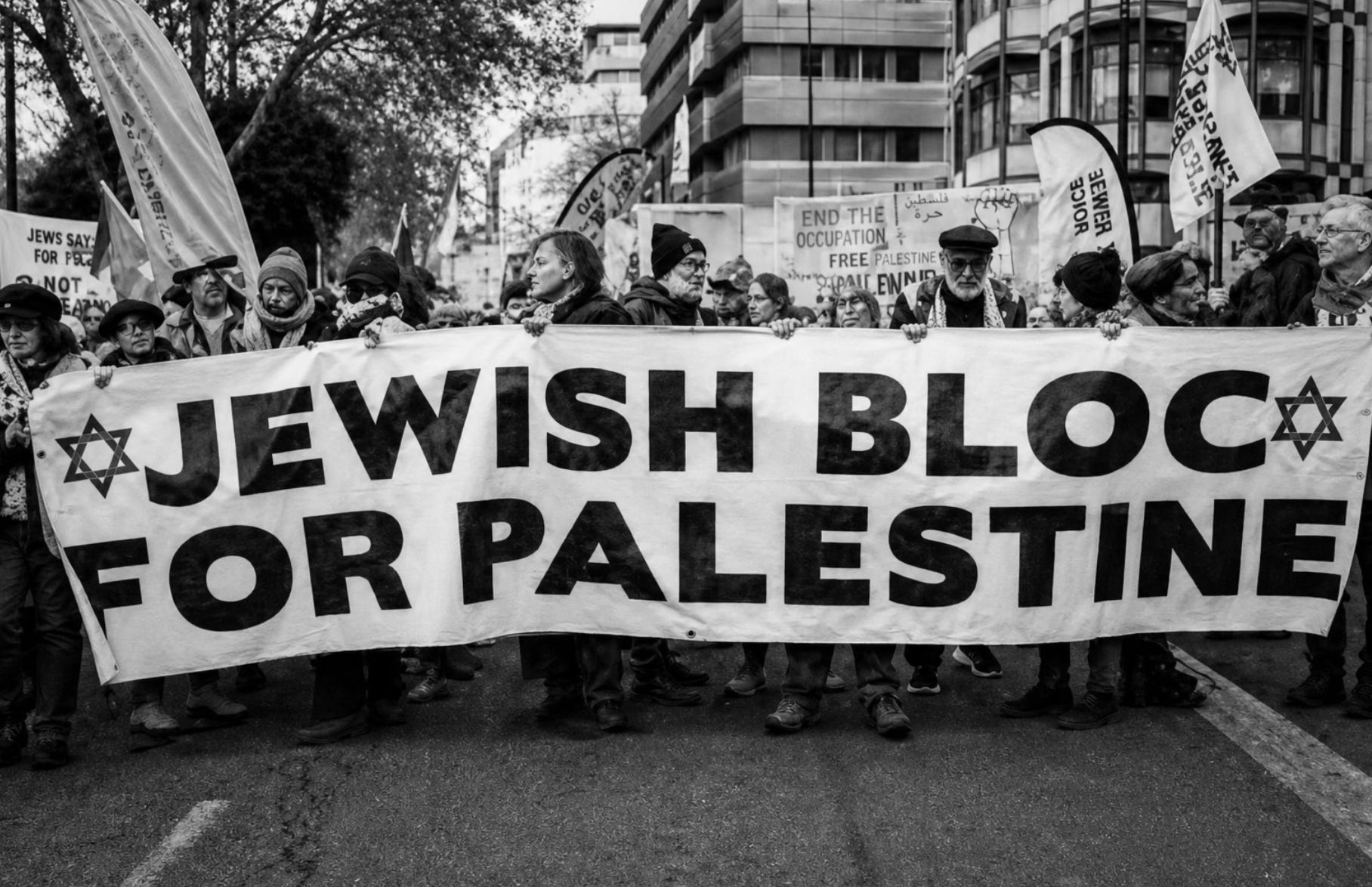
On the morning of October 7, 2023, the world shifted. Hamas launched an attack on southern Israel that killed approximately 1,200 people and took around 250 hostage (NPR, 2023). The horror and grief of that day was real. And the Israeli military response that followed — a campaign of destruction that has, by any credible measure, constituted a genocide against the civilian population of Gaza — was also real (ICJ, 2024). Within days, hundreds of thousands of people across Britain took to the streets. They marched not in support of Hamas, not out of hatred for Jewish people, but out of an urgent, moral demand that the killing stop. Among them were Holocaust survivors carrying photographs of their own families alongside photographs of Palestinian children, and rabbis in prayer shawls (The Guardian, 2024). They came week after week, in rain and cold, forming one of the largest and most sustained protest movements in British history.
The British state’s response to this mass movement was not to listen and reconsider its position as one of Israel’s most reliable arms suppliers (Campaign Against Arms Trade, 2024). It was to reach for a weapon it had been sharpening for years: the accusation of antisemitism. Since October 7, the British establishment has engaged in a systematic, multi-sited campaign to repress Palestinian solidarity, using the language of anti-racism as a cudgel against those who dare to oppose a genocide. This is a strategy with history, architecture, and purpose.
The practice of labelling Palestinian solidarity as antisemitism has a long history in Britain, built through decades of pro-Israel lobbying and the slow, patient construction of an institutional framework designed to make criticism of Israel professionally and socially costly. Its most important product was the International Holocaust Remembrance Alliance (IHRA) working definition of antisemitism; a document whose contested illustrative examples equate criticism of Israeli policy with anti-Jewish racism, and which was not an organic response to a rise in genuine antisemitism but the result of a sustained lobbying campaign. The UK government formally adopted it in 2016. By 2020, the then-Education Secretary Gavin Williamson was threatening to cut funding to universities that refused to follow suit (The Guardian, 2020).
That this infrastructure existed and could be weaponised against political opponents was a documented fact. The Forde Report — commissioned by Keir Starmer himself — found that antisemitism accusations had been used as a “factional weapon” against Jeremy Corbyn’s pro-Palestinian leadership of the Labour Party, deployed to destroy a political movement rather than to combat racism (Forde, 2022). Al Jazeera’s “The Labour Files” investigation, based on the largest leak of internal party documents in British political history, revealed the mechanics: senior officials trawling social media histories, conflating criticism of Israel with anti-Jewish racism, and working hand-in-glove with hostile media to destroy pro-Palestinian activists (Al Jazeera, 2022). The lesson the establishment drew was that the tactic had worked. When October 7 arrived and the streets filled with protesters, the infrastructure was already in place, the media already primed. All that was required was the trigger.
“Hate Marches” and the Language of Criminalisation
By late October 2023, the weekly marches had become a fixture of British political life. Hundreds of thousands of people were filling the streets of London and cities across the country, demanding a ceasefire and an end to British complicity in the assault on Gaza. The political class watched and decided to act. On October 30, 2023, the then-Home Secretary, Suella Braverman, wrote a piece for The Times in which she described the demonstrations as “hate marches” and accused the Metropolitan Police of applying a “double standard” by permitting them to proceed (Braverman, 2023). She claimed that protesters chanting “From the river to the sea, Palestine will be free” were calling for the “erasure of Israel” and that the presence of Palestinian flags and keffiyehs constituted a form of intimidation. She wrote to the Metropolitan Police Commissioner demanding that the marches be banned.

The language was deliberate and the intent was clear. By labelling the marches “hate marches,” Braverman was making a political argument. She was attempting to redefine the act of demanding a ceasefire as an act of racial hatred, and to pressure the police into treating peaceful protesters as criminals. The Metropolitan Police declined to ban the marches, finding no legal basis to do so. Braverman was sacked days later for a separate act of political insubordination that embarrassed Downing Street. The marches she had tried to criminalise continued. However, the label she had attached to them did not leave with her.
The damage was done, largely because the British press eagerly adopted her framing. The right-wing tabloids and broadsheets alike treated Braverman’s “hate march” as an objective description of reality. Front pages routinely juxtaposed images of peaceful marchers with headlines about “mobs” and “extremists.” The media acted as the transmission mechanism for the state’s hostility, laundering a political attack into a national consensus. The marches were now, in the minds of a significant portion of the political class, synonymous with antisemitism.
This framing had practical consequences. Employers, universities, and public bodies, taking their cues from the hostile media environment, began to treat the expression of solidarity with Palestine as a disciplinary matter. The chilling effect that Braverman and her allies sought to create began to take hold, not through any single act of state censorship, but through the accumulated weight of a thousand smaller acts of institutional intimidation.
The IHRA Definition: A Pre-Loaded Weapon
The mechanism through which this chilling effect was institutionalised had been put in place years earlier, in the form of the International Holocaust Remembrance Alliance (IHRA) working definition of antisemitism. The definition itself is relatively uncontroversial: “Antisemitism is a certain perception of Jews, which may be expressed as hatred toward Jews.” The problem lies in the illustrative examples appended to it, several of which conflate criticism of the Israeli state with anti-Jewish racism. The examples include “applying double standards by requiring of it a behaviour not expected or demanded of any other democratic nation,” “denying the Jewish people their right to self-determination,” and “drawing comparisons of contemporary Israeli policy to that of the Nazis” (IHRA, 2016).
The adoption of this definition across British institutions was the result of a sustained, aggressive lobbying campaign by the UK government and pro-Israel advocacy groups. In 2020, the then-Education Secretary Gavin Williamson explicitly threatened to cut funding to universities that refused to adopt the IHRA definition, effectively blackmailing academic institutions into accepting a highly contested political framework. The vast majority of universities capitulated. A comprehensive report by the British Society for Middle Eastern Studies (BRISMES) and the European Legal Support Centre (ELSC) documented the inevitable consequences: staff and students at British universities were subjected to unreasonable investigations, events were cancelled, and speakers were uninvited, all on the basis that their advocacy for Palestinian rights had been deemed antisemitic under the IHRA framework (BRISMES and ELSC, 2023). The report found that the definition was being used exactly as its critics had warned: not to protect Jewish students from genuine antisemitism, but to suppress political speech about Israel and Palestine.
The cases accumulated with grim regularity. At the School of Oriental and African Studies (SOAS), two student leaders, Alexander Cachinero-Gorman and Abel Harvie-Clark, were dismissed from their elected sabbatical roles in 2024 before they had even taken up their positions. Their dismissal followed a series of pro-Palestine protests on campus. They brought legal claims for wrongful dismissal, arguing that they had been targeted for their anti-Zionist beliefs, and in April 2026 the university’s students’ union settled the case for an undisclosed sum (Middle East Eye, 2026). The settlement was a vindication, but it also exposed the fundamental asymmetry of the IHRA regime: institutions can destroy a student’s career on the basis of a contested definition in an afternoon, while it takes years of gruelling legal battles to secure even a partial retraction.
The Purge of the Workplace
The crackdown was not confined to universities. Across British workplaces, employees discovered that expressing solidarity with Palestine was a sackable offence. The most prominent case was that of Mark Bonnick, a 62-year-old kit manager who had worked for Arsenal Football Club for twenty-two years. Bonnick was sacked on Christmas Eve 2024 after a coordinated online campaign by pro-Israel accounts accused him of antisemitism for social media posts opposing Israel’s assault on Gaza (Mondoweiss, 2025). He had used terms such as “ethnic cleansing” and “Jewish supremacy,” language that mirrors the conclusions of major international human rights organisations, including B’Tselem and Human Rights Watch. Arsenal’s own internal investigation concluded that his posts were not antisemitic, yet the club sacked him anyway, citing “reputational damage” (Mondoweiss, 2025). Bonnick, with the support of the European Legal Support Centre, filed a claim for unfair dismissal. His case is a precise illustration of how the weaponisation of antisemitism works in practice: the accusation is made, the investigation finds no evidence, and the punishment is administered regardless.
Bonnick was not alone. Healthcare workers were suspended for sharing information about the casualty figures in Gaza. Teachers were investigated for displaying Palestinian flags in their classrooms. Social workers were reported to their professional bodies for attending marches. A prominent disability charity, Sense, sacked a worker who had protested against the proscription of Palestine Action, only to reverse the decision after Novara Media reported the case publicly. The message being sent was unmistakable: your job, your career, your professional standing: all of these are contingent on your silence about a genocide.
Subscribe to Notes From Plague Island and join our growing community of readers and thinkers.
What makes these cases particularly instructive is the mechanism through which they operated. In almost none of them was the worker accused of actual antisemitism — of hatred of Jewish people as Jewish people. The accusation was invariably more nebulous: that their posts were “inflammatory,” that they had brought their employer “into disrepute,” that their views were “divisive.” The accusation functioned as a social and professional contaminant. Once made, it was sufficient to end a career regardless of its truth. This is the weaponised accusation in its purest form: a charge that requires no proof and admits of no defence, because the damage is done the moment it is levelled.
The Terrorism Label and the Criminalisation of Protest
As the marches continued and the death toll in Gaza mounted, the state escalated its response. The target was Palestine Action, a direct-action group founded in 2020 with the stated aim of disrupting the operations of Elbit Systems, an Israeli arms manufacturer with facilities across Britain. Palestine Action’s tactics were not subtle: activists broke into factories, spray-painted buildings, and damaged equipment. They were prosecuted under ordinary criminal law for criminal damage and trespass. They were not, by any reasonable definition, terrorists.
In July 2025, the Home Secretary, Yvette Cooper, proscribed Palestine Action under the Terrorism Act 2000, placing the group on the same list as Al-Qaeda and the Islamic State (Home Office, 2025). The decision was immediately condemned by the United Nations Human Rights Chief, Volker Türk, who called it a “disturbing misuse of UK counter-terrorism legislation” that expanded the concept of terrorism “beyond clear boundaries” (OHCHR, 2025). The UN High Commissioner warned that the ban “conflates protected expression and other conduct with acts of terrorism” and constituted “an impermissible restriction” on the rights to freedom of expression, peaceful assembly and association (OHCHR, 2025).
The government’s own intelligence assessment, obtained by The New York Times, told a story that directly contradicted the Home Secretary’s public justifications. The declassified report, compiled by the Joint Terrorism Analysis Centre within MI5, stated explicitly that “a majority of the group’s activity would not be classified as terrorism” under British law (New York Times, 2025). It expressed doubt that the group would explicitly encourage attacks on people, a characteristic of every other organisation on the proscription list. The three specific incidents cited in the assessment as meeting the legal test for terrorism all related to property damage at arms manufacturing sites (New York Times, 2025). One of them — a break-in in Glasgow where activists flew flags and set off fireworks on a factory roof — had been prosecuted by Scottish police as a “breach of the peace,” not a terrorism offence. The Scottish police had concluded that “the group had been focused on protest activity which has not been close to meeting the statutory definition of terrorism” (New York Times, 2025).
The government knew this. It proscribed Palestine Action anyway. The consequences were immediate and sweeping. Membership of the group became a criminal offence. Expressing support for Palestine Action became a criminal offence. Wearing a badge or carrying a sign that could arouse “reasonable suspicion” of support for the group became a criminal offence, punishable by up to fourteen years in prison. More than 1,400 people were arrested under the terrorism law in the weeks following the ban, the majority of them at peaceful protests where demonstrators held signs reading: “I oppose genocide. I support Palestine Action” (New York Times, 2025). The High Court ruled in February 2026 that the ban had been unlawfully applied, finding that the Home Secretary had acted outside the scope of her powers and that most of Palestine Action’s illegal activities could be dealt with under ordinary criminal law (BBC, 2026). The Home Office immediately appealed, and the ban remains in force pending the outcome of that appeal (Reuters, 2026).
Starmer and the Golders Green Pretext
The final act in this escalating campaign of repression arrived in late April 2026. On April 29, a man named Essa Suleiman stabbed two Jewish men in Golders Green, north London. The attack was horrific. The victims — Shloime Rand, 34, and Moshe Shine, 76 — were hospitalised with serious injuries. The suspect was arrested at the scene. He had a documented history of serious mental health issues. He had been referred to the government’s own Prevent counter-extremism programme in 2020 and cleared as a terrorist threat within six weeks (The Guardian, 2026).
None of this prevented Keir Starmer from seizing the moment. Within hours of visiting the scene in Golders Green, the Prime Minister had delivered his most explicit attack yet on the right to protest. “If you are marching with people wearing pictures of paragliders without calling it out,” he declared, “you are venerating the murder of Jews” (The Guardian, 2026). He called for the prosecution of anyone chanting “Globalise the intifada,” describing it as “calling for terrorism against Jews.” By May 2, Starmer had gone further still. He told BBC Radio 4’s Today programme that he would support stopping some protests altogether, citing the “cumulative effect” of the weekly marches on the Jewish community (The Guardian, 2026). He said he had been “having discussions with the police for some time” about the possibility of banning certain demonstrations.
The speed and confidence with which Starmer moved from a single violent incident to a call for banning mass protests is itself revealing. It suggests not a reactive response to a crisis, but the deployment of a pre-prepared argument waiting for the right moment. The right to protest in Britain is protected not only by convention but by the Human Rights Act 1998, which incorporates Articles 10 and 11 of the European Convention on Human Rights. To ban a protest, the state must demonstrate a specific, concrete threat that cannot be addressed by less restrictive means. A generalised claim about the “cumulative effect” of demonstrations on a community’s sense of safety does not meet that threshold. Starmer, a former lawyer and Director of Public Prosecutions, knows this; his call was a political signal.
It is necessary to be precise about what Starmer was doing here, because the imprecision is significant. He was not arguing that the man who stabbed two people in Golders Green had been radicalised at a pro-Palestine march. There is no evidence of any such connection. He was doing something more insidious: he was using the fear and grief generated by a real act of violence to justify the suppression of a political movement that has nothing to do with that violence. He was conflating the actions of a mentally ill man, cleared by his own government’s counter-terrorism programme, with the hundreds of thousands of people who have marched peacefully through London demanding a ceasefire.
This is the logic of the weaponised antisemitism accusation in its most advanced form. It does not require evidence of a direct connection between protest and violence. It requires only proximity; the suggestion that the marches create an “atmosphere,” a “cumulative effect,” a climate in which antisemitism can flourish. The marches become responsible for what they are alleged to represent, which in this framing, is not a demand for Palestinian rights but a threat to Jewish safety.
The most striking dissents, meanwhile, came from within the Jewish community whose pain the response purports to be addressing. Rabbi Herschel Gluck, a senior north London rabbi, told Middle East Eye plainly: “It is certainly not the marches that caused the tragic stabbing attacks on Wednesday in Golders Green.” He went further. Banning the marches in the name of the Jewish community would be an own goal: “There are many Jews who participate in the marches. Pro rata, there are more Jews than any other community. And the idea of banning speech is something that is a very un-Jewish thing to do” (Middle East Eye, 2026). Daniel Levy, the British-Israeli analyst and former adviser to the Israeli government, told Channel 4 News that the proposed moratorium on marches was “appalling” and that “you can’t have a false dichotomy between Jewish safety and Palestinian rights.” He went further still: “First we’ll be told you can’t protest on this and then you won’t be able to protest on anything and then we’re living in a fundamentally different society” (Channel 4 News, 2026).
Zack Polanski, the Jewish leader of the Green Party, appeared on Sky News on May 3 to defend the marches and was met with the full force of the machinery. When he pointed out that many Jewish people, including himself, march in solidarity with Palestinians, the presenter Trevor Phillips dismissed the invocation of his Jewish identity outright: “Don’t try that one on me.” Polanski had already written publicly that he was “the only Jewish leader of a major political party” and suffered “antisemitic abuse every single day,” and condemned the conflation of “the Israeli government’s genocide and actual antisemitism” as “disgusting” (Polanski, 2026). After the interview, he wrote that Phillips had smirked while he described being Nazi-saluted at, adding: “it feels deeply antisemitic.” The architecture does not distinguish between its targets. When a Jewish man argues that antisemitism is being weaponised, the response is to question his motives, erase his identity, and treat his testimony as a rhetorical manoeuvre. It processes everyone who challenges it the same way.
The Democratic Crisis
Something has been stolen. The language of anti-racism — one of the most hard-won moral achievements of the twentieth century, built on the bones of people who were murdered for their identity — has been taken and turned into an instrument of political suppression. It has been done not in spite of a stated commitment to fighting antisemitism, but in the name of it. That is a theft. It has a cost that extends far beyond the individuals sacked, suspended, prosecuted, or silenced.
Genuine antisemitism — the real, persistent hatred of Jewish people as Jewish people — is a serious and growing problem in Britain and across the world. It demands serious, sustained, and principled opposition. But every time the accusation of antisemitism is levelled at a nurse who shared a casualty figure, a student who attended a march, or a kit manager who used the words “ethnic cleansing” (words used daily by the United Nations) the accusation loses force. It becomes noise, the cry of a state that has used the charge so promiscuously, against so many people with so little evidence, that when genuine antisemitism appears, the alarm has already been silenced by overuse. The British state is not protecting Jewish people. It is instead burning through the moral capital that protects them.
The same government that placed Palestine Action on a terrorism list alongside Al-Qaeda has not proscribed a single organisation for its role in facilitating the killing of over fifty thousand Palestinian civilians. Starmer himself is the sharpest illustration of the rot. He built his political identity on legal rigour and human rights. As Director of Public Prosecutions, he prosecuted hate crimes. He talks about antisemitism with the fluency of a man who has rehearsed the speech many times, yet he leads a government that sells weapons to a state the International Court of Justice has found to be plausibly committing genocide. He has not called for an arms embargo or used Britain’s diplomatic weight to demand a ceasefire. He has not done the one thing that would most concretely protect the safety of Palestinian civilians, which is to stop arming the people killing them. Instead, he stands outside a stabbing scene in Golders Green and uses the grief of a community to justify banning the people who are demanding he act. The conclusion is not complicated: his concern is not for Jewish safety, but for the management of a policy he cannot defend.
Resistance and Resilience
Despite the severity of the repression since October 7, the Palestine solidarity movement in Britain has refused to be silenced. The weekly marches have continued, drawing diverse crowds united by a shared demand for justice. The legal victories have accumulated: the High Court’s ruling against the Palestine Action proscription, the SOAS settlement, the ongoing employment tribunal brought by Mark Bonnick. Most remarkably, juries have repeatedly acquitted activists charged with criminal damage at arms factories, finding that the defendants had a lawful excuse in preventing the commission of a greater crime. When ordinary citizens are presented with the facts of Britain’s complicity in the Gaza genocide, they consistently refuse to convict those trying to stop it. The movement has repeatedly demonstrated that the architecture of repression can be contested.
So, we keep writing and bearing witness. The machinery of repression depends on our exhaustion and self-censorship, but we must refuse. We owe this to the Palestinians, who have been buried, starved, displaced and dismembered while the question of whether we may mourn them at all is debated by ministers and lawyers. We owe it to the Jewish friends and neighbours and rabbis and Holocaust survivors who have refused, at considerable cost, to let their identities be conscripted into the architecture being built around them.
We have a right to call it a genocide and we should not be afraid to do so. When children are killed in their tens of thousands, when hospitals are bombed, when a population is starved as a matter of policy, when the Genocide Convention is invoked at the International Court of Justice and provisional measures are ordered — the word is not a slur. It is a description. The architecture of repression depends on our being too frightened of the word “antisemitism” to use the word “genocide.” The two charges have been deliberately wired together so that one cannot be uttered without the other being thrown back at us. That wiring must be cut. We have a responsibility to name what is happening. We do not need permission from a Prime Minister who is complicit in the genocide to use the words that international law has already given us.
It is the least we can do.
Or support us with a one-off tip → Buy Me a Coffee
References
Campaign Against Arms Trade (2024) UK Arms Exports to Israel. Available at: https://www.caat.org.uk/resources/countries/israel/ [Accessed 3 May 2026].
ICJ (2024) Application of the Convention on the Prevention and Punishment of the Crime of Genocide in the Gaza Strip (South Africa v. Israel), Provisional Measures, Order of 26 January 2024. International Court of Justice. Available at: https://www.icj-cij.org/node/203447 [Accessed 3 May 2026].
NPR (2023) ‘Israel revises down its death toll from Hamas attacks on Oct. 7’, 11 November. Available at: https://www.npr.org/2023/11/11/1212458974/israel-revises-death-toll-hamas-attacks-oct-7 [Accessed 3 May 2026].
The Guardian (2024) ‘London Gaza protest: Holocaust survivors join pro-Palestine demonstration’, 27 April. Available at: https://www.theguardian.com/uk-news/2024/apr/27/london-gaza-protest-openly-jewish-march-holocaust-survivors-palestine-demonstration [Accessed 3 May 2026].
Al Jazeera Investigative Unit (2022) ‘What really happened during Labour’s anti-Semitism crisis’, Al Jazeera, 25 September. Available at: https://www.aljazeera.com/news/2022/9/25/what-really-happened-during-labours-anti-semitism-crisis [Accessed 3 May 2026].
The Guardian (2020) ‘Williamson accuses English universities of ignoring antisemitism’, 9 October. Available at: https://www.theguardian.com/education/2020/oct/09/williamson-accuses-english-universities-of-ignoring-antisemitism[Accessed 3 May 2026].
BBC (2026) ‘Palestine Action ban ruled unlawful but group remains proscribed’, BBC News, 13 February. Available at: https://www.bbc.com/news/live/c8x90q9nyzyt [Accessed 3 May 2026].
Braverman, S. (2023 ) ‘The Left is wrong: these are hate marches’, The Times, 30 October. Available at: https://www.thetimes.com/uk/politics/article/the-left-is-wrong-these-are-hate-marches-suella-braverman-5d0lbxqwp (paywall ). Reported in: The Guardian, 30 October 2023. Available at: https://www.theguardian.com/politics/2023/oct/30/uk-ministers-cobra-meeting-terrorism-threat-israel-hamas-conflict-suella-braverman
BRISMES and ELSC (2023) Freedom of Speech and Academic Freedom in UK Higher Education: The Adverse Impact of the IHRA Definition of Antisemitism. Available at: https://elsc.support/wp-content/uploads/2023/09/BRISMES-ELSC-Report-Freedom-of-Speech-and-Academic-Freedom-in-UK-Higher-Education-The-Adverse-Impact-of-the-IHRA-Definition-of-Antisemitism.pdf [Accessed 3 May 2026].
Forde, M. (2022) The Forde Report: An Independent Investigation into Allegations of Factionalism and its Impact on the Labour Party’s Response to Antisemitism. London: Labour Party. Available at: https://labour.org.uk/wp-content/uploads/2023/01/The-Forde-Report.pdf [Accessed 3 May 2026].
The Guardian (2026) ‘PM vows to act against people “venerating the murder of Jews” as terror threat level rises’, 30 April. Available at: https://www.theguardian.com/uk-news/2026/apr/30/starmer-calls-on-public-to-open-their-eyes-to-jewish-pain-in-wake-of-golders-green-attack [Accessed 3 May 2026].
The Guardian (2026) ‘Some pro-Palestinian protests could be banned amid attacks on British Jews’, 2 May. Available at: https://www.theguardian.com/politics/2026/may/02/keir-starmer-calls-for-ban-on-some-pro-palestian-protests-british-jews[Accessed 3 May 2026].
Home Office (2025) Three Groups to be Proscribed. Available at: https://www.gov.uk/government/news/three-groups-to-be-proscribed [Accessed 3 May 2026].
IHRA (2016) Working Definition of Antisemitism. International Holocaust Remembrance Alliance. Available at: https://www.holocaustremembrance.com/resources/working-definitions-charters/working-definition-antisemitism[Accessed 3 May 2026].
Channel 4 News (2026 ) ‘Daniel Levy: “First we’ll be told you can’t protest on this and then you won’t be able to protest on anything”’, 3 May. Available at: https://www.facebook.com/Channel4News/videos/first-well-be-told-you-cant-protest-on-this-and-then-you-wont-be-able-to-protest/1276378501345379/
Middle East Eye (2026) ‘UK: Soas student leaders win legal settlement after dismissal over pro-Palestine activism’, 16 April. Available at: https://www.middleeasteye.net/news/uk-soas-student-leaders-win-legal-settlement-after-dismissal-over-pro-palestine-activism [Accessed 3 May 2026].
Middle East Eye (2026) ‘Rabbi Herschel Gluck: banning pro-Palestine marches would be an own goal for Jewish community’, 3 May.
Polanski, Z. (2026) Post on X (formerly Twitter), 3 May. Available at: https://x.com/ZackPolanski [Accessed 3 May 2026].
Mondoweiss (2025) ‘Arsenal FC face legal action for firing staff over pro-Palestine posts’, 16 May. Available at: https://mondoweiss.net/2025/05/arsenal-fc-face-legal-action-for-firing-staff-over-pro-palestine-posts/ [Accessed 3 May 2026].
New York Times (2025) ‘Secret Report Undercuts U.K. Condemnations of Pro-Palestinian Group’, 12 September. Available at: https://www.nytimes.com/2025/09/12/world/europe/palestine-action-uk-government-assessment.html[Accessed 3 May 2026].
Reuters (2026) ‘Britain challenges court decision that Palestine Action ban was unlawful’, 28 April. Available at: https://www.reuters.com/business/aerospace-defense/britain-challenges-court-decision-that-palestine-action-ban-was-unlawful-2026-04-28/ [Accessed 3 May 2026].
OHCHR (2025) ‘UK: Palestine Action ban “disturbing” misuse of UK counter-terrorism legislation, Türk warns’, 25 July. Available at: https://www.ohchr.org/en/press-releases/2025/07/uk-palestine-action-ban-disturbing-misuse-uk-counter-terrorism-legislation [Accessed 3 May 2026].