Israel First, Paid for by American Money and Blood

On 17 March 2026, Joe Kent, the Director of the National Counterterrorism Center, published a statement on social media and resigned his post. Kent is not a liberal dissident or a Democratic operative. He is the MAGA archetype: a Gold Star husband whose wife was killed fighting in Syria, an 11-time combat veteran who, in his own words, “supported your values and foreign policies from 2016, 2020, 2024” (Kent, 2026). He believed that Trump, in his first term, “understood better than any modern President how to apply military power without getting drawn into never-ending wars.” He was appointed by Donald Trump because he was the living embodiment of the movement’s promise. And yet, looking at the war unfolding in Iran, he could no longer participate in the administration. “Iran posed no imminent threat to our nation,” he wrote, “and it is clear that we started this war due to pressure from Israel and its powerful American lobby” (Kent, 2026).
With those words, the central illusion of the Trump administration collapsed.
What is a foreign policy? It is the way a nation decides who its friends are, who its enemies are, and for what principles it is willing to shed the blood of its citizens. The assumption of a sovereign democracy is that these decisions are made by the people, through their elected representatives, to secure the future of the nation itself. It requires a shared understanding of national interest and a refusal to allow the machinery of state to be captured by foreign entities.
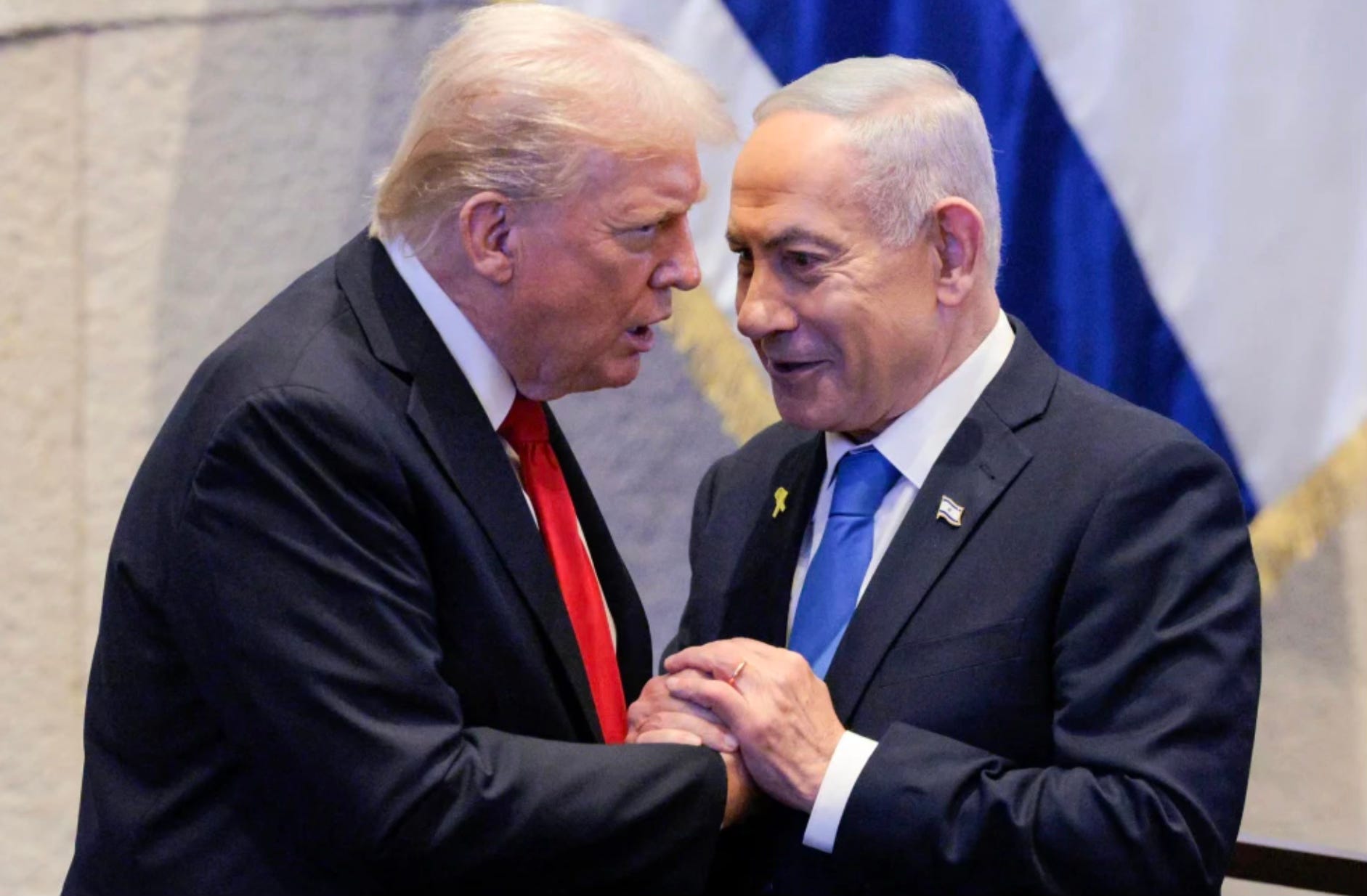
The people who now dominate the executive branch of the United States government deny all of this. For them, “America First” was a slogan designed to pacify a domestic audience while American foreign policy was handed to Israel. The war in Iran is the proof. It is a war fought for the geopolitical fantasies of Benjamin Netanyahu and the ideological demands of the Israel lobby, bankrolled by billionaires who view American foreign policy as a commodity to be purchased. The administration has subordinated American interests to Israeli demands. The republic’s foreign policy has been shaped not by its own intelligence agencies, but by the propaganda of a foreign state and its lobby.
The Blood Price of “America First”
We must begin with the reality of the war itself, and the question of who benefits from it. It is easy to speak of “strikes” and “operations,” but these are euphemisms designed to starve the public of the concepts needed to think about the present. What is happening is a war. It is a conflict with a devastating human and economic cost. It is not a sprawling, chaotic conflagration that threatens to consume the entire region.
In the first six days alone, the Pentagon reported to the Senate that the conflict cost $11.3 billion (NBC News, 2026). This is a huge sum, more than enough to fund the environmental and health agencies the administration has sought to dismantle (The Guardian, 2026a). It is money that could have been used to rebuild crumbling infrastructure, invest in education, or provide healthcare for those who cannot afford it. Instead, it was incinerated in the deserts of the Middle East, transformed into high-explosive munitions and jet fuel. The speed at which this money was spent reveals the true priorities of the state: there is always infinite capital available when Israel demands a war, but never enough when Americans need preservation.
But the cost is not merely abstract, nor is it confined to the ledgers of the Treasury Department. It is felt at the petrol station, where prices have jumped to a two-and-a-half-year high, rising by 47 cents a gallon in a matter of weeks (AP News, 2026; Massie, 2026). The Strait of Hormuz is effectively closed. Oil markets are in chaos. The economic toll on working-class Americans is immediate and severe, worsening a K-shaped economy — one where the wealthy recover and grow while the poor fall further behind — that already punishes the vulnerable (CNBC, 2026). The inflation that the administration promised to cure has been deliberately exacerbated by its own actions. The working class, the very people who were promised a return to prosperity, are now being asked to subsidise a war they never asked for.
When confronted with this reality, Donald Trump called the rising gas prices a “small price to pay” (The Hill, 2026a).
A small price for whom? Not for the 79 percent of Americans who opposed a war with Iran (University of Maryland, 2026). The war was launched despite historically low public support, proving that the consent of the governed is no longer a requirement for American military action. Not for the families struggling to pay 30-year mortgage rates that have climbed back above 6 percent. The price is paid by the American public; the purchase is made by Israel.
The administration’s own officials have admitted as much, though they have struggled to keep their stories straight. In early March 2026, Secretary of State Marco Rubio confessed that the United States joined the attack because Israel forced its hand. “We knew that there was going to be an Israeli action,” Rubio told reporters. “We knew that that would precipitate an attack against American forces, and we knew that if we didn’t pre-emptively go after them before they launched those attacks, we would suffer higher casualties” (The Intercept, 2026). Rather than using American leverage to stop Israel from launching a war that would endanger American troops, the administration simply joined the war.
The next day, Trump contradicted his own Secretary of State, claiming he had “forced their hand” because Iran was going to attack first. Rubio then humiliatingly denied his own recorded comments to a reporter’s face (The New Republic, 2026). But the truth eventually slipped out. Two weeks later, speaking to trustees of the John F. Kennedy Center, Trump abandoned the pretence of national security entirely. “We don’t need oil. We have all the oil we need for ourselves,” he said. “So, we don’t need it. But we did it. You could say we did it out of habit, which is not a good thing to do. But we did it because we have some good allies there. We have some great Middle Eastern countries there, Israel there. So, we did it for a lot of reasons” (New York Magazine, 2026).
We did it out of habit. We did it for Israel. The president of the United States casually admitting that he committed American blood to a foreign war not out of necessity, but out of habit and subservience to a foreign power. The logic of these statements reveals the core of the administration’s worldview: the suffering of the American people is an acceptable consequence for the achievement of Israel’s geopolitical goals.
The hypocrisy a political failing and a structural feature of the authoritarian project. The leader who campaigned on ending “forever wars” and mocked the political establishment for its endless interventions has now launched an all-out assault on Iran using the exact language of the neoconservatives he spent his career attacking. This is the logic of submission. The leader who claims to be the strongest is, in reality, the weakest. He has surrendered the sovereignty of American foreign policy to the Israel lobby. He is not a commander-in-chief; he is a broker, transferring the wealth and power of the American republic into the hands of a foreign state.
The Billionaire’s War
To understand how a nation goes to war against its own interests, we must look at the architecture of power. The influence of the Israel lobby in pushing for this conflict is not speculation, but a matter of public record. It is a reality that has been documented, debated, and ultimately proven by the events of the past year. When Joe Kent resigned, he exposed a system. He noted that “high-ranking Israeli officials and influential members of the American media deployed a misinformation campaign” (Kent, 2026) to deceive the administration.
Kent’s resignation is the emotional and moral anchor of this crisis. Here is a man who gave everything to the American military, who lost his wife to its wars, who believed in the nationalist promise of the administration he served. To walk away from that administration, to publicly accuse it of fighting a war for a foreign power, requires a profound moral rupture. But Kent went further than accusation. In his resignation letter, addressed directly to Trump, he wrote that “high-ranking Israeli officials and influential members of the American media deployed a misinformation campaign that wholly undermined your America First platform” and that “this echo chamber was used to deceive you into believing that Iran posed an existential threat to the United States, and that should you move, there was a clear path to a swift victory. This was a lie” (Kent, 2026). Kent was telling the president of the United States, to his face, that he had been conned by Israel. That the lobby had manufactured the intelligence, coordinated the media pressure, and manipulated the most powerful man in the world into fighting a war for a foreign state. If even the president can be deceived by the lobby, the question is no longer whether the lobby has too much power. The question is whether any democratic institution can withstand it. Even Senator Bernie Sanders, who rarely agrees with Kent, endorsed his assessment, stating: “Kent and I don’t agree on much, but he is right” (Just the News, 2026). When the populist right and the progressive left agree that the state’s foreign policy apparatus has been hijacked by a foreign lobby, it is time to pay attention.

The mechanism of this influence is highly organised and overwhelmingly financial. The lobby operates through a network of institutions — AIPAC, the Foundation for Defense of Democracies, and allied political action committees — that coordinate to manufacture consent for Israeli objectives. They draft the legislation that targets Iran, they provide the talking points that dominate the Sunday shows, and they fund the campaigns of those who comply while destroying the careers of those who resist. In a system where the state has been hollowed out, power resides not in institutions but in capital. The institutions of democracy — the Congress, the courts, the press — are viewed as obstacles to be overcome or commodities to be purchased. The state is no longer an arbiter of the common good; it is a marketplace where billionaires shop for policy outcomes on behalf of foreign powers.
Consider the Adelson dynasty. Sheldon Adelson, who gave over $800 million to Republican causes over his lifetime, was the original architect of this financial influence. His relationship with Trump was instrumental in moving the U.S. embassy to Jerusalem during the first term, a gift to Israel that cost America nothing except its credibility as an honest broker. Trump awarded Sheldon the Presidential Medal of Freedom in 2018. When Sheldon died in January 2021, he left behind not only a fortune but a political machine. His wife Miriam inherited both. She donated $250 million to Trump’s 2024 campaign, and reports indicate an offer of another $250 million for a third-term bid (Yahoo News, 2026). This kind of money is a dynasty. And the return on that dynasty’s investment is a foreign policy that aligns perfectly with the maximalist demands of the Israeli right wing. As one observer noted, “no one has as much sway here as Miriam Adelson” (More Perfect US, 2026). The quid pro quo is barely concealed: hundreds of millions of dollars in exchange for the annexation of the West Bank and the destruction of Iran’s military capacity. It is a transaction that bypasses the democratic process entirely, substituting the will of a single pro-Israel dynasty for the will of the electorate.
Subscribe to Notes From Plague Island and join our growing community of readers and thinkers.
When the top counterterrorism official in the country resigns because a war is being fought for a foreign lobby rather than national security, America is dealing with a president who has been propagandised and bought. The institutions designed to protect the nation have been bypassed or co-opted by private interests acting on behalf of Israel, and the commander-in-chief has willingly gone along with the deception. This is the essence of the transactional state: it exists only to serve those who can afford its services. The military, the intelligence agencies, the diplomatic corps — all have been subordinated to the will of a foreign power and its billionaire backers. The republic has been sold, and the war in Iran is the receipt.
Netanyahu’s Willing Executioner
The mechanics of this war are deeply familiar to anyone who remembers the lead-up to the 2003 invasion of Iraq. The playbook is the same; only the target has changed. The methods of deception, the manipulation of intelligence, the demonisation of the enemy, and the marginalisation of dissent — all of these techniques were perfected two decades ago and have been deployed again with devastating effect. In 1996, a group of American neoconservatives prepared a policy paper for Benjamin Netanyahu titled A Clean Break: A New Strategy for Securing the Realm. It advocated removing Saddam Hussein from power as “an important Israeli objective in its own right” (Institute for Advanced Strategic and Political Studies, 1996). It proposed a radical reshaping of the Middle East, driven by military force and justified by the rhetoric of democracy and security. Six years later, Netanyahu testified before the US Congress, urging the United States to invade Iraq. “If you take out Saddam, I guarantee you that it will have enormous positive reverberations on the region,” he promised (C-SPAN, 2002).
He was wrong. The Iraq War resulted in thousands of American deaths, hundreds of thousands of Iraqi deaths, and a cost of trillions of dollars. It destabilised the region, birthed new forms of terrorism, and shattered the moral authority of the United States. As Senator Sanders noted in June 2025, drawing the direct parallel: “Netanyahu was wrong regarding the war in Iraq. He is wrong now. We must not get involved in Netanyahu’s war against Iran” (Sanders, 2025). Yet, the same forces that pushed for the Iraq War have pushed for the Iran War. The same think tanks, the same lobbyists, the same politicians who championed the invasion of Iraq have spent the last two decades agitating for a confrontation with Iran. In 2006, political scientists John Mearsheimer and Stephen Walt published their groundbreaking paper on the Israel Lobby, arguing that the Iraq War “was due in large part to the Lobby’s influence” (Mearsheimer & Walt, 2006). They were vilified for stating the obvious, but history has vindicated their analysis. Today, that same lobby has achieved its ultimate goal: a direct US military confrontation with Iran.
Netanyahu has warned for more than twenty years about Iran’s nuclear weapons, always claiming they were imminent. He has built his political career on the politics of fear, constantly invoking the spectre of a second Holocaust to justify his own authoritarian tendencies and his aggressive foreign policy. When US strikes in June 2025 destroyed Iranian enrichment facilities, Netanyahu simply pivoted to a new threat — ballistic missiles — with no public evidence. The goalposts are always moving, because the goal is not security, but war. His agenda has always been to prevent a diplomatic solution and force a military one. He understands that Israel cannot defeat Iran alone, and so he has dedicated his life to ensuring that the United States will fight the war for him.
But if the lobby has wanted this war for two decades, why now? Why 2026? The answer lies in the intersection of fading power and closing windows. Netanyahu looks at America and sees a fading superpower — overstretched, internally fractured, and economically fragile. If Israel is going to use the American military as its own strike force, it must do so before that power recedes entirely. More importantly, he looks at Donald Trump and sees a fading president. Trump is the most pliable leader Israel has ever had, but he is also old, erratic, and politically vulnerable. The midterms loom, and with them the potential loss of congressional power. Netanyahu knows that the next president, whether Democrat or Republican, may not be as easily manipulated. Trump is a once-in-a-generation opportunity, and opportunities expire.
Furthermore, the war serves Netanyahu’s own immediate survival. Facing criminal charges and domestic unrest, expanding the conflict to Iran makes him indispensable, a wartime leader who cannot be removed. And crucially, the devastation of Gaza proved that he could act with total impunity. Israel crossed every red line in Gaza, committed a genocide, and faced no consequences from the international order or from Washington. If you can annihilate a population and still receive billions in American weapons, why not go further? The Iran war is the logical next step for a state that has learned it can do whatever it wants. As Netanyahu himself boasted when the strikes began: “This coalition of forces allows us to do what I have yearned to do for 40 years. … This is what I promised — and this is what we shall do” (The Intercept, 2026).
In Trump, Netanyahu found the perfect instrument for this moment: a man whose vanity makes him uniquely susceptible to flattery, whose transactional worldview makes him especially prone to donors, and whose ignorance of history makes him particularly vulnerable to the same lies that produced the Iraq War. Whether Trump is a willing executioner or a useful fool is, in the end, a distinction without a difference. The war is the same. The dead are the same. And the beneficiary is the same.
It must be said that in fighting a war for Israel, Trump is not doing anything that a succession of American presidents did not do. The influence of the Israel lobby and the sway of Israeli leaders over the White House is not a new phenomenon; it is a systemic feature of the American political order. Bill Clinton signed the Jerusalem Embassy Act. George W. Bush invaded Iraq, a war that served Israeli strategic interests. Barack Obama gave Israel the largest military aid package in history. Joe Biden watched Israel commit a genocide in Gaza and did not skip a beat, continuing to supply the weapons that made it possible. Kamala Harris struggled to utter a single meaningful criticism of Israel on the campaign trail, terrified of alienating the donor class. The structural capture of American foreign policy by the Israel lobby is decades old and entirely bipartisan.
The difference is twofold. First, Trump explicitly promised to be different. He was the candidate who promised to break from the establishment consensus, who mocked the neoconservatives, and who swore there would be no more forever wars — and particularly no more forever wars fought for someone else. He made that promise the entire basis of his political identity. And then he did exactly what every other president did, except he admitted it out loud.
The second difference is the mechanism of his capture. Previous presidents were captured by a system: through ideology, institutional pressure, and the fear of reputational destruction. Trump has no ideology and no reputational fear. He was captured through the most direct mechanism possible: money and flattery.
His subservience to Netanyahu is unprecedented in the history of American foreign policy. He has granted every wish, fulfilled every demand, and asked for nothing in return. He moved the US embassy to Jerusalem, recognised the annexation of the Golan Heights, and appointed Mike Huckabee — a Christian Zionist who recently suggested Israel has a God-given right to much of the Middle East — as US Ambassador to Israel (BBC News, 2026a). Huckabee’s appointment is a signal that the United States no longer views itself as an honest broker, but as an active participant in the theological project of the Israeli far right. It is a declaration that American foreign policy is now dictated by biblical prophecy rather than geopolitical reality.
The lobby’s task was made easier by the fact that Trump is surrounded by Christian nationalists — men like Huckabee and Pete Hegseth, the Secretary of Defense / War — who believe theologically that supporting Israel is God’s will. The lobby did not need to manufacture this conviction; it was already there, baked into the administration from the first day. All it needed to do was point these men toward Iran and let their faith do the rest. (For a full analysis of Christian nationalism and the Iran war, see our earlier piece: When Presidents Are ‘Anointed’: War in the Age of Christian Nationalism).
This subservience is most starkly visible in the administration’s response to the ongoing atrocities in Gaza. The war in Iran is the regional extension of the same project that produced the devastation in Gaza, and both serve Netanyahu’s vision. The scale of the destruction in Gaza is devastating. A February 2026 study published in The Lancet Global Healthestimated that more than 75,000 Palestinians were killed in the first 15 months of the conflict, a figure 50 percent higher than previously reported, amounting to 3.4 percent of Gaza’s pre-genocide population (The Guardian, 2026b; Middle East Monitor, 2026). Entire bloodlines have been erased. Hospitals, schools, and universities have been reduced to rubble. The systematic destruction of civilian infrastructure and the mass killings are a matter of historical record.
To provide diplomatic cover for these actions while the US fights Israel’s war in Iran, the Trump administration launched the “Board of Peace” at the World Economic Forum in Davos in January 2026. This initiative, which held its first meeting in February, is a charade designed to sideline multilateralism and legitimise ethnic cleansing (Carnegie Endowment for International Peace, 2026; The Hill, 2026b). It uses the vocabulary of diplomacy to mask the reality of annihilation, speaking of “reconstruction” while the bombs are still falling. It is a tool of statecraft deployed entirely for the benefit of a foreign power, ensuring that Israel faces no international consequences for its actions.
The Collapse of the Illusion
The con is unravelling, and the people who were conned are starting to notice.
For years, the Israel lobby operated in the background of American politics, its influence acknowledged in private but rarely named in public. Mearsheimer and Walt were called antisemites for describing its mechanics. Politicians who questioned the relationship were marginalised. Journalists who reported on it were accused of trafficking in conspiracy. The lobby’s greatest achievement was the creation of a culture in which its influence could not be discussed. That culture is now collapsing. The war in Iran has made the invisible visible. It has forced the question that was never supposed to be asked: whose interests does this serve?
When Mike Huckabee, the U.S. Ambassador to Israel, attempted to defend the war on Tucker Carlson’s show, the contradiction became impossible to ignore. Huckabee tried to justify the conflict by citing the threat to Israel’s northern border. Carlson, a mainstream voice of the populist right, cut him off. “What problem on the border with Lebanon? I’m an American. I live in Maine” (Al Jazeera, 2026).
This was the sound of the spell breaking. You could see the cognitive dissonance in real time: a man from Maine being told by an American ambassador that American soldiers must die for a border in the Levant. The man who had spent years defending Trump on every issue — the border, the courts, the economy — could not bring himself to defend this, because this was the one thing that could not be explained away. The war in Iran has no American logic. It has no American purpose. And the people who were told that Trump would put America first are now watching him put Israel first, in plain sight, with their money and their children’s lives.
The BBC has reported on how the Iran war has exposed deep cracks in the Republican coalition, as isolationist conservatives decry the conflict (BBC News, 2026b; Times of Israel, 2026). But the true collapse is not happening in Washington; it is happening in the minds of the millions who still believed in the movement. For the true believers, the ones who had faith in the “America First” promise, the Iran war is the moment the faith died. The MAGA voter who filled up their tank and paid $5 a gallon for a war they never asked for, in a country they couldn’t find on a map, for a leader who admitted he did it “out of habit” — that is the collapse.
You cannot say you put your nation first while outsourcing your military to a foreign power. You cannot claim to be a nationalist while acting as the mercenary force for a foreign state. You cannot campaign against forever wars and then start one. These are the kind of contradictions that destroy political movements, because they make the ordinary supporter feel like a fool.
The administration has abandoned any pretence of serving the public good, and this war is its most destructive act. It is the inevitable endpoint of a political project that was never about the people it claimed to represent. It was always about the donors, the lobbyists, and the foreign leaders with wish lists. The American working class was merely the vehicle used to attain power; the destination was always Jerusalem. The men who promised to drain the swamp have instead handed the keys to a foreign power, and the people who believed them are left to pay the toll.
The “America First” slogan is dead. It lies buried under the rubble in the Middle East and the soaring prices at American petrol stations. What remains is a monstrous administration that has outsourced its foreign policy to a foreign power, its military to a billionaire’s chequebook, and its conscience to the desert.
History has a way of unravelling what power conceals. The archives open, the witnesses speak, the documents surface. We will one day know more clearly who whispered into Trump’s ear, and what was said. We will see the full architecture of the influence that produced this war — the phone calls, the private meetings, the promises made in exchange for American blood. And perhaps, when that history is written, it will be even darker than what we already know. Perhaps, somewhere in the shadows of all of this, we will find the ghost of Jeffrey Epstein — a reminder that the networks of power that shape American foreign policy are rarely the ones that appear in the official record. For now, we have what we have: a president who admitted he went to war out of habit and for Israel, a Secretary of State who contradicted himself within 24 hours, and a Gold Star husband who resigned rather than participate in the lie. That is enough. That is more than enough.
Or support us with a one-off tip → Buy Me a Coffee
References
Al Jazeera (2026) ‘Netanyahu’s war: Analysts say Trump’s Iran strikes benefit Israel, not US’, 1 March. Available at: https://www.aljazeera.com/news/2026/3/1/netanyahus-war-analysts-say-trumps-iran-strikes-benefit-israel-not-us[Accessed: 19 March 2026].
AP News (2026) ‘Iran war jolts oil markets, sending US gas prices to a 2.5-year high’, 18 March. Available at: https://apnews.com/article/us-oil-trump-war-iran-gas-prices-edef1d6c5bf85ab64d959510fb50f0bd [Accessed: 19 March 2026].
BBC News (2026a) ‘US ambassador’s Israel comments condemned by Arab nations’, 22 February. Available at: https://www.bbc.com/news/articles/cn5gkkgdzkyo [Accessed: 19 March 2026].
BBC News (2026b) ‘How the Iran war exposed cracks in Trump’s Republican coalition’, 13 March. Available at: https://www.bbc.com/news/articles/cg4g66r3z40o [Accessed: 19 March 2026].
Carnegie Endowment for International Peace (2026) ‘The Board of Peace and Funding for Gaza Reconstruction’, 16 March. Available at: https://carnegieendowment.org/russia-eurasia/research/2026/03/the-board-of-peace-and-funding-for-gaza-reconstruction-on-whose-account [Accessed: 19 March 2026].
CNBC (2026) ‘Iran war, oil price surge worsen K-shaped economy, say economists’, 17 March. Available at: https://www.cnbc.com/amp/2026/03/17/iran-war-oil-price-surge-worsen-k-shaped-economy-say-economists.html[Accessed: 19 March 2026].
C-SPAN (2002) ‘Benjamin Netanyahu projects the benefits of War in Iraq’, 12 September. Available at: https://www.c-span.org/clip/house-committee/user-clip-benjamin-netanyahu-projects-the-benefits-of-war-in-iraq-2002/4529789[Accessed: 19 March 2026].
Institute for Advanced Strategic and Political Studies (1996) A Clean Break: A New Strategy for Securing the Realm. Available at: https://www.dougfeith.com/docs/Clean_Break.pdf [Accessed: 19 March 2026].
Just the News (2026) ‘Bernie Sanders on Joe Kent blaming Israel lobby for Iran War: “He is right”’, 17 March. Available at: https://justthenews.com/government/security/bernie-sanders-joe-kent-blaming-israel-lobby-iran-war-he-right[Accessed: 19 March 2026].
Kent, J. (2026) Resignation Statement via X (formerly Twitter), 17 March. Available at:
[Accessed: 19 March 2026].
Massie, T. (2026) Statement on gas prices, reported via Rep. Salud Carbajal Facebook Post, March. Available at: https://www.facebook.com/repsaludcarbajal/posts/trumps-war-in-iran-is-driving-up-gas-prices-across-the-country-hardworking-ameri/1421503122687396/ [Accessed: 19 March 2026].
Mearsheimer, J. and Walt, S. (2006) ‘The Israel Lobby’, London Review of Books, 28(6), 23 March. Available at: https://www.lrb.co.uk/the-paper/v28/n06/john-mearsheimer/the-israel-lobby [Accessed: 19 March 2026].
Middle East Monitor (2026) ‘Lancet study: Gaza death toll 50% higher than previously reported’, 20 February. Available at: https://www.middleeastmonitor.com/20260220-lancet-study-gaza-death-toll-50-higher-than-previously-reported/[Accessed: 19 March 2026].
More Perfect US (2026) Facebook Post regarding Miriam Adelson, March. Available at: https://www.facebook.com/MorePerfectUS/posts/a-few-pro-israel-billionaires-are-influencing-the-trump-admins-iran-policy-and-n/1333215002162962/ [Accessed: 19 March 2026].
NBC News (2026) ‘First 6 days of Iran war cost $11.3 billion, Pentagon tells senators’, 11 March. Available at: https://www.nbcnews.com/politics/congress/first-6-days-iran-war-cost-11-billion-pentagon-tells-senators-rcna263060[Accessed: 19 March 2026].
Politico (2026) ‘US says ambassador’s comments on Israel and the Middle East were taken out of context’, 22 February. Available at: https://www.politico.com/news/2026/02/22/us-says-ambassadors-comments-on-israel-and-the-middle-east-were-taken-out-of-context-00792618 [Accessed: 19 March 2026].
Sanders, B. (2025) ‘NEWS: Sanders Statement: “Netanyahu Was Wrong in 2002. He Is Wrong Now.”’, 19 June. Available at: https://www.sanders.senate.gov/press-releases/news-sanders-statement-netanyahu-was-wrong-in-2002-he-is-wrong-now/ [Accessed: 19 March 2026].
The Guardian (2012) ‘Netanyahu’s bomb diagram succeeds – but not in the way the PM wanted’, 27 September. Available at: https://www.theguardian.com/world/2012/sep/27/binyamin-netanyahu-cartoon-bomb-un [Accessed: 19 March 2026].
The Guardian (2026a) ‘US spending on first week of Iran war raises stark questions over priorities’, 18 March. Available at: https://www.theguardian.com/us-news/2026/mar/18/us-spending-iran-war-priorities [Accessed: 19 March 2026].
The Guardian (2026b) ‘Gaza death toll for first 16 months of war far higher than reported, Lancet study suggests’, 19 February. Available at: https://www.theguardian.com/world/2026/feb/19/gaza-death-toll-higher-than-reported-lancet-study[Accessed: 19 March 2026].
The Hill (2026a) ‘Trump raises Democratic attacks by downplaying high fuel prices’, 15 March. Available at: https://thehill.com/homenews/administration/5783652-trump-energy-policy-impact/amp/ [Accessed: 19 March 2026].
The Hill (2026b) ‘Trump hosts first Gaza Board of Peace meeting: 5 takeaways’, 19 February. Available at: https://thehill.com/policy/international/5746010-trump-board-of-peace-takeaways/ [Accessed: 19 March 2026].
Yahoo News (2026) ‘Trump quips this “should be my third term” during State of the Union’, 24 February. Available at: https://www.yahoo.com/news/articles/trump-quips-third-term-during-030641506.html [Accessed: 19 March 2026].
New York Magazine (2026) ‘Trump Casually Muses That Maybe Iran War Was a Mistake’, 18 March. Available at: https://nymag.com/intelligencer/article/trump-casually-muses-that-maybe-iran-war-was-a-mistake.html [Accessed: 19 March 2026].
The Intercept (2026) ‘Rubio Admits That America Is Fighting Israel’s War’, 3 March. Available at: https://theintercept.com/2026/03/03/rubio-trump-iran-israel-war/ [Accessed: 19 March 2026].
The New Republic (2026) ‘Trump Team Scrambles Over Rubio’s Admission About Israel and Iran’, 4 March. Available at: https://newrepublic.com/post/207325/donald-trump-marco-rubio-israel-iran [Accessed: 19 March 2026].