Exposure Without Consequence: How a Redacted Epstein Files Release Protects the Predator Class

The latest release of the Epstein files arrives with the familiar choreography of supposed revelation. There are documents. There are photographs. There is a breathless media cycle. There is the implication (carefully implied, never stated) that something meaningful has finally been exposed. And yet, once again, the core architecture of power remains untouched. Names are still redacted. Networks are still obscured. Responsibility is still diffused into atmosphere and implication. The exercise performs transparency while delivering none.
Most telling of all is what is not there. There is nothing at all about Donald Trump.
Not a line of inquiry, sustained examination or engagement with a relationship that has been documented in public reporting for decades. The omission is neither subtle nor accidental; it is the clearest signal yet that what we are witnessing is another carefully managed act of containment.
The files give us images instead of answers. Photographs of Jeffrey Epstein smiling beside the powerful are images of proximity without consequence. The result is voyeurism masquerading as disclosure; an archive of scandal drained of legal or political risk. It is exposure designed to exhaust public outrage rather than to sharpen it.
This article builds directly on what Notes From Plague Island has already established, piece by piece, over months of reporting and analysis. In ‘The Epstein Files: Nothing to Hide, Everything to Bury,’ we laid out the fundamental lie at the heart of every so-called disclosure: that transparency alone can substitute for justice. In ‘The Disciples of Epstein,’ we traced the way Epstein functioned not as an aberration but as a facilitator, an access point within elite systems that rewarded silence and mutual protection. In ‘The Country Club Prisoner,’ we examined how Ghislaine Maxwell absorbed institutional outrage while the structures that enabled her remained intact. And in ‘The Predator’s Privilege,’ we named the system for what it is: a predator class that insulates itself from consequence through wealth, proximity to power, and legal asymmetry.
This latest release confirms every one of those conclusions. Redaction is about protection. Images are safer than indictments. Elite accountability ends precisely where it would become inconvenient. It also confirms that certain figures — those who sit at the intersection of political power and donor networks — remain beyond scrutiny, even in a case as grotesque and well-documented as Epstein’s.
The Guardian’s reporting on the new tranche of material leans heavily on imagery and implication, describing photographs that “appear to show” compromising behaviour while carefully avoiding any broader interrogation of power (The Guardian, 2025). This language is doing important work. It keeps the focus on the spectacle rather than the system. It invites the reader to speculate, to feel momentarily scandalised, then to move on. The files themselves mirror this approach: an abundance of paper, a poverty of consequence.
Meanwhile, the public record on Epstein’s social world is not thin. It never has been. Epstein’s proximity to politicians, royalty, financiers, and celebrities has been documented repeatedly, most notably in the investigative reporting that first forced his case back into the open (Brown, 2018). We know how he moved. We know where he was welcomed. We know which institutions repeatedly failed to treat his victims as anything other than collateral damage. What we do not see in these releases is any serious attempt to connect those dots in a way that would threaten the legitimacy of the system itself.
This is where the omission of Trump becomes impossible to ignore. Trump’s social connection to Epstein was no secret. It was photographed, reported, and openly discussed long before Epstein’s final arrest. Trump himself spoke publicly about Epstein in the early 2000s, praising his taste for “beautiful women” and noting that some of them were “on the younger side” (New York Magazine, 2002). This is part of the contemporaneous record. Yet in the latest files, released amid loud claims of openness, this relationship simply disappears. It is as if silence itself has been redacted into the archive.
That silence tells us everything we need to know about the purpose of these disclosures. This is not about protecting victims. If it were, the focus would be on accountability, on naming enablers, on dismantling the conditions that allowed abuse to flourish unchecked. Instead, we are given a sanitised spectacle that preserves the reputations of the powerful while re-circulating the trauma of the abused. Survivors are asked, once again, to watch as their suffering is transformed into content that never quite crosses the line into consequence.
Nor is this about the rule of law. What remains is institutional self-preservation. The predator class does not only evade justice; it redesigns the process so that justice never quite arrives. Disclosure becomes a pressure valve. Outrage is allowed to vent, briefly, before being safely dispersed.
The result is a kind of moral pornography: endless images of proximity and implication, consumed in place of action. The public is permitted to look, but never to intervene. And the most dangerous figures, those whose exposure would threaten political stability or donor ecosystems, are quietly excluded from the frame.
Children were raped. Lives were destroyed. Careers, bodies, and futures were permanently altered. And yet the system still cannot bring itself to say the names that matter most. The silence is the story. And it is damning.
The Latest Release: Paper, Pictures, and Cowardice
The newest Epstein material is being sold as disclosure. In practice, it is paperwork without peril. Pages are unsealed, images circulated, headlines generated, yet the release is carefully engineered to ensure that nothing essential changes. The architecture of impunity remains intact.
What dominates the files is volume, not substance. There are photographs, many previously unseen, some already familiar, which show Epstein in proximity to wealth and status. There are documents that gesture towards association while stopping well short of attribution. What is conspicuously absent is the connective tissue that would turn association into accountability.
This pattern mirrors earlier disclosures in the Epstein saga, where the release of material functioned as a mechanism to exhaust public attention. The files offer implication without consequence, insinuation without prosecution. They allow institutions to say something has been done while ensuring that nothing dangerous follows.
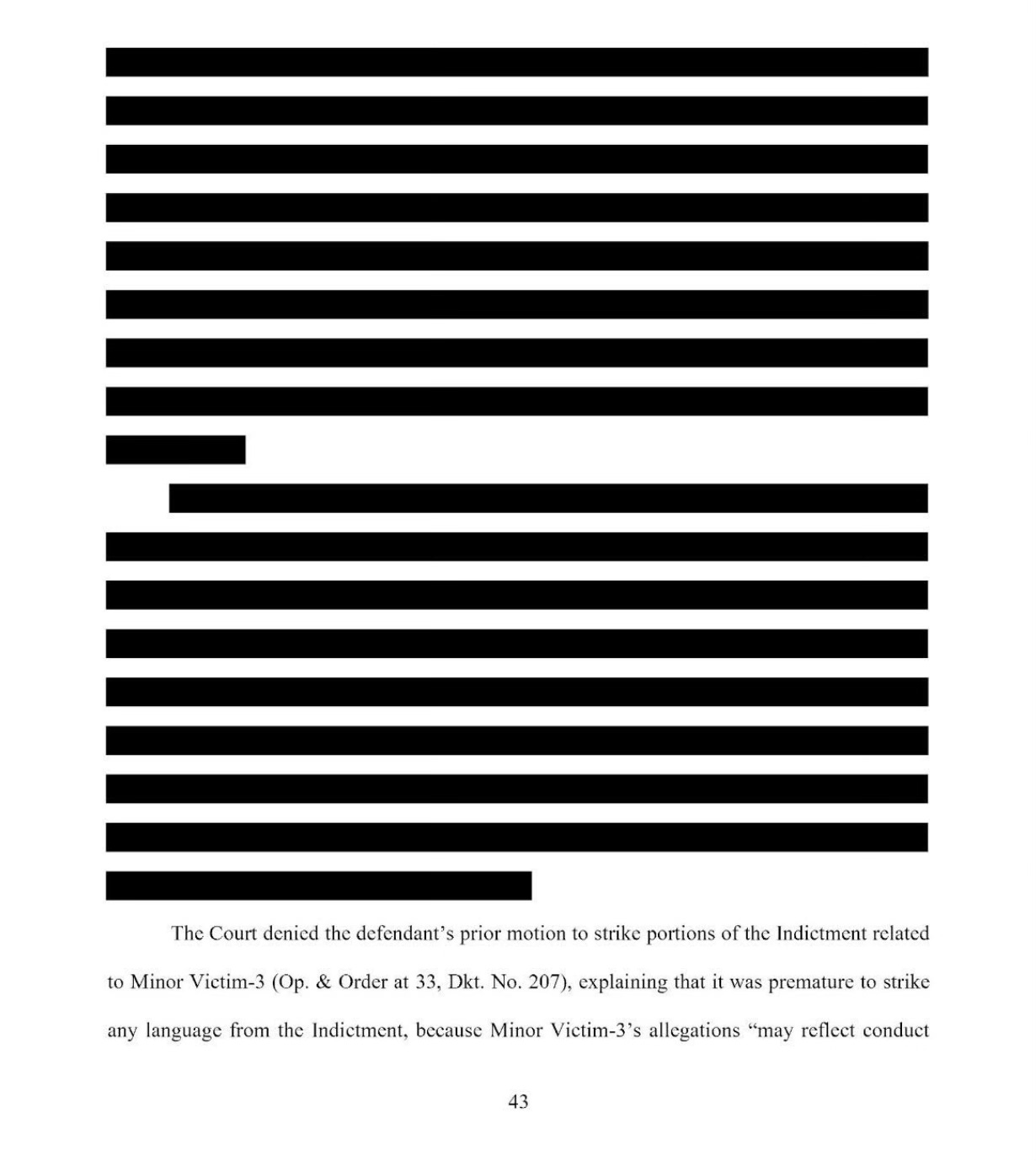
Alongside photographs, there are documents that reference contact: partial logs, lists, fragments of correspondence that have been heavily redacted and stripped of context. Names are obscured. Dates float free of narrative. Patterns are broken before they can be traced. The effect is to present association as a series of isolated moments rather than as part of a sustained, protected network.
Then, there are descriptions of material rather than the material itself. Interpretations in place of raw evidence. This matters. Summaries allow institutions to curate meaning, to shape how documents are understood, and crucially, to decide what the public never gets to see. They are a buffer between truth and consequence.
So, what is missing is more important than what is present. There is no comprehensive mapping of Epstein’s financial flows, despite longstanding questions about how his operation was funded and sustained (Brown, 2018). There is no serious engagement with the institutional failures that allowed him to receive repeated preferential treatment from prosecutors. There is no attempt to connect social proximity to decision-making power. And there is no appetite for asking why certain relationships vanish entirely from the record while others are endlessly recycled.
This is where cowardice enters the frame. The release is careful not to threaten living power. It avoids any line of inquiry that would destabilise contemporary political or economic arrangements. It offers up figures who are already disgraced, already marginalised, already safe to implicate, while steering conspicuously clear of those whose scrutiny would carry institutional cost.
This approach is visible in the continued reliance on redaction. Redaction is publicly justified on legal grounds: privacy, due process, ongoing sensitivity. But in the context of Epstein, these claims ring hollow. Epstein is dead. Ghislaine Maxwell has been convicted (although she currently resides in a country club prison. Survivors have testified repeatedly, in court and in public, often at great personal cost (US District Court, 2021). There is no plausible argument that releasing names would compromise an active prosecution. What it would compromise is reputational insulation.
Redaction, in this context, is not a neutral legal tool. It is a class weapon. It determines who is exposed and who remains protected. It draws a line between those whose implication is tolerable and those who must remain unnamed. The files act to reproduce power.
Equally revealing is the absence of institutional self-examination. The documents do not seriously interrogate the role of law enforcement, prosecutors, or political actors who repeatedly failed (or refused) to act. Epstein’s extraordinary 2007–2008 non-prosecution agreement, which shielded him from federal charges and kept his crimes largely hidden from public view, remains one of the most egregious miscarriages of justice in recent US history (US Department of Justice, 2020). Yet the files stop short of naming this as a systemic scandal. Instead, they allow it to fade into the background noise of “past failures,” detached from present responsibility.
The effect of all this is to transform the Epstein case into an endlessly renewable scandal, one that can be revisited, repackaged, and consumed without ever crossing the threshold into reform. Each release promises revelation; each delivers a controlled leak that preserves the underlying order. Outrage is generated, then dissipated. The predator class survives another cycle intact.
What we are witnessing, once again, is theatre. A performance designed to reassure the public that the truth is emerging, even as the most dangerous truths are quietly withheld. The files are heavy with paper and light on courage. They gesture towards accountability while ensuring it never arrives.
And hovering over all of this is the silence around those whose naming would force the question this release is determined to avoid: not who knew, but who was protected, and by whom.
Subscribe to Notes From Plague Island and join our growing community of readers and thinkers.
The Trump-Shaped Hole in the Record
The most revealing feature of the latest Epstein release is not what it contains, but what it avoids. Hundreds of pages. Endless photographs. Breathless headlines. And yet, once again, Donald Trump is absent: not scrutinised, contextualised, or interrogated. The omission borders on parody. It is impossible to square with the public record, and that is precisely why it matters.
Trump’s association with Epstein was neither obscure nor clandestine. It was open, photographed, and reported at the time. Epstein moved freely within Trump’s social orbit in Florida during the 1990s and early 2000s, appearing at Mar-a-Lago events and social gatherings. In 2002, Trump told New York Magazine that Epstein was “a terrific guy” who enjoyed the company of “beautiful women,” adding, without irony, that “many of them are on the younger side” (New York Magazine, 2002). This was a public remark, made on the record, long before Epstein’s final arrest.
That statement alone should render Trump’s absence from the files indefensible. Yet the latest release treats it as if it never existed. If the Epstein files purport to map Epstein’s social and political world, then excluding one of the most powerful men in the United States, one who publicly acknowledged a social relationship with Epstein, constitutes a deliberate distortion of the archive.
Defenders of this silence often retreat to a familiar line: that social contact is not proof of criminality. That is true, and it is also beside the point. The Epstein case has never been solely about individual acts of abuse, horrific as those were. It is about access, tolerance, and protection; how a known predator was allowed to circulate among the powerful without serious consequence. In that context, social proximity is the mechanism by which impunity operates.
Trump understood this world intimately. Mar-a-Lago was a political and social staging ground where wealth, celebrity, and influence converged. Epstein’s presence there reflected the permissive culture that allowed him to present himself as a legitimate insider long after credible allegations of abuse had begun to surface. That culture was shared and enforced by the institutions and figures who benefitted from it.
The files do not ask why Epstein was welcome in these spaces. They do not ask who vouched for him, or what it meant for a serial abuser to enjoy open access to the social infrastructure of American power. And they do not ask why certain relationships are endlessly replayed —royals, already disgraced figures — while others vanish entirely.
This selective amnesia reflects a hierarchy of risk. Naming Trump would not just provoke scandal; it would destabilise narratives that large parts of the political system are invested in preserving. Trump is not another associate. He is a sitting president, a central figure in contemporary American politics, and a lightning rod for institutional anxiety. To subject his relationship with Epstein to the same scrutiny applied elsewhere would raise questions the system is unwilling to confront: about complicity, tolerance, and the complete moral bankruptcy of elite culture itself.
Instead, the files perform a familiar manoeuvre. They gesture towards power without touching it. They circle the centre while carefully avoiding impact. The result is an archive riddled with absence, one that speaks louder than any photograph.
This silence also functions politically. Trump has spent years cultivating a persona rooted in moral crusade, often wrapped in the language of Christian virtue and ‘family values.’ That rhetoric has been deployed aggressively against imagined enemies, while real, documented harm is quietly sidelined. The failure of the Epstein files to engage seriously with Trump’s documented social connection to Epstein allows this moral performance to continue untroubled. It shields power not only from legal scrutiny, but from ethical reckoning.
It is here that the logic of protection becomes unmistakable. The Epstein files fail to mention Trump because naming him would force a confrontation with how deeply embedded Epstein was in the culture of elite indulgence, and how that culture remains politically dominant. The predator class does not merely protect itself through secrecy. It protects itself through omission, through the strategic narrowing of relevance, through the excision of figures deemed too consequential to implicate.
This is why the Trump-shaped hole in the record matters more than any single image or redacted name. It reveals the boundary of permissible truth. It shows us where disclosure stops and power begins. And it confirms, beyond any reasonable doubt, that the Epstein files are not designed to illuminate the system that enabled abuse, but to preserve it. What cannot be named cannot be challenged. And what cannot be challenged is allowed to endure.
Christian Values and the Stench of Hypocrisy
Running parallel to the Epstein disclosures, indeed, helping to shape how they are received, is a relentless performance of moral authority. A politics saturated with Christian language, and a public culture in which ‘family values,’ ‘protecting children,’ and ‘moral order’ are invoked with near-ritualistic intensity. Yet, when confronted with the most documented elite sexual abuse network of the modern era, this same moral apparatus falls into a sudden, strategic silence.
For years now, prominent political figures, most conspicuously Trump and those orbiting his movement, have framed themselves as defenders of Christian civilisation against moral decay. Trump’s public alignment with evangelical leaders, his rhetoric about restoring a ‘moral America,’ and his positioning as a guardian against threats to children have been widely reported and actively cultivated (Gorski, 2020; Whitehead and Perry, 2020). This language has proven politically effective because it offers a sense of righteous struggle.
But that moral clarity collapses entirely when faced with Epstein.
Here is a case involving the systematic rape and trafficking of minors. There are years of documentation, sworn testimony, and institutional failure. Survivors have named not only their abuser, but the social and legal machinery that protected him. And yet, from the self-appointed guardians of Christian virtue, there is no sustained outrage or full disclosure. No insistence that names be named and consequences delivered.
This hypocrisy is a political strategy. Christian rhetoric, in this context, is about disciplining the public. It directs moral fury downward and outward, towards marginalised groups, cultural ‘others,’ or abstract threats, while carefully avoiding confrontation with elite criminality. It creates an atmosphere in which morality is loud, theatrical, and selectively deployed.
The Epstein files expose this fraud with brutal clarity. If the protection of children were genuinely the organising principle of this moral politics, Epstein would be the defining scandal of a generation. It would dominate the discourse. Instead, though, it is treated as an embarrassment to be managed, a stain that must not spread too far up the social hierarchy.
It is not a moral framework grounded in accountability or Christian compassion. It is a cultural technology used to launder power. By cloaking political authority in religious language, elites are able to claim moral legitimacy while exempting themselves from moral scrutiny. The rhetoric shields abuse. It offers cover, not correction.
This dynamic has been well documented by scholars of religion and politics, who note that Christian nationalist movements often prioritise order, hierarchy, and loyalty over ethical consistency or care for victims (Gorski, 2020; Whitehead and Perry, 2020). In that framework, moral outrage is triggered by challenges to authority. Abuse becomes tolerable if it is committed by, or can be contained within, the right social class.
The Epstein case sits squarely within this logic. The victims were young, often poor, often marginalised. The men who moved freely around Epstein were rich, powerful, and institutionally connected. When forced to choose between these two groups, the system repeatedly chose to protect the powerful men. Christian rhetoric only served to sanctify that choice.
This is why the omission of Trump from the Epstein files is a moral issue. Trump’s political brand has been partially built on a claim to moral restoration, amplified by religious allies who present him as an instrument of divine will or cultural renewal (Associated Press, 2020). That claim cannot survive serious engagement with Epstein. And so, the engagement does not happen.
Instead, Christian language is redirected elsewhere — towards symbolic battles that carry little risk to elite power. The result is a grotesque inversion of moral concern. The loudest defenders of innocence and family have nothing to say about a case that annihilated both.
For survivors, this is another layer of violence. It means watching their trauma erased by legal and moral cowardice. It means seeing religion, something that should speak to justice, humility, and truth, devastatingly abused as a shield for the powerful.
What the Epstein files ultimately reveal is not just the limits of transparency, but the bankruptcy of elite moral performance. Christian language, stripped of accountability, becomes just another instrument of control. It disciplines the public, absolves the powerful, and leaves victims alone with the wreckage.
There is nothing Christian about that.
Lives Destroyed, Justice Denied
Strip away the paperwork, the redactions, the photographs, the legal euphemisms, and the spectacle. What remains is the human cost: enduring, unrelieved, and largely ignored. The Epstein files, in their current form, ask the public to look everywhere except here.
The survivors of Jeffrey Epstein have never lacked evidence. They have provided testimony, sworn statements, contemporaneous accounts, and years of corroboration. What they have consistently lacked is a system willing to place their lives above elite stability. The latest release does nothing to change that balance. It acknowledges harm in the abstract while refusing the only response that could honour it: accountability.
For many survivors, the damage did not end when the abuse stopped. It compounded through disbelief, intimidation, legal obstruction, and the slow, grinding realisation that their abuser was being protected in plain sight. The Department of Justice’s own review confirms that federal prosecutors negotiated a secret non-prosecution agreement that shielded Epstein from serious consequences while keeping victims uninformed of their rights (US Department of Justice, 2020). That was a choice that placed convenience and reputation above children.
When survivors challenged that choice, the system closed ranks again. Litigation under the Crime Victims’ Rights Act exposed how the state failed to notify victims while securing Epstein’s leniency, yet even then the courts ultimately declined to impose meaningful consequences on the officials involved (US Court of Appeals, 2020). Justice was acknowledged rhetorically and denied materially. The message was unmistakable: truth may be conceded, but power will not be inconvenienced.
Against that backdrop, the latest files land as an affront. Survivors are asked to watch their experiences reduced to redacted lines and recycled images. Evidence stripped of force; context stripped of meaning. Their suffering becomes content, endlessly circulated, while the mechanisms that enabled it remain intact.
The files also perpetuate a dangerous fiction: that time itself is a form of justice. That because years have passed, because Epstein is dead, because Maxwell has been convicted, the moral ledger has somehow balanced. It has not. Time does not heal institutional betrayal. Delay does not diminish harm. And a single conviction does not absolve a system that allowed abuse to flourish across decades.
What justice would involve is a full, unredacted disclosure of enablers and protectors. It would involve institutional admissions of failure, not couched in passive language but named plainly. It would involve consequences for those who negotiated, facilitated, or ignored abuse, not as historical curiosities, but as actors whose decisions destroyed lives. None of that is present here.
Instead, the burden is placed again on survivors to endure. To relive. To explain why redaction feels like erasure. To justify their anger in a culture that treats elite crime as an unfortunate embarrassment rather than a moral emergency. This is the quiet violence of denial: not the brutality of the original acts, but the ongoing refusal to confront them honestly.
The predator class understands this dynamic well. It knows that outrage fades, that attention shifts, that fatigue sets in. It relies on the public to confuse exposure with justice, to mistake documentation for accountability. And it relies on survivors, exhausted by years of fighting, to be too worn down to keep demanding more. The files are calibrated to that exhaustion.
However, the truth persists. Lives were derailed, bodies violated, trust shattered, education interrupted. Many survivors speak of long-term mental health consequences, addiction, broken relationships, and an abiding sense that the world will not protect them.
To say that justice has been denied is an understatement. The law acknowledged harm and then retreated. Institutions admitted failure and then insulated themselves. Disclosure arrived carefully pruned to ensure that the most powerful names remained untouched. At every stage, the needs of survivors were subordinate to the needs of the system.
This is why this version of the Epstein files cannot be read as a step forward. They are a document of refusal. Until that refusal ends, the files will remain what they are now: an archive of harm without remedy. And for the people whose lives were destroyed, that is reprehensible.
Conclusion: This Is Why Nothing Ever Changes
By the end of this latest Epstein release, the pattern is no longer deniable. What has been presented as transparency is, in fact, a demonstration of the system’s limits: limits drawn deliberately, defended carefully, and enforced without apology. The files do not expose power; they instead map the boundary beyond which power will not allow itself to be exposed.
Across this series, Notes From Plague Island has traced the same logic from multiple angles. We have shown that Epstein was not an anomaly, and his operation depended on tolerance, access, and protection. That punishment was distributed strategically, and absorbed by those deemed expendable, diverted away from those deemed indispensable. And now, with this latest release, we see the final confirmation: even revelation itself has been domesticated.
Nothing here disrupts the hierarchy. Names remain redacted. Networks remain fragmented. Accountability remains carefully rationed. The files offer the appearance of movement while ensuring stasis. They generate headlines without consequences, outrage without repair, and documentation without justice.
Most damning of all is the silence that runs through the archive like a fault line. Certain figures, certain relationships, certain questions are simply excluded because they are too destabilising to confront. This is the predator class once again demonstrating that there are limits to how far truth is allowed to travel.
And so, the lesson of the Epstein files is permission. We are permitted to know that abuse happened. We are permitted to see images. We are permitted to feel disgust.
What we are not permitted to do is connect the abuse to power in a way that demands consequences. We are not permitted to follow the trail upward, or to insist that moral rhetoric be matched by moral action. We are not permitted to ask why some names never appear, no matter how often they surface in the public record.
This is why focusing narrowly on Epstein himself has always missed the point. Epstein is gone. The system that enabled him is not. It adapts. It absorbs scandal. It survives exposure. It learns, each time, how much it can reveal without threatening itself.
For survivors, this reality is devastating. It means that even when the world finally looks, it does so on terms set by the very institutions that failed them. It means justice is perpetually deferred, reframed as an unreasonable demand rather than a moral necessity. It means their irreversibly altered lives are acknowledged only insofar as that acknowledgment remains politically safe.
And for the rest of us, the implications are just as bleak. A society that cannot bring itself to fully confront elite sexual abuse is a society that has accepted impunity as a fact of life. A democracy that cannot prosecute power is revealing its true operating conditions rather than just malfunctioning.
The Epstein files were never going to deliver justice on their own. But they could have marked a refusal to keep managing the truth for the comfort of the powerful. Instead, they confirm something far darker: that even now, after everything, the system still believes it can outwait outrage, outlast memory, and survive without accountability.
Children were raped. Lives were destroyed. The powerful closed ranks. And once again, the predator class walks away intact. The Epstein files will stand not as a record of accountability, but as evidence of how power protects itself even when the crimes are undeniable.
References:
Associated Press (2020) ‘Trump embraces evangelical support as a core political strategy’, Associated Press, 23 October. Available at: https://apnews.com/article/elections-donald-trump-race-and-ethnicity-religion-voting-2020-election-3c8f6d9b5b7c2a1b5a6c9f0e4f8c3a2f [Accessed: 20 December 2025].
Brown, J.K. (2018) ‘Perversion of justice’, Miami Herald, 12 November. Available at: https://www.miamiherald.com/news/local/article220097825.html [Accessed: 20 December 2025].
Gorski, P.S. (2020) American Covenant: A History of Civil Religion from the Puritans to the Present. Princeton, NJ: Princeton University Press.
The Guardian (2025) ‘Epstein files appear to show ex-prince Andrew lying on laps watched by Ghislaine Maxwell’, The Guardian, 20 December. Available at: https://www.theguardian.com/uk-news/2025/dec/20/epstein-files-appear-to-show-ex-prince-andrew-lying-on-laps-watched-by-ghislaine-maxwell [Accessed: 20 December 2025].
New York Magazine (2002) ‘Jeffrey Epstein: International Moneyman of Mystery’, New York Magazine, 28 October. Available at: https://nymag.com/nymetro/news/people/n_7912/ [Accessed: 20 December 2025].
Roberts Giuffre, V. (2025) Nobody’s Girl: A Memoir of Surviving Abuse and Fighting for Justice. London: Penguin Books.
US Court of Appeals (2020) Doe v. United States (19-13843), 14 April. Available at: https://media.ca11.uscourts.gov/opinions/pub/files/201913843.pdf [Accessed: 20 December 2025].
US Department of Justice (2020) Office of Professional Responsibility Report on Jeffrey Epstein Non-Prosecution Agreement. Washington, DC: DOJ. Available at: https://www.justice.gov/opa/pr/department-justice-releases-report-non-prosecution-agreement-jeffrey-epstein [Accessed: 20 December 2025].
US District Court (2021) United States v. Ghislaine Maxwell: Trial Record and Verdict. Southern District of New York. Available at: https://www.nysd.uscourts.gov [Accessed: 20 December 2025].
Whitehead, A.L. and Perry, S.L. (2020) Taking America Back for God: Christian Nationalism in the United States. Oxford: Oxford University Press.