Born After the Future: The Strange Death of Tomorrow in Britain

The other night, we were watching Aaron Bastani talk about China when he said something that sounded like a diagnosis of an illness we had already learned to live with. Britain, he suggested, was no longer really a country in the old sense. It was a Ponzi scheme. Not literally, not in the narrow legal sense of a fraudulent investment operation, but structurally: a system organised around protecting the claims of those who arrived earlier by extracting more from those who arrived later (Novara Media, 2026).
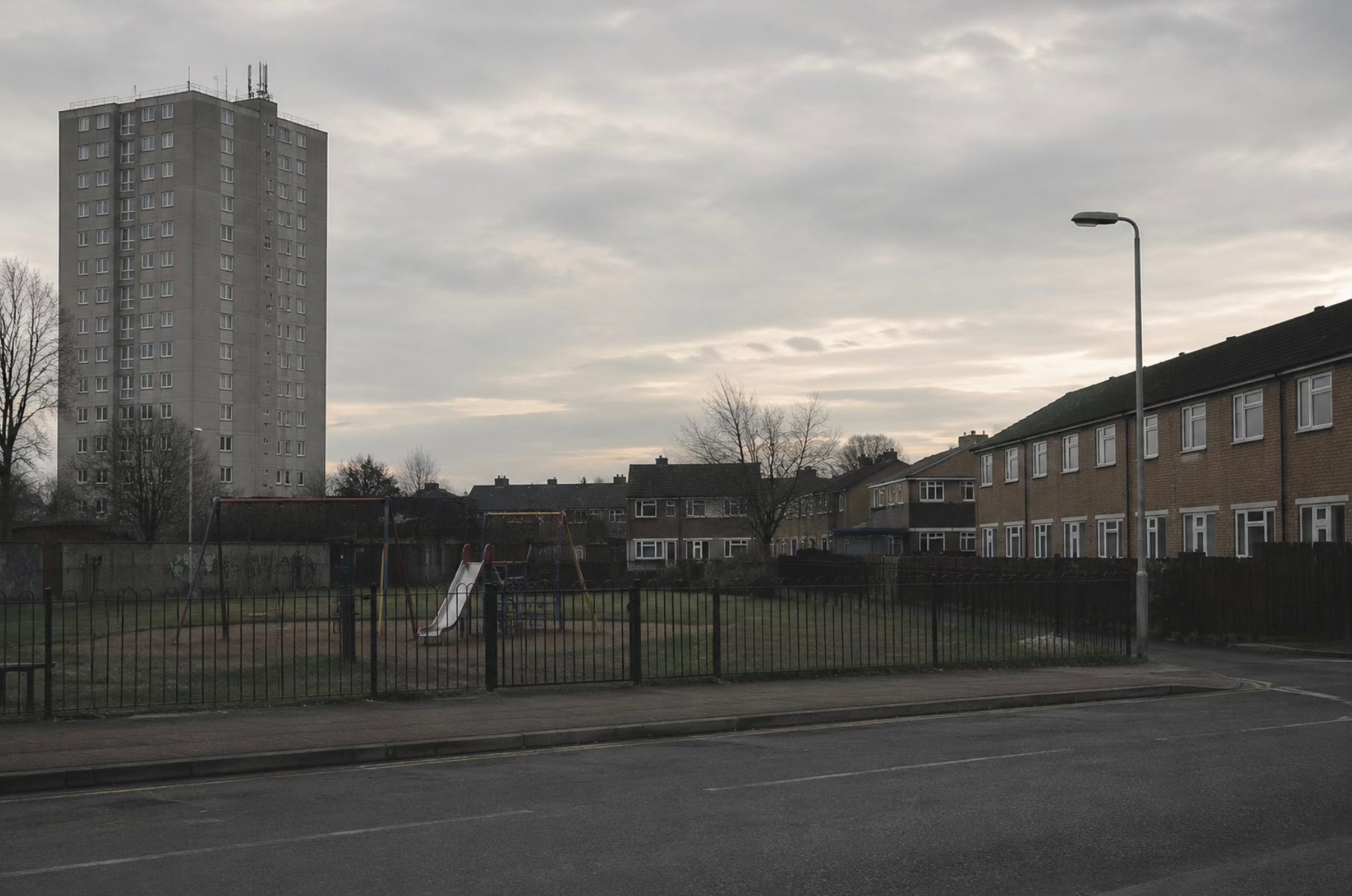
It was a strange thing to hear said plainly, because some of us have never known anything else. Born after 1979, we have no memory of a Britain that believed in the future. We have only inherited the afterlife of that belief: the municipal buildings, rail posters, council estates sold off, utilities privatised, universities marketised, houses transformed into pension plans, the language of national renewal repeated by people who cannot clean a river, staff a court, restore a dentist, or imagine a child born today living better than their parents.
That is the peculiar ache of being born after the future. It is not the feeling of having watched something die. It is stranger than that. It is the feeling of having been raised among monuments to a promise nobody remembers making.
Every generation is tempted to mistake its own disappointments for historical tragedy, so we should be careful about that. Britain before 1979 was not a pastoral republic of fairness and municipal wisdom. It had racism, sexism, imperial aftershock, bad housing, class brutality, and all the rest of it. The point is not that the past was good — nostalgia is one of the diseases this country uses to avoid thought. The point is that the post-1979 settlement did something more profound than change economic policy. It changed the country’s relationship with time.
Before the neoliberal turn, Britain still retained institutional memories of collective provision, public ownership, industrial strategy, municipal capacity, and mass social improvement. After 1979, during Margaret Thatcher’s premiership that oversaw a period of immense social and economic change, Britain shifted from centralised, state-controlled institutions towards privatisation and economic reform (BBC News, 2013). The future was increasingly reimagined as a private balance sheet: home ownership replaced social housing, shareholder value replaced public utility, debt replaced grant, rent replaced security, and managerial politics replaced historical movement. The national imagination narrowed until the only futures on offer were technological consumerism, property inheritance, border panic, or decline with better branding.
This is why Bastani’s phrase lands so hard. A Ponzi scheme is a temporal arrangement. It does not simply steal money; it steals tomorrow. It survives by using new entrants to honour promises made to earlier ones. Post-1979 Britain has done something similar with housing, pensions, rents, privatised infrastructure, student debt, suppressed wages, and the slow deterioration of the public realm. It asks the young to pay more for worse housing, worse services, weaker security, and smaller hopes, while protecting the asset values and accumulated claims of those who got in before the drawbridge lifted.
The official language for this is prudence, but the lived experience is enclosure. Britain’s deepest crisis is therefore more than economic, though the economics are bad enough. It is temporal. The future has stopped arriving as a collective promise and now arrives mainly as a bill.
The Country That Lives Off Itself
The Resolution Foundation and the Centre for Economic Performance described Britain in 2023 as being “a decade and a half into a period of stagnation”. Their final Economy 2030 Inquiry report argued that prosperity requires “a resolve to invest in our future rather than live off our past” (Resolution Foundation and Centre for Economic Performance, 2023). That sentence names the whole sentiment. Britain is not simply failing to grow. It is living off the residues of an earlier version of itself.
The facts are bleak, and they are significant because they give structure to a mood that might otherwise be dismissed as melancholy. Labour productivity grew by just 0.4 per cent a year in the twelve years after the financial crisis. The UK’s productivity gap with France, Germany and the United States doubled after 2008. Real wages, which grew by 33 per cent per decade from 1970 to 2007, grew by less than zero in the 2010s. By mid-2023, wages were back where they had been around the financial crisis, and fifteen years of lost wage growth had cost the average worker £10,700 a year (Resolution Foundation and Centre for Economic Performance, 2023). These failures are time made material, for they are the delayed child, the missing holiday, and the mould in the rented flat.
Housing is the central parable because housing is where the post-1979 settlement made itself intimate. Right to Buy was sold as liberation, and for many tenants it was. Millions gained an asset and security they might otherwise never have had. But the social meaning of a policy cannot be measured only by the first beneficiaries; it must also be measured by the world it leaves behind. Common Wealth’s 2025 report estimates that 1.9 million council homes in England have been sold through Right to Buy since 1980, at an average discount of 44 per cent. Those homes now have a combined market value of around £430 billion. The report estimates that about 780,000 former council homes, worth £176 billion, have entered the private rented sector (Hayes, 2025). That is the story of Britain after the future. Public assets became private wealth; yesterday’s political triumph became today’s rent bill.

The cruelty is that the country can still look rich while becoming less capable of renewal. The Office for National Statistics estimated the UK’s net worth in 2024 at £13.1 trillion. Household net worth stood at £10.8 trillion. Non-produced assets rose to £7.1 trillion, driven largely by land values, while household non-produced assets stood at £4.6 trillion, with land-value growth accounting for £176.7 billion in 2024 (Office for National Statistics, 2025). Britain’s balance sheet swells as its future contracts.
This is the difference between wealth and futurity. A country can become wealthier because the land under existing houses becomes more expensive, scarcity is capitalised, and the young are forced to bid against one another for access to the basic conditions of adulthood. But that is not the same as becoming a society that is building anything. Land is not a dream. Rent is not a future.
The post-1979 settlement is supposed to have shrunk the state, but that is the flattering version told by people who like to imagine neoliberalism as an argument about efficiency. It transferred public wealth into private claims and public imagination into market discipline. It told us that the state was the problem while ensuring that the state remained strong enough to create markets, protect assets, discipline labour, rescue finance, and make alternatives seem childish.
This is why the word “Ponzi” is useful, even if it is not literal. The older story of Britain was that each generation would inherit a country made more liveable by the last: better homes, better wages, better services, better transport, better education, cleaner air, fuller lives. The newer story is that each generation must work harder to preserve the paper wealth accumulated before it. The promise of improvement has been replaced by the obligation to service the past.
Public investment tells the same story in institutional form. The Resolution Foundation has argued that weak and highly volatile public investment has helped make Britain a low-investment nation. Investment has been too low and repeatedly cut when the public finances come under pressure, because capital spending is easier to postpone than political promises made to existing voters. The planned increases after the 2019 election were cut after the 2022 mini-budget, reversing more than 80 per cent of the gains that had been planned (Odamtten and Smith, 2023). That is Britain’s political economy of cancelled time. Maintenance is deferred. The bill is moved forward, and the future is asked to pay interest.
Subscribe to Notes From Plague Island and join our growing community of readers and thinkers.
The Cancellation of National Time
Mark Fisher understood that capitalism does not only organise work, culture, and consumption. It organises the possible. In Capitalist Realism, he described a world in which capitalism presents itself as the only realistic political-economic system, a “lived ideological framework” in which free-market neoliberalism appears as a fact of nature (Repeater Books, n.d.a). In Ghosts of My Life, Fisher’s concern turned to the futures that failed to happen: the cultural and political possibilities that haunt the present precisely because they were never allowed to arrive (Repeater Books, n.d.b).
This is the most useful way to understand Britain now. We are governed by bad policy and restricted imagination. The old injunction was that there is no alternative. But after enough years, that phrase becomes an atmosphere. It enters the body. It becomes the caution of the parent advising their child not to expect too much; the graduate’s acceptance that debt is normal; the renter’s learned helplessness before another rise; the public’s weary assumption that every service will be worse next year and more expensive to access; the Labour politician explaining that transformation must wait until the markets are reassured, and the Conservative politician explaining that nothing can be afforded except tax cuts for people already insulated from consequence.
The future is not abolished in one dramatic act. It is cancelled slowly. A rail line is delayed. A hospital is postponed. A council sells land. A library closes. A university course is cut. A bus route disappears. A young person leaves the town that raised them because there is no work, no housing, and no reason to stay except love. Each decision is presented as temporary, necessary, regrettable... Together they form a civilisation.
This is why Britain feels less like a failed state than a state of permanent afterlife. The uniforms remain. The acronyms remain. The ceremonies remain. The royal pageantry, the parliamentary rituals, the press conferences, the “world-leading” announcements, the consultations, the reviews, the taskforces: all continue. What disappears is not the image of authority but its substance. The country can still stage the performance of itself and issue statements about delivery while repeatedly proving that it has lost the power to deliver.
Bastani’s language about simulacrum and mirage is useful here because the post-1979 state is present in a peculiar, spectral form. It is everywhere as demand and nowhere as care. It can chase, sanction, charge, outsource, procure, surveil, and brand. It is less capable of building durable public goods, though. It retains the negative powers of the state while losing, or refusing, many of the positive ones.
This produces a distinctive kind of politics. Not hope versus fear, but nostalgia versus management. The right offers a past it cannot restore: borders, empire, deference, discipline, a fantasy of national homogeneity, the imagined moral clarity of a Britain before decline. The centre offers a present it cannot improve: fiscal credibility, institutional respectability, consultation, stability, small efficiencies, a politics of lowered expectations. The left still carries fragments of the future, but it is constantly instructed to behave like an adult by people whose adulthood consists of making peace with decay.
To be born after 1979 is to have grown up under this emotional regime. We did not experience neoliberalism as heroic modernisation. We experienced it as inherited common sense. We were told to be flexible, entrepreneurial, resilient, realistic. We were told that public goods were unaffordable, that unions were anachronisms, that housing wealth was aspiration, that debt was investment, that politics was the art of the possible, and that the possible was whatever the bond market, the landlord, the developer, the water company, or the inherited homeowner would tolerate.
The result is a common feeling of grief without an object. We mourn something we never had, are homesick for a country we did not inhabit, and suspicious of that homesickness because we know the past was never innocent. We are told we are nostalgic if we want public ownership, unrealistic if we want cheap housing, naive if we want industrial strategy, reckless if we want wages to rise, divisive if we want wealth taxed, and extreme if we think a society should be judged by the future it makes possible for those who arrive after it. That is the emotional genius of capitalist realism. It does not persuade us that the world is good. It persuades us that no other world can be built.
China As the Disturbing Mirror
This is where China enters the argument. Any honest comparison has to begin with the obvious: China is an authoritarian state, ruled by a party that suppresses dissent, censors public life, and subordinates civil liberties to party power. It faces serious economic problems too: weak consumption, real-estate fragility, demographic pressure, local-government debt, unemployment, industrial overcapacity, and export dependence. The Congressional Research Service notes that China’s Fifteenth Five-Year Plan acknowledges structural problems including weak demand, economic imbalances, unemployment, real-estate risks, and high debt in local governments and financial institutions (Congressional Research Service, 2026).
None of that should be minimised but nor should it be used as a comfort blanket. The unsettling thing about the comparison is that a repressive state can still appear historically dynamic, while a liberal capitalist democracy can become stagnant, privatised, nostalgic, and incapable of collective construction. China can still say, however brutally and imperfectly: this is what we are building. Britain too often says: this is what we used to build.

The Fifteenth Five-Year Plan is a useful symbol because it shows a state still organised around forward motion. The Congressional Research Service describes it as a high-level national document setting policy priorities through to 2030 and long-term goals to 2035, with emphasis on science and technology independence, industrial upgrading, advanced manufacturing, artificial intelligence, robotics, energy, software, semiconductors, digital infrastructure, and supply-chain control (Congressional Research Service, 2026). China Briefing’s account similarly emphasises technological self-sufficiency, industrial upgrading, emerging industries, and targets for research and development, patents, and the digital economy (Huld, 2026).
While plans can fail and industrial policy can produce waste, repression, corruption, overcapacity, surveillance, and environmental harm, a plan is also a statement about time. It says the future is politically imaginable, and that the state has some conception of direction. This is what makes the contrast painful. Britain still has plans, of course — white papers, review panels, growth missions, industrial strategies, infrastructure pipelines, net-zero pathways, levelling-up funds, delivery boards — the machinery of planning has not disappeared. What has disappeared is confidence that any of it will survive contact with Treasury caution, party management, lobbying, judicial review, land markets, institutional fragmentation, short electoral horizons, or the next round of fiscal theatre. Britain announces futures, then it value-engineers them into disappointments.
The Chinese state’s futurity is morally compromised, while Britain’s absence of futurity is morally compromised. It is just compromised in a more familiar way: through rents, delays, degraded services, privatised monopolies, fiscal cowardice, and the endless instruction that there is no money for the things that would make life less small.
One of the comforting myths of liberal democracies is that authoritarian societies are trapped in history while we are open to the future. Britain now suggests a more disturbing possibility. A society can hold elections, celebrate individual freedom, and still lose the collective ability to decide what it wants to become. It can have formal liberty without historical agency. It can be free to choose between varieties of managed decline. This is why the China comparison should make us uneasy. Chiana reveals the poverty of our own temporal imagination. It shows that the end of history did not mean the triumph of liberal democracy. In Britain, it meant the draining of politics into asset management.
The Children of Managed Decline
What happens to people raised inside no future? They become fluent in diminishment and learn the language of lowered expectations before they learn the language of power. They know that owning a home is unlikely without inheritance, and that work may not bring security. They understand that a degree may bring debt rather than mobility. They recognise that public services exist, but increasingly as queues, forms, eligibility tests, phone lines, and apologies. They are aware that the planet is heating, that wages stagnate, that rents rise, that the old are anxious and the young are tired, and that politics mostly arrives as a request to be sensible.
Often this produces exhaustion over radicalism. Sometimes it produces conspiracy, because conspiracy at least restores agency to a world in which official politics seems to deny cause and effect. Sometimes it produces cruelty, because if the future cannot be expanded, the remaining political temptation is to ration belonging. Sometimes it produces nostalgia for periods never lived through, because nostalgia is the counterfeit of hope.
But beneath all of that there is grief, which is difficult to name because it is personal, generational, and atmospheric all at once. It is there in the knowledge that the life script sold to our parents has become a historical artefact. It exists in the strange humiliation of adulthood without solidity, and the way Britain still speaks to its young as if they are irresponsible for failing to thrive in conditions designed to extract from them. It is present in the demand that we celebrate resilience, when resilience often means adapting to forms of social vandalism that should never have been normalised.
A society that cannot promise a future becomes cruel in subtle ways. It asks the young to be grateful for survival and tells them that wanting stability is entitlement. It informs them that expecting public goods is nostalgia. It tells them that exhaustion is maturity; that anger is extremism. They are to admire entrepreneurs, landlords, investors, and homeowners, while treating nurses, teachers, carers, cleaners, rail workers, and renters as costs to be disciplined.
The tragedy is not that nothing works. It is that enough still works to keep the arrangement alive. For those born after 1979, Britain’s future has always appeared in diminished form. We have known it as a warning, a debt, a housing ladder with the bottom rungs removed, a climate target, a graduate repayment schedule, a closed youth centre, a river one should not swim in, a landlord’s portfolio, a politician’s slogan. We have grown up in a country that tells us to look forward while forcing us to live among the proceeds of what was sold behind us.
Despite all of this, we must not end with despair. The point of naming the cancelled future is to refuse the lie that this is maturity. A country that sells tomorrow and calls it prudence is not grown-up. A politics that protects asset values while abandoning children to insecurity is decadent. A state that can rescue banks, subsidise landlords, underwrite private contracts, police borders, and guarantee inherited wealth can also build homes, own utilities, plan industry, repair services, and make promises that do not depend on the desperation of the next generation.
The future is a material arrangement. It is housing, wages, energy, transport, schools, hospitals, time, care, clean water, public beauty, and the confidence that collective life can be made less humiliating. It is not enough to denounce decline. We have to recover the right to expect. But still, there is a sadness here, because something has been lost even if we never touched it. We were born after the future, but not after the need for one. We inherited the ruins of a promise and were told they were the limits of the possible. We were asked to become adults in a country that had converted its tomorrow into collateral.
Bastani’s phrase made audible the thing beneath the statistics: the suspicion that Britain has been living by consuming the future of those not yet powerful enough to refuse. Those of us born after 1979 have no memory of a time before there was no future. But memory is not the only source of politics. Sometimes politics begins in the ache of absence, in the refusal to accept that the world we were handed is the only one that can be built. Our country has forgotten how to promise. That does not mean we must forget how to demand.
Or support us with a one-off tip → Buy Me a Coffee
References
BBC News (2013) ‘The Thatcher years in statistics’, BBC News, 9 April. Available at: https://www.bbc.com/news/uk-politics-22070491 [Accessed 11 May 2026].
Congressional Research Service (2026) ‘China’s 15th Five-Year Plan: S&T and Economic Priorities’, Congress.gov, 16 April. Available at: https://www.congress.gov/crs-product/IF13204 [Accessed 11 May 2026].
Hayes, C. (2025) ‘Wrong to Sell: How Right To Buy Gave Away Billions in Public Wealth’, Common Wealth, 3 August. Available at: https://www.common-wealth.org/publications/wrong-to-sell [Accessed 11 May 2026].
Huld, A. (2026) ‘China’s 15th Five-Year Plan: Key Insights for Foreign Investors’, China Briefing, 13 March. Available at: https://www.china-briefing.com/news/chinas-15th-five-year-plan-key-insights-for-foreign-investors/ [Accessed 11 May 2026].
Novara Media (2026) ‘Labour Face Wipeout, Launch “Project Fear” Against Greens’, YouTube, 6 May. Available at:
[Accessed 11 May 2026].
Odamtten, F. and Smith, J. (2023) ‘Cutting the cuts: How the public sector can play its part in ending the UK’s low-investment rut’, Resolution Foundation, 30 March. Available at: https://www.resolutionfoundation.org/publications/cutting-the-cuts/ [Accessed 11 May 2026].
Office for National Statistics (2025) ‘National balance sheet estimates for the UK: 2025’, Office for National Statistics, 18 December. Available at: https://www.ons.gov.uk/economy/nationalaccounts/uksectoraccounts/bulletins/nationalbalancesheet/2025 [Accessed 11 May 2026].
Repeater Books (n.d.a) ‘Capitalist Realism: Is There No Alternative?’, Repeater Books. Available at: https://repeaterbooks.com/audiobooks/capitalist-realism-is-there-no-alternative-2/ [Accessed 11 May 2026].
Repeater Books (n.d.b) ‘Ghosts of My Life: Writings on Depression, Hauntology and Lost Futures’, Repeater Books. Available at: https://repeaterbooks.com/audiobooks/ghosts-of-my-life/ [Accessed 11 May 2026].
Resolution Foundation and Centre for Economic Performance (2023) ‘Ending Stagnation: A New Economic Strategy for Britain’, The Economy 2030 Inquiry, 4 December. Available at: https://economy2030.resolutionfoundation.org/reports/ending-stagnation/ [Accessed 11 May 2026].