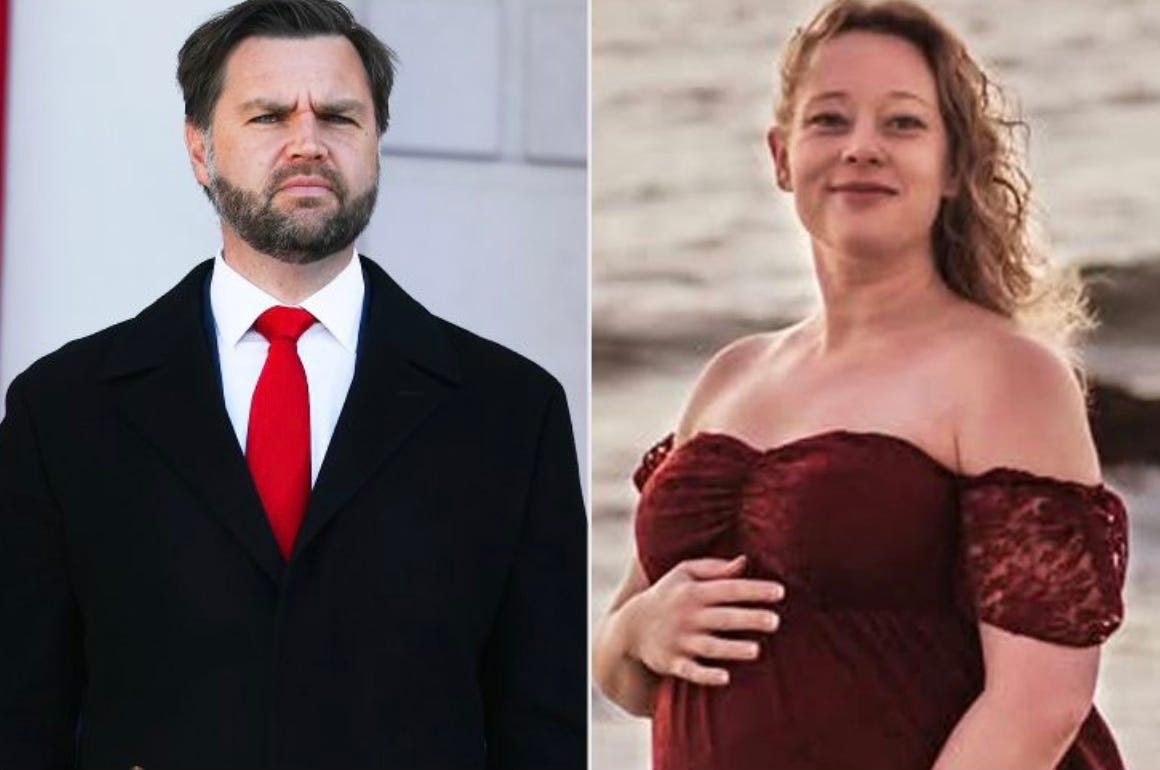
"A Tragedy of Her Own Making" J.D. Vance, State Violence, and the Moral Collapse of American Power

Editor’s Note: This article is a follow-up to “The Shot That Shattered the Republic,” which examined the murder of Renée Nicole Good and its broader political implications. This piece focuses specifically on Vice President J.D. Vance’s rhetorical defence of the murder and what it reveals about the far-right authoritarian ideology of the Trump administration.
9 January 2026.
The murder of Renée Nicole Good on January 7 2026, was not a tragedy. It was an execution. It was a test of whether the American people would accept a new political reality: one in which the state could murder a citizen in broad daylight, and the second-highest official in the land could defend that murder with rhetoric so brazen, so contemptuous of truth, that it amounted to a direct assault on democratic discourse itself. Vice President J.D. Vance stepped forward to conduct that test. His words would reveal his own moral bankruptcy, and the architecture of a far-right authoritarian movement that has abandoned all pretence of democracy in favour of raw state power.
The Immediate Response: Vance’s Swift Defence of Murder
What was remarkable about J.D. Vance’s response to Renée Nicole Good’s murder was its speed and absoluteness. Less than 24 hours after the shooting, Vance stood in the White House briefing room and declared that the ICE agent was “doing their job” and acted in “self-defense” (CNN, 2026). He did not wait for a thorough investigation or acknowledge the contested nature of the video evidence. He did not express any uncertainty or call for a careful examination of the facts. Instead, he spoke with the confidence of an authoritarian operative who had already decided the outcome, who was not interested in truth but in enforcing a particular narrative that would protect the state’s agents from accountability.

This is the defining characteristic of Vance’s political style: certainty without evidence, authority without justification, authoritarianism without apology. He claimed that the agent was “protected by absolute immunity,” a legal doctrine that shields federal officers from civil liability in certain circumstances (CNN, 2026). But by invoking this doctrine in the immediate aftermath of the murder, Vance was not making a legal argument; he was making a political one. He was signalling to every ICE agent in the country that the federal government would stand behind them, no matter what they did, no matter how many citizens they murdered. He was announcing that loyalty to the state apparatus would be rewarded with impunity.
Vance’s invocation of absolute immunity is particularly revealing because it transforms a legal question into a political weapon. Absolute immunity is a doctrine designed to protect government officials from civil liability when they are acting within the scope of their authority. But Vance was not arguing that the agent acted within the scope of his authority; he was asserting that the agent could not be held accountable regardless of what he did. This is a fundamental inversion of the rule of law. It is a declaration that the state’s agents are above the law, that they can murder without consequences, and that the federal government will defend them unconditionally. This is authoritarian and fascist, full stop.
The speed of Vance’s defence is itself significant. It suggests that he was responding to a predetermined script. The Trump administration had already decided how to respond to this murder before the investigation could begin. Vance was merely the instrument through which that predetermined response was announced. This is the abandonment of leadership in favour of raw political power; a signal that the federal government is not interested in truth, justice, or accountability, but that it will defend its agents no matter how many citizens they murder. It is a signal that America is now living under an authoritarian regime.
The Blame-Shifting: “A Tragedy of Her Own Making”
Vance’s most chilling statement was his assertion that Renée Nicole Good’s murder was “a tragedy of her own making” (CNN, 2026). This phrase deserves careful analysis, for it is a window into the moral worldview of the Trump administration and the far-right authoritarian movement it represents. The phrase encapsulates the entire ideological architecture of a political movement that has abandoned all pretence of justice in favour of raw state power and the murder of its citizens.
The phrase “tragedy of her own making” performs a remarkable rhetorical sleight of hand. It acknowledges that a murder has occurred — an admission that cannot be avoided when a mother of three lies dead — while simultaneously denying any responsibility for that murder. It is a way of saying: yes, someone died, but that is not our fault. It is her fault. She brought this upon herself. She deserved to be murdered. By using this language, Vance was actively blaming the victim for her own murder. He was inverting the moral order by suggesting that the state bears no responsibility for the violence it commits, and that the victim bears full responsibility for being murdered by the state.
This is victim-blaming elevated to an instrument of authoritarian control. It operates on the assumption that if a citizen dies at the hands of the state, it must be because that citizen did something to deserve it. The burden of proof is reversed. The victim must prove her innocence, not the state must prove its guilt. And since the victim is dead, murdered by the state, she cannot speak in her own defence. She cannot explain what she was doing, what she was thinking, or why she made the choices she made. She can only be spoken about, never heard from. She is silenced twice: first by the bullet, then by the rhetoric that follows. Posthumous moral execution. This is how authoritarian regimes silence dissent and justify murder.
Moreover, Vance’s phrase suggests that Renée Nicole Good had agency in her own murder, that she made choices that led inevitably to her being shot multiple times in the face by a federal agent. But what choices did she have? She was in her own car, in her own neighbourhood, when she was approached by masked, unidentified federal agents. Her options were limited: comply with the demands of armed strangers or attempt to escape. She chose to escape. For this choice, she was murdered. Vance is suggesting that this choice was hers to make, that she bears responsibility for the consequences. But this is a profound reversal of moral responsibility. The agent had the power to murder. The agent chose to use that power. The agent bears responsibility for that choice. Renée Nicole Good had no such power. She had only the desperate hope that she could escape from armed strangers. For this hope, she was murdered. For this hope, she was murdered by the state.
The Assault on Language: Gaslighting as Authoritarian Weapon
When critics of the ICE agent’s actions began to speak out, Vance responded by accusing them of “gaslighting” (The Washington Post, 2026). This is a tactic straight out of the authoritarian playbook because it recodes dissent as dishonesty and scrutiny as ideological warfare. It is a way of policing the boundaries of acceptable discourse, of silencing any voice that dares to question the state’s narrative. It is a way of saying: you are not making a valid argument; you are simply trying to manipulate reality. This is a rhetorical move that is designed to shut down conversation rather than to advance it. It’s how authoritarian regimes maintain control: by attacking the very possibility of truth.
During his White House briefing, Vance raised his voice and accused critics of spreading lies. He said it was a “lie” to describe Renée Good as “some innocent woman” (Time, 2026). By using this language, he was attempting to reframe the entire debate by arguing that the very characterisation of her as innocent was false. This is a particularly insidious form of rhetoric because it operates at the level of basic facts. It is not just disagreeing with an interpretation; it denies the possibility of interpretation altogether.
But what does it mean to question Renée Nicole Good’s innocence? She was a U.S. citizen, and a mother of three. She was a poet and a writer. She was going about her life when she was approached by armed federal agents and murdered. In what sense was she not innocent? Vance’s accusation that it is a “lie” to call her innocent suggests that she was guilty of something. But guilty of what? He never specifies. He simply asserts that the characterisation of her as innocent is false and moves on. This is accusation without evidence, judgment without trial, and the language of authoritarianism.
This is how far-right authoritarian regimes maintain control. They do not just suppress dissent; they attack the very possibility of truth. They make it impossible for citizens to trust their own eyes, their own judgment, their own reasoning. They create a situation in which the only reliable source of truth is the state itself. They create a situation in which citizens must accept the state’s version of events or be accused of lying, gaslighting, or spreading misinformation. Vance is disciplining language here and attempting to create a political reality in which the state is always right, and any opposition to it is illegitimate. He is attempting to establish a new political order in which dissent is not tolerated, and the state’s narrative is the only narrative that matters.
Subscribe to Notes From Plague Island and join our growing community of readers and thinkers.
The Broader Pattern: Normalising State Murder
The murder of Renée Nicole Good is part of a broader pattern of state violence that has been steadily normalised and accepted by those in power. Each time the state murders a citizen, and each time that murder is defended by officials like Vance, the threshold for the next act of violence is lowered. The boundaries of acceptable force expand. The justifications become more brazen. The rhetoric becomes more contemptuous of truth. This is how authoritarian regimes expand their power: incrementally, through the normalisation of violence, through the accumulation of precedents, through the steady erosion of the boundaries between what is permissible and what is monstrous.
Vance’s defence of the ICE agent is not just about this one murder but about establishing a precedent that will reverberate throughout the entire apparatus of state power. It is about announcing to every agent of the state that they can act with impunity, murder citizens without fear of consequences, and that they will be defended by the highest levels of government. This is how far-right authoritarian regimes function. They do not just commit violence; they celebrate it. They do not just tolerate it; they institutionalise it. They do not just defend it; they make it the foundation of their political order. They make murder a tool of state policy. And they make those who defend that murder the architects of the new political order.
The Contradiction at the Heart of Vance’s Position
At the heart of Vance’s position lies a fundamental contradiction so profound that it cannot be resolved through argument or evidence. He states that the ICE agent acted in self-defence, yet the video evidence shows Renée Good’s vehicle backing away from the agent as he opened fire. He claims that she posed a lethal threat, yet she was an unarmed woman in her own car, attempting to escape. He asserted that the murder was justified, yet he cannot point to any action on her part that would justify the use of lethal force against an unarmed citizen. Instead, he resorts to victim-blaming, to accusations of lying, to attacks on the very possibility of truth. He does not engage with the facts; he attacks those who cite them.
These contradictions are the inevitable and necessary result of trying to defend the indefensible. When the facts do not support your position, you must attack the facts themselves. When the evidence contradicts your narrative, you must attack the very concept of evidence. When the people refuse to accept your version of events, you must attack the people themselves and accuse them of dishonesty and ideological warfare. This is the logic of authoritarianism, and how far-right authoritarian regimes maintain power in the face of overwhelming evidence of their wrongdoing. This is how they justify murder. And this is precisely what Vance is doing. He is not trying to convince us that the murder was justified, but that the very concepts of justification, evidence, and truth are irrelevant.
The Ideological Continuity: Vance as Enforcer of Far-Right Authoritarianism
Vance’s words carry the weight of the federal government. He represents the far-right authoritarian wing of American conservatism that has abandoned all pretence of constitutional constraint. He is not arguing that the agent acted within the bounds of the law; he is arguing that the law itself is irrelevant. He insists that loyalty to the state apparatus is more important than loyalty to the Constitution. He wants you to believe that the state’s power to use violence is unlimited and unaccountable.
The dangerous aspect of Vance’s position is that it is not presented as an aberration or an exception. It is now presented as the normal operation of government. When the Vice President defends state murder without hesitation or qualification, he is normalising that murder, making it seem inevitable. This normalisation is perhaps the most insidious aspect of his rhetoric. It does not just defend this one murder; it prepares the ground for the next one. It establishes the precedent that the state can murder citizens with impunity, and that the highest officials will defend that murder.
The Rhetorical Strategy: Control Through Language
Vance’s defence of the ICE agent reveals a sophisticated understanding of how language can be weaponised to serve authoritarian ends. He constructs an entire rhetorical framework designed to make criticism of the agent not just illegitimate but impossible. He does this by attacking the very foundations of rational discourse and the possibility of shared truth.
First, he establishes that the agent was “doing their job.” This phrase is designed to transform a contested action into a routine performance of duty. It suggests that the agent was simply following procedure, that he was acting as any agent would act in similar circumstances. But this is precisely what is in question. It’s not whether the agent was following procedure; the question is whether the procedure itself is appropriate, whether the procedure justifies murder. By asserting that the agent was “doing their job,” Vance pre-empts any examination of whether the job itself is being done appropriately, whether the job involves murdering citizens. He forecloses debate before it can begin.
Second, he invokes the doctrine of absolute immunity. As previously stated, this legal doctrine is designed to protect government officials from civil liability when they are acting within the scope of their authority. But Vance uses it as a political weapon to suggest that the agent cannot be held accountable, that criticism of the agent is futile, that the only appropriate response is acceptance of state murder. This is a rhetorical move designed to discourage further inquiry and to establish that accountability itself is illegitimate. He is not arguing that the agent acted within the scope of his authority; he is arguing that the very concept of accountability is irrelevant.
Third, he attacks those who criticize the agent as dishonest and manipulative. By accusing critics of “gaslighting” and of lying, Vance attempts to delegitimise criticism without having to address it substantively. He creates a situation in which critics are forced to defend themselves against accusations of dishonesty rather than being able to present their case. This is a classic authoritarian tactic: make the critic the subject of debate rather than the actions being criticised. This is how far-right authoritarian movements silence dissent. They do not defeat arguments; they destroy the possibility of argument itself.
The Deflection of Responsibility: Protecting Power, Not Law Enforcement
When asked directly what responsibility he and Trump bore to defuse the tensions created by the murder, Vance’s answer revealed the true nature of his position. He said their responsibility was to “protect the people who are enforcing law and protect the country writ large” (Associated Press, 2026). This is a masterclass in deflection. Vance is not saying the administration bears any responsibility for the violence or the tensions it has created. He is saying the administration’s only responsibility is to stand behind those who commit violence and to protect the state apparatus itself.
When pressed on how to “turn down the temperature,” Vance offered this response: “The best way to turn down the temperature is to tell people to take their concerns about immigration policy to the ballot box” (Associated Press, 2026). In other words, the way to reduce tensions is not for the administration to change course, not for the administration to show restraint, not for the administration to acknowledge the legitimate concerns of those who oppose its policies. No. The way to reduce tensions is for citizens to accept the administration’s violence and wait for the next election.
So, the administration commits violence. The administration defends that violence. The administration then blames critics for the tensions created by that violence. The administration’s solution is not to stop the violence, but to demand that critics accept it silently or be accused of inflaming tensions.
But Vance’s statement about “protecting the people who are enforcing law” reveals something even more sinister. He is not protecting law enforcement, but the administration’s choice to use law enforcement as a tool of political power. He is protecting the decision to deploy ICE agents in Democratic cities, and to use immigration enforcement as a weapon against political opponents. Ultimately, he is protecting himself and Trump, their power. When Vance says he is protecting law enforcement, what he really means is that he is protecting the administration’s right to use violence without accountability, restraint, or consequence.
This is the core of the authoritarian project: to commit violence, to defend that violence, to blame critics for the violence, and then to demand that critics accept the violence or be accused of disloyalty. Vance is not interested whatsoever in law and order. He is only interested in power.
The Moral Verdict
J.D. Vance’s position on the murder of Renée Nicole Good can be summarised as follows: the murder was justified. The responsibility for the murder lies not with the armed agent of the state who pulled the trigger, but with the unarmed citizen who was murdered. Law enforcement must be defended at all costs, regardless of how many citizens they murder, and any criticism of their actions is not only illegitimate but also a dangerous and dishonest attack on the foundations of law and order. This is a position that belongs to authoritarian regimes.
What Vance is defending is the opposite of law and order. He is defending a system in which the state’s power to use violence is unlimited and unaccountable, where the citizen has no rights, no protections, and no recourse. He is defending a system in which the state can murder with impunity and then blame the victim for their own death. This is not the language of a republic. This is the language of an empire. And this is the language of fascism.
Conclusion: The Kind of America Vance Is Making Inevitable
Vance’s defence of the ICE agent is a declaration of war against democratic values. It is an announcement that the Trump administration will use state violence to enforce its will, and that it will defend that violence with rhetoric designed to silence dissent and manipulate reality. It is a test to see whether the American people will accept this new political reality. The answer to that test will determine the future of the republic. It will determine whether America remains a nation of laws, or whether it will become a nation of men — men like J.D. Vance, who believe that loyalty to power is more important than loyalty to truth, that authoritarianism is preferable to democracy, and that murder is justified if committed by the state.
The murder of Renée Nicole Good was not inevitable, and it was not a tragedy of her own making. It was the predictable result of a far-right authoritarian political movement that has prioritised loyalty to power over loyalty to truth, that has prioritised force over restraint, and that has prioritised the state’s right to use violence over the citizen’s right to life. J.D. Vance’s defence of that murder reflects the moral and political bankruptcy of American far-right authoritarianism. It is the sound of a nation that is slowly but surely abandoning the principles of democracy in favour of the logic of authoritarian rule. It is the sound of fascism taking hold.
But the American people have the power to reject this dystopian vision of their country. They have the power to demand accountability from their government, to insist that the rule of law applies equally to all citizens, including those who work for the state. They have the power to choose a different future and reject far-right authoritarianism and defend democracy. The choice of what comes next is theirs, and the time to make that choice is now.
Or support us with a one-off tip → Buy Me a CoffeeReferences
Associated Press. (2026) ‘Vance calls killing of Minneapolis woman by an ICE officer a tragedy of her own making’, 8 January. Available at: https://apnews.com/article/vance-minnesota-immigration-enforcement-06b23b428edcc8498362be4ac656f201 [Accessed: 9 January 2026].
CNN. (2026 ) ‘Vance calls death of MN woman: tragedy of her own making’, 8 January. Available at: https://www.cnn.com/2026/01/08/us/video/vance-on-death-of-mn-woman-digvid-vrtc [Accessed: 9 January 2026].
Plague Island. (2026 ) ‘The Shot That Shattered the Republic’. Available at: https://www.plagueisland.com/p/the-shot-that-shattered-the-republic [Accessed: 9 January 2026].
The Guardian. (2026 ) ‘Woman in Minnesota fatally shot by ICE agent during raid, video shows’, 7 January. Available at: https://www.theguardian.com/us-news/2026/jan/07/minneapolis-shooting-immigration-crackdown [Accessed: 8 January 2026].
The Washington Post. (2026 ) ‘In combative news conference, Vance defends ICE agent in Minneapolis shooting’, 8 January. Available at: https://www.washingtonpost.com/politics/2026/01/08/vance-ice-shooting-minneapolis/ [Accessed: 9 January 2026].
Time. (2026 ) ‘Vance Defends ICE Agent in Minneapolis Shooting’, 8 January. Available at: https://time.com/7344826/minneapolis-renee-nicole-good-jd-vance/ [Accessed: 9 January 2026].


A superb dissection of J.D. Vance.
This is a terrific post. Thanks!